
Blog5/7/2026
Smart Home Upgrades for Everyday Convenience and Comfort
6 mins Read
The Briefing
Quick takeaways for the curious
Seamless automation prioritizes reliability and invisibility, avoiding gimmicks and focusing on devices that integrate into daily life without constant tweaking.
Intelligent climate control and air quality upgrades can dramatically improve comfort and health while reducing energy waste.
Smart air purifiers with sensors enable automated responses to changing air quality and can integrate with your existing smart home platforms.
A robust security system uses AI for accurate detections and offers local and cloud storage to ensure footage remains accessible even if the internet is temporarily unavailable.
Interoperability, privacy protections, and durable connectivity are essential criteria when selecting smart home gear to sustain long-term reliability.
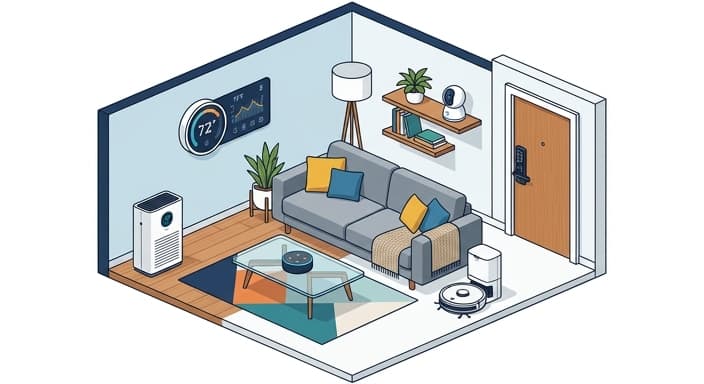
The modern home has evolved from a static shelter into a responsive environment that anticipates our needs, manages our energy, and secures our peace of mind. Transforming a living space into a truly "smart" home isn’t about filling rooms with blinking lights or unnecessary gadgets; it is about reclaiming the hours once lost to repetitive domestic maintenance and mundane manual tasks.
The Philosophy of "Seamless Automation"
When upgrading your home with smart technology, it is all too easy to fall into the "gimmick trap"—the tendency to buy novelty connected devices, voice-controlled gizmos, or "smart" appliances that offer a novelty experience for a week before becoming frustrating, disconnected paperweights. We see this cycle every year: an influx of budget smart bulbs that lose connection to the Wi-Fi at the slightest signal flutter, flimsy automated locks that require proprietary apps that never receive software updates, and voice assistants that struggle to understand basic commands. At HootFinds, we reject the cycle of "disposable automation." Instead, we embrace the philosophy of "Seamless Automation."
Seamless Automation is the deliberate act of selecting technology that integrates into the background of your life, working reliably without requiring constant troubleshooting. It is the recognition that the best smart home upgrades are those that become invisible—the lights that dim when you settle into the sofa, the thermostat that learns your thermal comfort preferences, and the security systems that provide alerts only when they truly matter. By prioritizing gear that features robust interoperability, encrypted privacy protocols, and industrial-grade connectivity, we ensure that our technology serves the home, rather than the home serving the technology.
Intelligent Climate Control and Air Quality
The most impactful smart home upgrade is often the one that manages your environment without you ever touching a dial. A high-quality smart thermostat is the cornerstone of a modern home, utilizing occupancy sensors and geofencing to ensure that your living space is at the perfect temperature the moment you walk through the door, while drastically reducing energy consumption when the house is empty. Unlike traditional programmable thermostats that rely on rigid schedules, modern smart climate controllers analyze local weather patterns and your home's thermal retention to minimize waste.
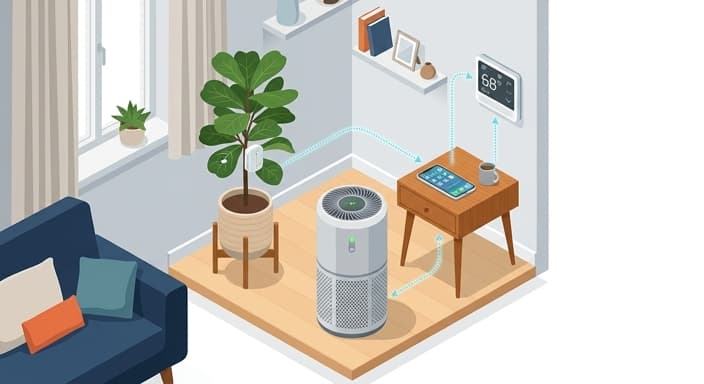
Beyond temperature, we must consider the air we breathe. Smart air purifiers equipped with laser particle sensors have moved from "optional convenience" to "essential health maintenance." These devices sync with your phone to provide real-time data on VOCs, dust, and allergens, automatically ramping up their filtration speed when the air quality dips. By selecting a unit that integrates with platforms like Apple HomeKit or Google Home, you can automate your air quality management to coincide with your daily routines, ensuring that your home is a sanctuary of clean, crisp air without the manual effort of monitoring filters or fan speeds.
Security Systems That Prioritize Peace of Mind
True convenience in home security is defined by the absence of anxiety. The "disposable" approach to security involves cheap cameras that trigger false alarms every time a shadow moves, leading to "alert fatigue" where the user eventually turns the system off entirely. A sophisticated smart security setup, however, utilizes AI-driven object detection to distinguish between a delivery driver, a stray cat, and a potential intruder. This precision is the difference between a system you trust and a system you ignore.
Look for video doorbells and exterior cameras that offer local storage options alongside cloud backup. This ensures that even if your internet connection wavers, your security footage remains secure and accessible. Furthermore, smart locks that support remote guest access allow you to grant temporary digital keys to house-sitters or service professionals without the logistical nightmare of hiding physical keys under a doormat. When integrated with a smart hub, these devices can trigger routines—such as turning on the entryway lights when the door unlocks—creating a seamless arrival experience that feels both safe and incredibly welcoming.
Lighting as an Ambient Utility
Lighting is the primary tool we use to dictate the mood and functionality of a space, yet most of us rely on the binary "on" or "off" of a standard wall switch. Smart lighting upgrades provide the convenience of "scenes"—predetermined configurations of light color, temperature, and intensity that can be activated with a single voice command or a scheduled routine. For example, a "Focus" scene might brighten your office lighting to a crisp 5000K, while a "Wind Down" scene in the living room shifts the bulbs to a soft, warm 2700K as the sun sets.
The key to avoiding the "gimmick" aspect of smart lighting is choosing systems that utilize a dedicated bridge or a robust mesh network protocol like Zigbee or Thread. These technologies ensure that your light switches and bulbs communicate with each other instantly, without clogging your home’s Wi-Fi network. By automating your lighting, you aren't just saving energy; you are actively curating the rhythm of your day. Imagine waking up not to a jarring alarm, but to a gradual brightening of your bedroom that mimics a natural sunrise, or arriving home to a house that is already illuminated, sparing you the fumbling for switches in the dark.
The Hub: Centralizing Your Smart Ecosystem
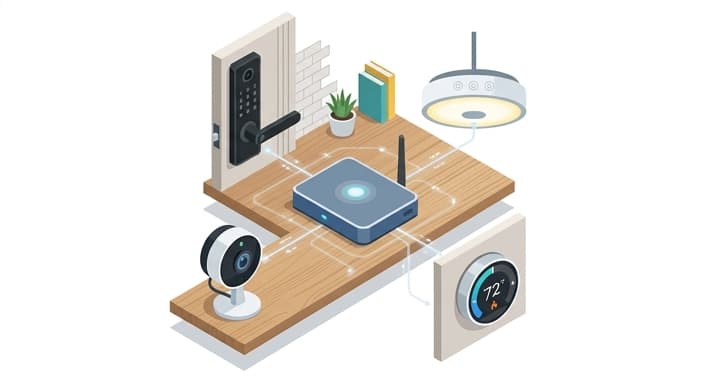
The greatest challenge of a smart home is the "fragmentation of control." When you have a smart lock app, a camera app, a lighting app, and a thermostat app, you have created a digital chore list rather than a convenience. The solution is a centralized smart home hub—a physical or software-based control center that unifies your devices into a single ecosystem. Modern standards like Matter have made this easier than ever, allowing devices from different manufacturers to communicate seamlessly.
When shopping for a hub, look for one that supports local processing. Local processing means that your smart home commands are executed on the hub itself, rather than traveling to a cloud server and back. This translates to faster response times, increased reliability during internet outages, and significantly better privacy. A well-configured hub allows you to create "If-This-Then-That" (IFTTT) automations that are truly transformative: if the smoke alarm triggers, the lights turn to bright red and the smart locks automatically disengage for emergency egress. This is the pinnacle of smart home convenience—a system that thinks ahead to protect your home and simplify your daily operations.
Investing in Long-Term Compatibility
As you curate your smart home, remember that the goal is to build a robust foundation that can grow with you. Avoid proprietary systems that lock you into a single brand’s ecosystem, as these are the most likely to become obsolete as technology shifts. Instead, prioritize devices that are compatible with open-standard platforms like Matter or Home Assistant. This future-proofing ensures that your smart investments today will remain functional and integrated for years to come.
Ultimately, the best smart home upgrades are those that allow you to spend less time managing your house and more time enjoying it. Whether it is the quiet efficiency of a sensor-driven thermostat or the intuitive comfort of automated lighting, these tools are designed to remove the friction from our daily lives. By focusing on quality, interoperability, and genuine utility, you can build a living space that truly works for you, turning the concept of a "smart home" into a tangible, high-functioning reality that supports your well-being and simplifies your most important asset: your time.
Common Questions
🤔
Frequently Asked Questions
What is Seamless Automation and how can I implement it in my home?▼
Seamless Automation is the practice of choosing technology that fades into the background and works reliably without requiring constant troubleshooting. Start by prioritizing devices with strong interoperability, encrypted privacy protections, and robust connectivity, rather than flashy gadgets. Build routines that automate daily tasks—lighting, climate, and security—so they respond automatically to presence, time of day, or weather. Regularly update firmware and stick to a single ecosystem when possible to avoid fragmentation.
Which smart upgrades deliver the most convenience for daily living?▼
The most impactful upgrades typically begin with the core environment: a smart thermostat, smart lighting, and a reliable security system. Focus on devices that learn from your patterns and operate in the background, reducing manual adjustments. Choose products that prioritize interoperability and privacy, so you can expand without creating gaps in coverage. Implement routines and scenes that simplify mundane tasks, like setting the house to energy-saving mode when you leave or waking up to light gradually turning on.
How can smart devices help improve indoor air quality without adding complexity?▼
Smart air purifiers equipped with laser particle sensors provide real-time insights into VOCs, dust, and allergens. They can auto-adjust filtration speed based on air quality and integrate with platforms like Apple HomeKit or Google Home for automated routines. Pairing a purifier with a smart thermostat can centralize climate and air-quality management. The goal is to automate health maintenance without requiring constant manual monitoring.
What features should I look for in a security system to ensure true peace of mind?▼
Look for cameras and doorbells with AI-driven object detection to reduce false alarms and alert fatigue. Ensure there is both local storage and cloud backup so footage remains accessible even during internet outages. Prefer smart locks with secure remote guest access and encrypted communications to protect privacy. Finally, choose systems that receive regular software updates and offer transparent privacy controls, so you can trust the ongoing performance.