Blog4/1/2026
Best Creative Gifts for 7-Year-Olds: Inspiring Play
5 mins Read
The Briefing
Quick takeaways for the curious
Creative gifts for 7-year-olds should support constructive play that builds planning, focus, and problem-solving skills.
Gifts that foster flow help children become fully immersed in a task, gaining agency and seeing their efforts produce tangible results.
Seven-year-olds benefit from gifts that bridge abstract ideas and physical output, such as coding toys, DIY kits, or beginner engineering projects.
Look for 'low floor, high ceiling' gifts that are easy to start but offer increasing levels of challenge as skills grow.
Tangible, hands-on materials engage multiple senses and promote iterative learning, though well-chosen digital tools can complement them.
Seven is a milestone age—that magical window where a child moves beyond simple play and begins to explore the world through the lens of logic, complex problem-solving, and burgeoning personal identity. At HootFinds, we believe that the best creative gifts for 7-year-olds are those that treat them like the budding innovators they are, offering tools that transform their curiosity into tangible, imaginative output.
The Psychology of "Constructive Play"
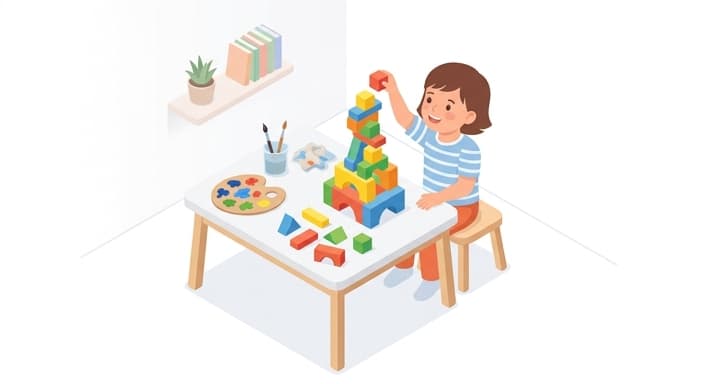
When we talk about creativity at age seven, we aren't just talking about finger paints and coloring books. We are talking about "constructive play," a developmental stage where children derive profound satisfaction from building, designing, and iterating. At this age, the brain is rapidly developing executive functions—the mental processes that enable us to plan, focus attention, and juggle multiple tasks. By providing gifts that require a sequence of steps, you are essentially providing a playground for the brain.
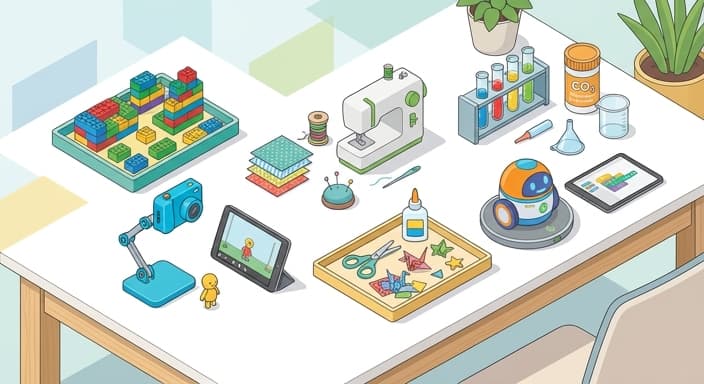
The beauty of a creative gift for a 7-year-old lies in its ability to foster "flow state," a psychological phenomenon where a child becomes fully immersed in a task, losing track of time and external distractions. Unlike passive entertainment, which can lead to overstimulation, creative play acts as a regulatory tool. Whether they are snapping together complex modular bricks, experimenting with a tabletop science kit, or learning the mechanics of a simple sewing project, they are developing a "can-do" mindset. You aren't just giving them a toy; you are giving them the agency to manipulate their environment and see the results of their own effort.
The Science of Skill-Based Development
Developmental psychologists often point to age seven as the "golden age" for fine motor refinement and spatial reasoning. During this year, a child’s hand-eye coordination catches up to the complexity of their internal ideas. This is why gifts that bridge the gap between abstract thought and physical manifestation—such as digital cameras, kid-friendly coding robots, or DIY craft stations—are so impactful.
When a child builds a fort, paints a canvas, or assembles a model, they are engaging in "iterative learning." They learn that if a structure falls, they must stabilize the base; if a color doesn't look right, they must mix a new shade. These small failures are the building blocks of resilience. By choosing gifts that are "open-ended"—meaning they don't have one single "right" way to be used—you are encouraging the child to become an architect of their own entertainment.
Curating the Creative Toolkit
To select the perfect creative gift, you need to look beyond the "bestseller" lists and focus on the child's specific "creative signature." Is the child a builder, a storyteller, a budding engineer, or a tactile artist? A high-quality gift for this age group should offer just enough challenge to keep them engaged, but not so much that it causes frustration.
We recommend looking for "low floor, high ceiling" items. A low floor means the gift is accessible and easy to start using immediately; a high ceiling means it offers increasing levels of complexity as the child masters the basics. For example, a basic stop-motion animation kit is accessible to a 7-year-old beginner but can be mastered over years as they learn about lighting, framing, and narrative structure. Investing in items that grow with the child—rather than toys that are discarded after a single afternoon of use—is the hallmark of a thoughtful HootFinds gift.
The Value of Tangible vs. Digital Innovation
In an increasingly digitized world, there is immense value in gifts that emphasize the tactile. While tablets and apps have their place, the cognitive benefits of "physical" creativity are unmatched. When a child works with clay, wood, paper, or textiles, they are engaging multiple sensory pathways simultaneously. This sensory feedback loop is essential for cognitive growth.
We suggest focusing on gifts that require physical interaction:
- Engineering and Architecture: Sets that use real physics, like marble runs, magnetic tiles, or introductory circuitry kits.
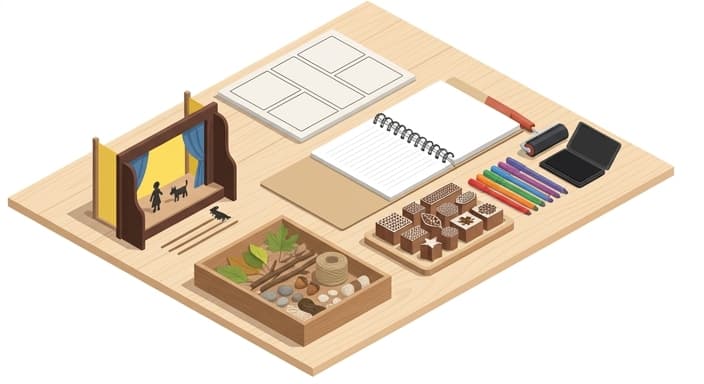
- Narrative Creation: Tools that allow for storytelling, such as DIY comic book templates, shadow puppet theaters, or high-quality journals paired with unique pens.
- Artistic Exploration: Kits that go beyond standard markers, such as block-printing sets, pottery wheels, or nature-based crafting kits that encourage them to forage for materials.
Creating an Environment for Creativity
The gift itself is only half the equation. To truly unlock the creative potential of a 7-year-old, consider how the gift fits into their daily environment. Often, the best way to support a child’s creative development is to create a "dedicated space" for it. When you give a gift, consider including the secondary tools that make the primary gift easier to use—a drop cloth for the art set, a dedicated storage bin for the building blocks, or a small tripod for the camera.
By setting up a "creative sanctuary," you are signaling to the child that their work has value. This validation is a powerful motivator. A 7-year-old who feels supported in their creative endeavors is more likely to develop a lifelong habit of curiosity and problem-solving. This is the ultimate goal of "intentional gifting"—creating a ripple effect where the joy of the gift leads to the joy of mastery.
Selecting for Longevity and Sustainability
Finally, we encourage you to prioritize quality over quantity. At HootFinds, we advocate for "heirloom-quality" gifts—items made from durable materials like wood, metal, or high-grade recycled plastics that can withstand the rigors of childhood play. Cheap, disposable plastic toys often break within weeks, leading to frustration for the child and waste for the planet.
When you purchase a high-quality building set or a well-made art kit, you are teaching the child that their tools are worth caring for. This is a subtle but important lesson in stewardship. When they treat their toys with respect, they learn to value the process of creation over the instant gratification of a new purchase. Look for brands that offer replacement parts, modular expansion packs, or warranties, as these are often the strongest indicators of a product designed for years of engagement.
The best creative gifts for 7-year-olds are those that act as catalysts for their natural curiosity. By choosing items that challenge their spatial reasoning, encourage their artistic expression, and respect their growing maturity, you aren't just filling a toy box—you are fueling their potential. Whether you opt for a high-tech robotic kit or a classic woodworking set, the most important element remains the encouragement you provide. When you show genuine interest in what they have built, painted, or invented, you transform a simple gift into a lasting memory of support and love.
Common Questions
🤔
Frequently Asked Questions
What should I look for in a creative gift for a 7-year-old?▼
Seek gifts that support constructive play and development of planning and problem-solving. The best options offer just enough challenge to stay engaging, encourage a step-by-step approach, and invite iteration rather than a single right answer. Open-ended toys allow children to explore multiple outcomes and build confidence as they experiment.
How does the idea of 'low floor, high ceiling' apply to gift selection?▼
A gift with a low starting barrier should be immediately usable, so the child can begin creating right away. It should also offer bigger challenges as the child grows, such as adding advanced techniques or more complex projects. This design supports long-term engagement and helps kids develop resilience through incremental mastery.
Why are tangible materials important for development at this age?▼
Hands-on materials engage multiple senses and strengthen fine motor and spatial reasoning, which are key at seven. They provide immediate feedback through physical manipulation, aiding iterative learning and problem-solving. While digital tools have value, physical play remains uniquely beneficial for cognitive growth.
Can you share examples of gifts that fit these criteria?▼
Good fits include modular brick sets, DIY craft stations, beginner-friendly sewing kits, tabletop science kits, stop-motion animation kits, and kid-friendly coding robots. Look for items that start simple but can be expanded with more complex projects. The goal is to offer tools that grow with the child while staying accessible enough to avoid frustration.
Explore Related Topics
Browse more gift ideas in the categories this article belongs to.