
Blog4/30/2026
Best Outdoor Tech Gifts for Him: Rugged Gear Picks
5 mins Read
The Briefing
Quick takeaways for the curious
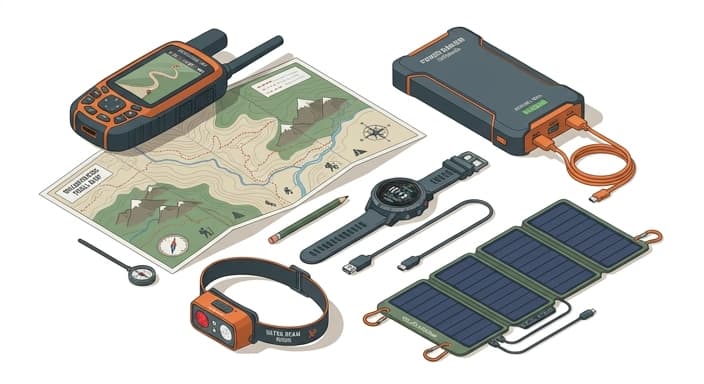
Outdoor tech should enable exploration without adding clutter or fragility, so opt for Adaptive Resilience gear that is rugged, reliable, and glove friendly.
Don’t rely solely on smartphones for navigation; invest in dedicated devices with multi-band GNSS, offline maps, and safety features to ensure you can navigate and call for help when needed.
Power management is critical: prioritize rugged, weatherproof power banks with high IP ratings, pass-through charging, and high-output PD 60W or more to support laptops, cameras, or drones.
Lighting matters: choose headlamps or lights with high lumen-to-weight efficiency and adaptive beam patterns suitable for night hikes and camping setups.
Adopting a design philosophy that emphasizes weatherproofing and durability over performative gadgets helps gear survive rugged terrain, extend trips, and keep him safe.
The call of the open trail, the serenity of a remote campsite, and the adrenaline of a mountain summit aren’t just hobbies; for many men, they are a primary source of grounding in an increasingly digital world. While the essence of the outdoors is disconnection, the right technology serves as a bridge, allowing the modern adventurer to push further, climb higher, and stay safer without sacrificing the spirit of exploration.
The Philosophy of "Adaptive Resilience"
When shopping for the outdoor enthusiast, it is easy to succumb to the "gadget-heavy trap"—the tendency to buy over-engineered, battery-draining devices that promise to do everything but often fail when faced with the reality of rugged terrain and unpredictable weather. We see this cycle every season: an influx of disposable power banks, flimsy solar chargers, and non-weatherproof devices that clutter a pack without providing any tangible benefit. At HootFinds, we reject the cycle of "performative outdoor tech." Instead, we embrace "Adaptive Resilience."
Adaptive Resilience is the art of selecting equipment that thrives in the wild. It is the recognition that the best outdoor tech is silent, reliable, and fundamentally rugged. It is gear that doesn't demand your attention but instead works quietly in the background to ensure safety, comfort, and precise navigation. By focusing on IP-rated weatherproofing, high-density energy storage, and tactile, glove-friendly interfaces, we curate a selection of tools that transform a standard trip into a masterclass in efficiency.
Precision Navigation: Beyond the Smartphone
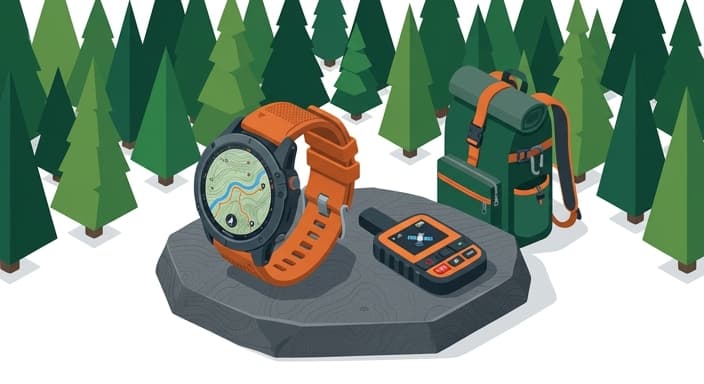
The most common mistake when outfitting a man for the outdoors is the over-reliance on a standard smartphone for navigation. While phones have impressive GPS capabilities, they are fragile, battery-hungry, and often lose signal in deep canyons or dense forests. A high-quality handheld GPS or a specialized multisport watch isn't just a backup; it is an essential piece of safety equipment.
Look for devices that utilize "multi-band GNSS" technology, which allows the device to track signals from multiple satellite constellations simultaneously. This provides pinpoint accuracy even in "urban canyons" or dense tree cover where standard GPS might drift. For the man who values data, a robust watch with offline topographic mapping and emergency satellite messaging capabilities—like the Garmin inReach series—provides a layer of security that a phone simply cannot match. The gift of peace of mind is, ultimately, the most valuable thing you can offer someone who loves to wander off the beaten path.
The Power of Sustainable Energy
The "low battery" notification is the death knell of a great adventure. Whether he is a backcountry photographer or a long-distance hiker, managing power is a constant logistical hurdle. The shift away from fragile, fold-out solar panels toward high-density, ruggedized power banks has been a game-changer.
When choosing a power bank, prioritize units with a high IP67 or IP68 rating. This means the device is dust-tight and capable of surviving submersion in water—a non-negotiable trait for gear that might end up in a kayak or a rain-soaked backpack. Look for "Pass-Through Charging" capabilities, which allow the bank to charge his devices while the bank itself is being topped up by a solar panel or wall outlet. Additionally, check for "PD" (Power Delivery) specs; a 60W or higher output means he can charge a laptop, a camera, or a drone in the field, not just a phone. A well-chosen power solution is the difference between a trip that ends at sunset and one that extends into a multi-day expedition.
Lighting the Path: Tactile and Intelligent Illumination
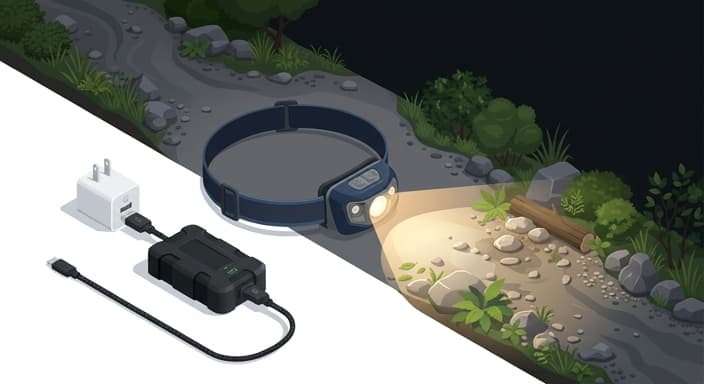
There is a stark difference between a cheap hardware-store flashlight and a purpose-built adventure headlamp. The best outdoor lighting is characterized by "lumen-to-weight" efficiency and intelligent beam patterns. For the man who enjoys night hiking or setting up camp after dark, a headlamp that features a "reactive lighting" sensor is a gold-standard gift. These sensors automatically adjust the brightness based on the distance of the object he is looking at, which saves battery life and prevents the "blinding rebound" effect when reading a map or working with close-up gear.
Beyond just brightness, consider the beam profile. A good light should offer a wide, diffused "flood" beam for campsite cooking and a tight, focused "spot" beam for trail finding. If you want to impress the tech-focused adventurer, look for headlamps with high CRI (Color Rendering Index) ratings, which provide more natural light, making it easier to identify trail markers or foliage colors in the dark. Always opt for rechargeable lithium-ion models over those requiring disposable batteries; it’s better for his pack weight and better for the planet.
Smart Monitoring: Keeping Tabs on the Environment
For the man who is as interested in the conditions as he is in the journey, portable environmental sensors are the ultimate "pro-level" upgrade. We are seeing a surge in compact, Bluetooth-enabled weather stations and air-quality monitors that pair with a smartphone to log real-time data. These devices can track ambient temperature, barometric pressure, humidity, and even altitude trends.
Why does this matter? A sharp drop in barometric pressure is a scientific precursor to an approaching storm, allowing him to adjust his plans before the clouds even darken. These sensors are incredibly small—often the size of a key fob—and can be clipped to a backpack strap. They turn a hike into a data-driven experience, helping him learn to "read" the weather by correlating digital data with his own observations. It’s an intellectual gift for the man who treats every trip like a mission.
The Art of Selection: Quality Over Quantity
When navigating the overwhelming world of outdoor technology, the most effective strategy is to focus on the "Core Three": Navigation, Power, and Visibility. These are the pillars that support every successful excursion. By opting for gear that is built to endure—MIL-STD-810 tested, IP-rated, and ergonomically designed—you are ensuring that your gift remains a reliable companion for years to come.
Avoid the flash-in-the-pan viral gadgets that prioritize gimmicks over grit. Instead, look for brands that have a legacy of performance in the field. When you invest in a piece of tech that is built for resilience, you aren't just buying a gadget; you are facilitating his next great story. The best outdoor tech should eventually become invisible, allowing him to focus entirely on the horizon in front of him. Whether it’s a high-accuracy GPS for his next summit bid or a ruggedized power bank for a week in the deep woods, the right choice will make his time outside more immersive, safer, and infinitely more enjoyable.
Common Questions
🤔
Frequently Asked Questions
What is Adaptive Resilience and why should it guide your outdoor tech gifts?▼
Adaptive Resilience is the idea of selecting equipment that works quietly and reliably in the wilderness, rather than chasing every flashy feature. It means prioritizing ruggedness, weatherproofing, long battery life, and glove-friendly interfaces that don’t fail under rain, mud, or cold. By choosing gear built for real-world conditions, you reduce the risk of gear failure that can derail a trip. This philosophy helps you curate gifts that add value without adding clutter or fragility.
Why choose multi-band GNSS devices over smartphones for navigation?▼
Multi-band GNSS devices can receive signals from multiple satellite systems at once, delivering more accurate positioning even in urban canyons or dense forests. Smartphones are highly capable but are also battery-hungry and prone to signal loss, which can leave you stranded. A dedicated handheld GPS or multisport watch with offline topo maps and emergency messaging offers a reliable safety net when signal is weak or unavailable. This is especially important for adventures far from cell coverage.
What features matter most in a rugged outdoor power bank?▼
Look for high IP ratings (IP67 or IP68) to resist dust and water immersion, ensuring the charger survives rain, rivers, and backpack drops. Pass-through charging lets you top up the bank while charging other devices, and Power Delivery (PD) with 60W or more output lets you power laptops, cameras, and drones in the field. Consider capacity, recharge speed, and a rugged enclosure with a secure grip. These traits collectively extend trip duration and reduce the risk of dead devices.
How should you evaluate outdoor lighting for him?▼
Evaluate lumen output relative to weight, ensuring a bright but compact option that doesn’t weigh down the pack. Look for intelligent beam patterns and modes (tight spot for trail, wide flood for camp) and a red-light or night-vision-friendly setting for wildlife watching. Glove-friendly switches, long battery life, and an IP-rated, impact-resistant build matter for reliability in rain, mud, or cold. A good headlamp should disappear into the background until you need it.
Explore Related Topics
Browse more gift ideas in the categories this article belongs to.