Blog6/16/2026
Best Eco-Friendly Kitchen Gifts for Thoughtful Homecooks
5 mins Read
The Briefing
Quick takeaways for the curious
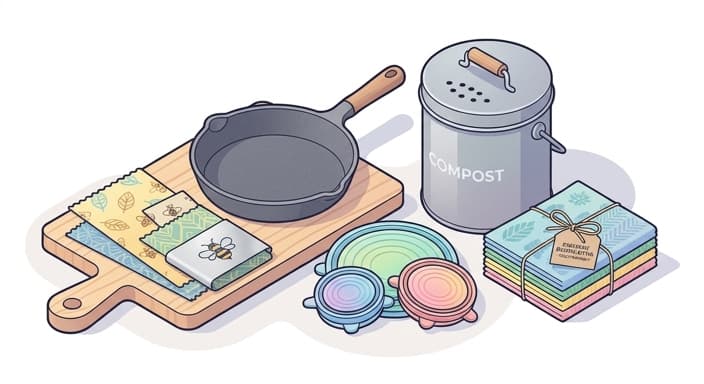
Beeswax wraps are the best eco-friendly substitute for plastic wrap, with starter kits around $18-$25 and a lifespan of about a year when cared for properly.
Cast iron skillets like Lodge are rugged and durable enough to be passed down, typically priced around $25-$40, but they require ongoing maintenance and cannot go in the dishwasher.
Silicone stretch lids help manage mismatched containers, cost about $15-$20, and are dishwasher safe, though some people find the tactile grip a bit annoying and they can be easy to misplace.
Countertop compost bins with charcoal filters are practical for apartment living, priced around $30-$50, and require occasional filter replacements to keep odors in check.
Reusable Swedish dishcloths replace disposable paper towels, are made of cellulose and cotton, and can absorb up to 20 times their weight in water.
Last Tuesday, my cousin Leo called me from the middle of an aisle at a big-box store, holding a set of plastic neon-colored mixing bowls that looked like they belonged in a dormitory cafeteria from 1998. He was trying to pick out a housewarming gift for his partner, who is suddenly obsessed with sourdough starters and high-hydration dough, but Leo was paralyzed. He wanted something that felt like a "grown-up kitchen investment" but didn't want to buy a bunch of plastic junk that would warp in the dishwasher by next month. He asked me, "Is there anything actually eco-friendly that doesn't feel like a hippie science project?"
Beeswax wraps instead of the plastic roll
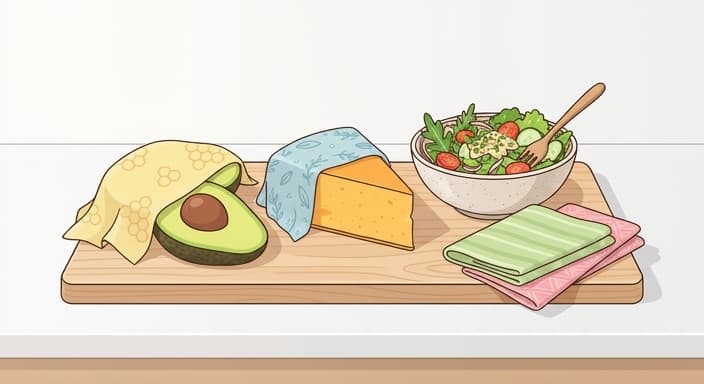
If you are still wrestling with a roll of cling film that sticks to itself more than your leftovers, stop it. Beeswax wraps are the absolute gold standard for replacing that flimsy petroleum-based nightmare. Brands like Bee’s Wrap or Abeego make sheets infused with beeswax, resin, and jojoba oil that get tacky when warmed by your hands. They mold perfectly over a half-cut avocado, a block of cheddar, or a bowl of salad. You can find starter kits for around $18 to $25, which is a solid price point for a gift that lasts a year. The catch is that you have to wash them with cool water and mild soap; hit them with hot water, and the wax coating will melt right off, leaving you with a sticky, useless piece of cotton.
Cast iron skillets that outlive your landlord
There is something inherently un-chic about non-stick pans that have started to flake their chemical coating into your eggs after six months. A Lodge cast iron skillet is the antithesis of this. It is a hunk of heavy, American-made iron that you can pass down to your grandchildren. They are rugged, they conduct heat like a dream, and you can pick one up for around $25 to $40. The trade-off is the maintenance. You cannot just toss it in the dishwasher, leave it soaking in the sink, or ignore it after cooking. If you don't dry it immediately and keep it lightly oiled, it will rust faster than a abandoned sedan in the Pacific Northwest.
Silicone stretch lids for the mismatched container hoard
Most home cooks have a cabinet full of random glass jars and mismatched ceramic bowls that don't have matching lids. Instead of buying a new set of plastic Tupperware, buy a set of food-grade silicone stretch lids. They come in various sizes, they’re dishwasher safe, and they grip onto glass, metal, and ceramic like a suction cup. A decent set usually runs about $15 to $20. What might bug you is the tactile experience; if you have a sensory aversion to the feeling of rubbery, grippy materials, you might find them annoying to stretch over a square container. They are also notoriously easy to lose in a cluttered drawer.
Compost bins that don't smell like a landfill
If someone wants to start composting but lives in a tiny apartment, they aren't going to have a pile in the backyard. A countertop compost bin, specifically one made of stainless steel with a charcoal filter, is a lifesaver. You can pick up a sleek, non-clunky model for $30 to $50. It keeps the fruit flies away and hides the smell of rotting banana peels. The downside here is the filter replacement. You have to swap out those charcoal discs every few months to keep the odor-blocking properties active, and those little refills are an annoying recurring cost you have to account for.

Reusable Swedish dishcloths for the perpetual spill
Paper towels are the ultimate kitchen crutch. We all know they are wasteful, but we reach for them anyway because they are convenient. Swedish dishcloths are essentially a cross between a sponge and a paper towel. They are made of cellulose and cotton, and one cloth can absorb 20 times its weight in water. When they get gross, you just throw them in the washing machine or the top rack of the dishwasher. You can grab a pack of five or six for around $15 to $20. The only trade-off is the texture; when they are dry, they feel like stiff, dried-out construction paper, which can be jarring the first time you pull one out of the package. They only get pliable once you wet them.
Stasher bags instead of the zipper-lock waste
I have a drawer full of Ziploc bags that I keep reusing until they look like a crime scene, and it’s embarrassing. Stasher bags are the upgrade everyone actually wants but rarely buys for themselves. They are made of food-grade silicone, they are airtight, and you can boil, freeze, or microwave them. A single bag will run you $10 to $15, which feels like a lot for a "baggie," but they are nearly indestructible. The limitation is the opening; because the silicone is thick and rigid, it can be a total pain to clean the corners if you’ve used them for something saucy or oily. You’ll need a bottle brush or some serious patience to get them completely pristine.
If you want the one gift that bridges the gap between "I care about the planet" and "I actually enjoy cooking every single night," go for the Lodge cast iron skillet. Yes, the maintenance sounds intimidating to people who grew up with the dishwasher as their primary kitchen appliance, but there is no replacement for the sear it gives a steak or the crust it builds on a loaf of cornbread. It is a $30 workhorse that replaces three different Teflon pans, and it makes every meal feel more intentional. Just tell your friend to buy a good stiff brush for cleaning, and they will never have to buy another pan again.
Common Questions
🤔
Frequently Asked Questions
What makes these gifts eco-friendly kitchen options?▼
Each item replaces a common disposable or plastic-based product with a durable, reusable alternative (beeswax wraps vs plastic wrap, cast iron vs non-stick that wears out, silicone lids vs mismatched plastic containers). The choices cover a range of uses—storage, cooking, waste reduction, and cleaning—while offering long lifespans at accessible price points.
Which gift is best for someone just starting to adopt eco-friendly kitchen habits?▼
Beeswax wraps offer a simple, practical swap for plastic wrap and are supported by a reasonable starter price around $18-$25. They address a common pain point for new eco-shoppers without requiring major changes to cooking routines. Silicone lids are another easy upgrade for those tired of mismatched containers.
How should I care for these items to extend their life?▼
Beeswax wraps should be washed with cool water and mild soap, avoiding hot water which can melt the wax. Cast iron requires drying after cooking and light oiling to prevent rust, and it should not go in the dishwasher. Silicone stretch lids are dishwasher safe, and countertop compost bins use replaceable charcoal filters to maintain odor control.
Which item offers the best durability or value for money?▼
A Lodge cast iron skillet is highlighted as exceptionally durable and family-friendly, with an ability to outlive its owner and be passed down, typically priced around $25-$40. While more maintenance is required than some alternatives, its longevity and performance often justify the cost as a long-term kitchen investment.
Explore Related Topics
Browse more gift ideas in the categories this article belongs to.