Blog6/18/2026
Best Summer Kitchen Gifts for Foodies: Practical & Luxurious
5 mins Read
The Briefing
Quick takeaways for the curious
The article argues that gifts for foodies should favor high-end materials over more gadgets to improve daily meal prep.
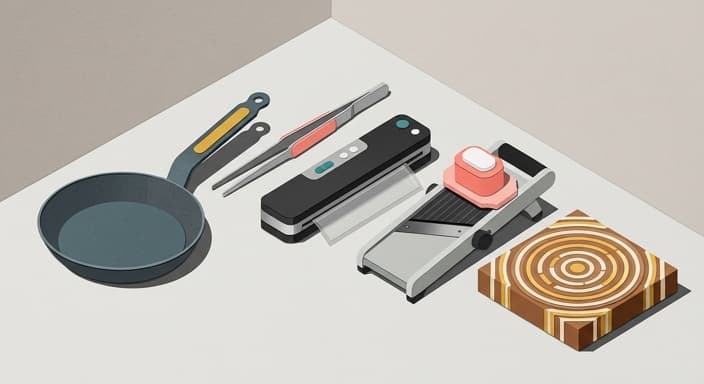
Pro-grade plating tweezers add precision and visual flair, turning home plating into a restaurant-like experience.
A high-quality Japanese mandoline delivers razor-thin, uniform slices but requires careful handling and guard maintenance.
Heavy-gauge carbon steel pans offer durable, temperature-responsive performance with proper seasoning and ongoing care.
For long-term storage, a vacuum sealer is a practical upgrade for sous-vide enthusiasts or bulk buyers.
Last Tuesday, a reader emailed me asking for a wedding gift for a couple who already has every kitchen appliance imaginable. No more air fryers, no more monogrammed cutting boards. I told her to stop looking at electrics and start looking at high-end materials that make the daily grind of meal prep actually enjoyable. People don't need more gadgets; they need tools that don't quit.
Pro-grade chef’s tweezers for plating
If you want to make a home cook feel like a line cook, buy them a set of offset plating tweezers. You see these in every professional kitchen because they turn a messy pile of herbs into an elegant garnish with zero effort. They are precise, stainless, and honestly fun to use when you’re finishing a plate. I personally recommend the 12-inch heavy-duty versions because the short ones feel like toys. Expect to spend around $15 to $25 for a professional-grade set.
The catch is that they are basically giant surgical tools, so if you have a cramped drawer, they tend to snag on everything. Also, you have to be careful not to poke yourself or accidentally flick a stray basil leaf across the kitchen. If you're buying for someone who likes visual flair, this is it.
The Japanese steel mandoline
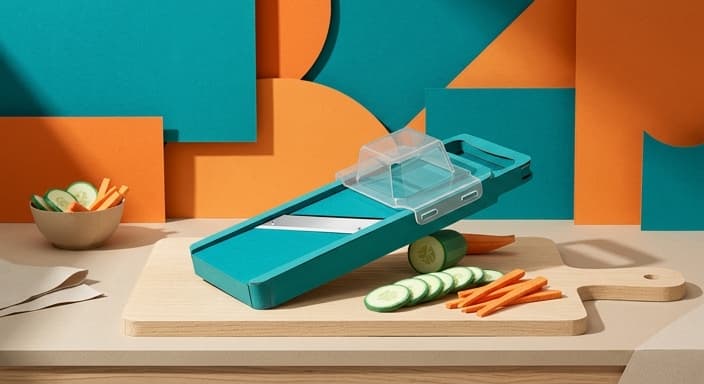
People are terrified of mandolines, and they should be, because the cheap plastic ones are death traps. A high-quality Japanese mandoline—look for brands like Benriner—is a totally different animal. It’s sharp enough to slice a radish into a translucent sheet with a single pass. It’s the difference between a salad that feels like a chore and a salad that looks like it came from a bistro. You can find these for $35 to $50.
The trade-off is the maintenance. The blade is so sharp that you must use the included guard, which is admittedly annoying to set up. If you don't use the guard, you will lose a tip of your finger, no questions asked. It’s a tool that demands respect, but it rewards the user with perfect, consistent slices every single time.
Heavy-gauge carbon steel pans
Stop buying non-stick pans that go to the landfill after eighteen months of daily use. Carbon steel is what you want. It behaves like cast iron—meaning it builds a slick, seasoned surface—but it’s lighter and responds to temperature changes much faster. Brands like Misen or Matfer Bourgeat offer these for $50 to $90. They are virtually indestructible and can go from the stovetop directly into a screaming hot oven without warping.
What might bug you is the seasoning process. You can't just put these in the dishwasher. You have to scrub them, dry them over the flame, and wipe them with a thin layer of oil. If you leave them sitting in the sink filled with soapy water, they will rust overnight. It’s a bit of work, but the pan will outlive you.
High-density end-grain cutting blocks
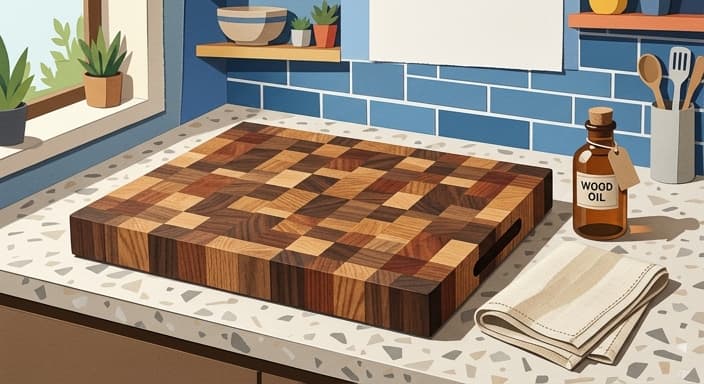
Most people are using cheap, thin bamboo boards that slide around the counter and warp the moment they hit humidity. Get them a thick, end-grain walnut or maple block. The wood fibers run vertically, meaning your knife edge goes between the fibers rather than dulling against them. These heavy blocks are a luxury, usually running $100 to $200. They are a permanent fixture, not something you tuck away.
The limitation here is the maintenance and the weight. These boards need a coat of food-safe mineral oil every month or they will crack. They also weigh ten pounds or more, so they aren't for the person who needs to move their gear around a small apartment. They also require a dedicated spot on the counter because moving them is a project.
Vacuum sealer for long-term storage
If your foodie friend buys in bulk or experiments with sous-vide, a decent vacuum sealer is a game changer. It keeps herbs fresh for weeks and prevents freezer burn on expensive proteins. Look for models like Nesco or Weston in the $80 to $150 range. They are workhorses that keep the fridge organized and significantly reduce food waste, which is the biggest hidden cost in any kitchen.
The friction is in the proprietary bags. The machine works great, but you will eventually run out of the specific texture-patterned bags you need for the seal to take. You cannot use standard thin plastic bags from the grocery store. It’s an ongoing cost that people rarely calculate until they’re standing in the kitchen with a pile of meat and no bags left.
Digital infrared thermometer
I am not talking about the probe kind that you stick into a steak. I mean the laser gun style. It is the best tool for checking if your cast iron is hot enough for a sear or if your baking stone is ready for pizza. It makes guessing obsolete. You can get a reliable one for around $25 to $40. It is the ultimate "I’m tired of burnt butter and uneven crusts" gift.
The catch is that they can't read through glass or steam. If you try to shoot the temperature of a casserole through a Pyrex lid, you’re just going to get a reading of the glass, not the food. It’s also just a fun toy that people use for way more things than they should, like checking the temperature of their coffee or their AC vents.
The best gift on this list is the carbon steel skillet. It hits the perfect intersection of utility, longevity, and "pro" status. Most people think they need a fancy high-tech machine, but the reality of a great kitchen is having one piece of metal that works exactly how you want it to for the next thirty years. It’s a gift that teaches someone how to cook better, not just how to own more stuff. Buy a 10-inch or 12-inch version, wrap it in butcher paper, and tell them to keep it oiled. They’ll be thanking you when they’re searing their first perfect steak.
Common Questions
🤔
Frequently Asked Questions
What is the core gift strategy emphasized in the article?▼
The piece argues to move away from electronic gadgets and toward high-quality materials that enhance daily meal prep and durability. The goal is to give tools that are reliable, not disposable, and that add tangible joy to cooking. The tone is practical and design-focused, favoring performance and longevity.
Which item is highlighted for improving presentation at home?▼
Pro-grade plating tweezers transform a messy heap of herbs into a neat garnish and give home cooks line-cook precision. They’re stainless, precise, and genuinely fun to use for finishing plates. Note that the longer 12-inch versions are preferred for real control, and there can be drawer-fit challenges due to their size. Expect to spend around $15 to $25 for a professional-grade set.
What should buyers know about the Japanese mandoline?▼
A high-quality Japanese mandoline delivers razor-thin, uniform slices, but it’s sharp and requires respect. Brands like Benriner are recommended for their quality. The included guard is essential for safety, and maintenance is necessary to keep the blade in good condition. Price typically ranges from $35 to $50.
Why are carbon steel pans recommended, and what care do they require?▼
They offer durable, fast-heating performance and can go from stovetop to oven without warping. They require seasoning, careful hand washing, thorough drying, and a light oiling to maintain the patina. They can rust if left in soapy water or neglected, but with proper care they outlast many non-stick pans. Brands like Misen or Matfer Bourgeat are commonly cited, with typical prices around $50 to $90.
Explore Related Topics
Browse more gift ideas in the categories this article belongs to.