Blog6/23/2026
Best Eco-Friendly Kitchen Gadgets for Thoughtful Homeowners
6 mins Read
The Briefing
Quick takeaways for the curious
Eco-friendly kitchen gadgets should balance practicality, durability, and price, so start with proven options rather than trend chasers.
Silicone food covers are inexpensive, dishwasher-safe, and work well on smooth-rimmed containers, making them a solid entry point for reducing cling wrap waste.
Beeswax wraps add flexibility and aesthetics for odd shapes but cannot handle hot foods or raw meat and require eventual replacement.
Electric countertop composters like the Lomi offer fast, odorless waste processing but at a high upfront cost and ongoing energy use; as a lower-tech alternative, a stainless steel bin with a carbon filter can control odors with regular filter maintenance.
Switching to durable, reusable scrubbing tools such as walnut scour pads and wooden brushes reduces microplastic waste and improves kitchen longevity.
Shopping for an eco-friendly homeowner is a total nightmare because most "green" products are glorified junk that break after two uses. You’re either buying bamboo-fiber plates that warp in the dishwasher or overpriced gadgetry that solves problems nobody actually has.
What are the best reusable alternatives to plastic cling wrap?
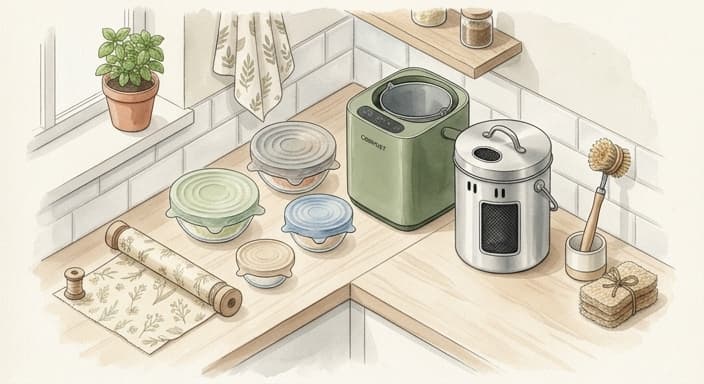
Let’s be real: plastic wrap is the worst. It never sticks where you want it to, and you end up using five feet just to cover half an onion. For most people, Silicone Stretch Lids are the best entry point. These sets usually cost around $15 to $25, and they are essentially heavy-duty rubber bands for your bowls. They handle the fridge fine and you can just toss them in the dishwasher afterward. The catch is that they only work on smooth-rimmed containers; if you’re trying to stretch one over a wonky, chipped ceramic bowl, it’s going to ping off and hit you in the face.
If you want something a bit more aesthetic, look into Beeswax Wraps. Brands like Bee's Wrap are the standard here, with multi-packs running about $18 to $30. They mold perfectly to odd-shaped leftovers and actually let the food breathe a little. The trade-off is that you cannot use these on hot food or raw meat, because the wax melts and harbors bacteria. You also have to be prepared for the fact that they eventually lose their tackiness after a year, meaning you have to compost them and buy new ones.

Is there a way to compost in a kitchen without the smell of death?
Kitchen composting used to mean keeping a bucket of rotting scraps under your sink until the fruit flies took over your life. Thankfully, electric food cyclers have changed the game. The Lomi or similar countertop dehydrators are the gold standard, though they aren't cheap; you’re looking at $350 to $500 for a reliable unit. These machines take your scraps, grind them up, and heat them into a dry, dirt-like mulch in a few hours. It’s quiet and it kills the smell instantly. The downside is that they pull a decent amount of electricity, so if you are trying to be 100% net-zero on your energy use, this might sting a little.
If you want a low-tech route, get a high-quality stainless steel countertop bin with a carbon filter. Look for brands like Utopia Kitchen; these typically go for $20 to $35. They look sleek on the counter, and the charcoal filter catches the funk before it hits your nose. The friction here is maintenance. You have to be diligent about replacing those carbon filters every three to four months, or the smell will inevitably leak out, and then you’re right back to dealing with a stinky, fly-ridden kitchen.
What kind of sponges actually work without being plastic nightmares?
Standard yellow-and-green sponges are basically microplastic delivery systems that fall apart in a week. Your best move is to switch to Walnut Scour Pads or cellulose sponge cloths. A pack of these will cost you about $10 to $15, and they hold up way longer than the supermarket stuff. They scrub burnt-on pasta off a pan with zero effort. The limitation is that they don't hold soap suds quite as well as those giant fluffy plastic sponges, so you’ll find yourself re-soaping your sponge more frequently while you wash a sink full of dishes.
For the heavy-duty stuff, invest in a wooden dish brush with replaceable heads, like those from Redecker. These brushes usually run $12 to $20, with replacement heads costing about $6. They look great sitting on the side of the sink and they don't scratch up your non-stick pans. The trade-off is the wood handle. If you leave it sitting in a pool of water at the bottom of your sink, the wood will eventually rot or get moldy. You have to treat it like a real tool and hang it to dry, or it won't last more than a few months.

Are reusable silicone baking mats actually worth the hype?
If you bake cookies or roast veggies, you are likely burning through rolls of parchment paper. Silpat is the big name here, and their mats cost around $25 to $35 each. They create a perfect non-stick surface, and nothing—I mean nothing—sticks to them. You save a ton of money over time since you aren't buying boxes of paper every other month. The catch is they are impossible to store if you don't have a flat spot for them. If you try to roll them up or shove them in a crowded drawer, they get weird creases that trap crumbs, and they lose their flat, stable base over time.
If you prefer something you can toss in the dishwasher, some people prefer high-grade stainless steel sheet pans that are seasoned correctly. A good heavy-duty pan will set you back $30 to $50. Once you get a good patina on them, they function almost like a non-stick surface without the chemical coating. The limitation is the learning curve; if you don't know how to season metal, everything will stick to it like cement, and you’ll spend your afternoon scrubbing with steel wool.
What kitchen gadgets for homeowners are total trash?
Avoid anything that claims to be "biodegradable" but feels like plastic. If you put it in the ground and it’s still there in five years, you got scammed. Stay away from "eco-friendly" bamboo products that are clearly glued together with heavy resins. If it smells like a chemical factory when you take it out of the box, it isn't helping the planet.
- Avoid "biodegradable" plastic bags that require industrial heat to break down; they’re just regular plastic in disguise.
- Skip the bamboo plastic-blended travel mugs; they are brittle and crack if you drop them once.
- Steer clear of any gadget that requires a proprietary app just to turn on or monitor its "energy efficiency."
- Don't buy cheap "eco" starter kits from unknown dropshippers; the items are usually low-quality seconds destined for a landfill.
- Avoid fancy filtered water pitchers that require proprietary filters costing $20 a pop; they create more waste than just using a simple tap attachment.
Keep your kitchen simple. The most eco-friendly gadget is the one that stays in your drawer for a decade instead of the one you replace every spring. Focus on high-quality materials like glass, stainless steel, and natural fibers, and you’ll save money while keeping your house from turning into a pile of disposable waste.
Common Questions
🤔
Frequently Asked Questions
What are the most practical eco-friendly kitchen gadgets for beginners?▼
For beginners, start with silicone food covers; they’re inexpensive, dishwasher-safe, and work well on smooth rims. Beeswax wraps add aesthetic flexibility and allow the food to breathe, though they’re not suitable for heat or raw meat and will need replacing after about a year. If you want to cut down on waste without heavy electronics, these two options cover most common use cases.
Do silicone lids or beeswax wraps offer better value?▼
Silicone lids are an affordable entry point around $15-$25 and seal most bowls, but they only work on smooth-rimmed containers. They’re dishwasher-safe and reusable, reducing disposable plastic wrap usage. Beeswax wraps, typically $18-$30 for multi-packs, offer a more aesthetic option and mold to odd shapes, but they can’t be heated and will lose tackiness over time. Consider a mix of both to cover different leftovers and storage needs.
Is it worth buying an electric kitchen composter?▼
Electric countertop composters like the Lomi turn scraps into dry mulch in a few hours, dramatically reducing kitchen waste. They typically cost about $350 to $500 for a reliable unit and require occasional maintenance. They do use electricity, which may complicate a strict net-zero goal for some households. As a lower-tech alternative, a stainless steel countertop bin with a carbon filter helps control odors with ongoing filter replacements.
What should homeowners know about maintenance and long-term costs of these gadgets?▼
Maintenance and long-term costs matter when evaluating eco kitchen gadgets. Sponges and brushes like walnut scour pads or cellulose cloths last longer than disposable options but still need replacement over time. A wooden dish brush with replaceable heads lasts longer if you dry it properly, but the wood can rot if left soaking. Budget for occasional replacements and routine cleaning to maximize the value of these tools and avoid waste.
Explore Related Topics
Browse more gift ideas in the categories this article belongs to.