
Blog2/14/2026
Milan 2026: Fake Snow, Space-Age Housing, and the Future of Winter Games
5 mins Read

The Briefing
Quick takeaways for the curious
The Milan Olympic Village was designed by SOM using modular techniques originally developed for lunar settlements.
The 2026 Games rely on 3.1 million cubic yards of artificial snow, highlighting a major environmental crisis.
Ski Mountaineering (Skimo) makes its debut as the first new Winter Olympic discipline since 2002.
Streaming services like Peacock have decentralized viewing, moving from scheduled TV to on-demand and cinema experiences.
Future Winter Games (2030 onwards) face strict 'climate positive' mandates as natural snow becomes scarcer.
The 2026 Milan Cortina Winter Games are far more than a high-stakes athletic competition; they represent a massive logistical and cultural experiment unfolding across Northern Italy. In an era of "Olympic overload," the signal-to-noise ratio often leans heavily toward the latter, with the sheer volume of broadcasts and statistics obscuring the deeper narratives. To truly understand these Games, one must look past the podium and into the structural shifts—architectural, environmental, and technological—that are redefining the Olympic movement for a modern, sophisticated audience.
This is a Games of geographic decentralization, stretching from the urban intensity of Milan to the heights of Cortina d’Ampezzo, and it demands we rethink what it means to host a winter spectacle in a warming world.
1. The Architecture of "Performance and Partying"
The Olympic Village in Milan’s Porta Romana railway yard was designed to solve a uniquely Olympic contradiction: how to house thousands of elite competitors who are on completely different physical and emotional schedules. The winning bid came from the New York-based firm Skidmore, Owings & Merrill (SOM), who beat out a staggering 71 other studios from nine countries. This victory by an American firm on Italian soil caused what lead designer Colin Koop described as "polite grumbling" among local architects, but the technical sophistication of the bid was undeniable.
Remarkably, the design was born not in the Alps, but in outer space. SOM’s team had previously partnered with the European Space Agency and MIT to design a lunar settlement, and they applied that same modular, high-efficiency logic to Milan. To meet an immovable deadline, the Village was built at "warp speed" using prefabricated elements—including ready-made bathrooms that were crane-dropped and assembled on-site. The layout is meticulously engineered to balance the need for "silence and focus" for those yet to compete with the "partying" requested by those who have finished.

Unlike previous "white elephant" venues, this site is designed for a permanent second life. Immediately following the Games, it will be converted into Europe’s largest student housing complex with 1,700 beds, ensuring the architecture remains a vital part of Milan’s urban fabric rather than a decaying relic.
2. The $1 Billion "Fake Snow" Crisis
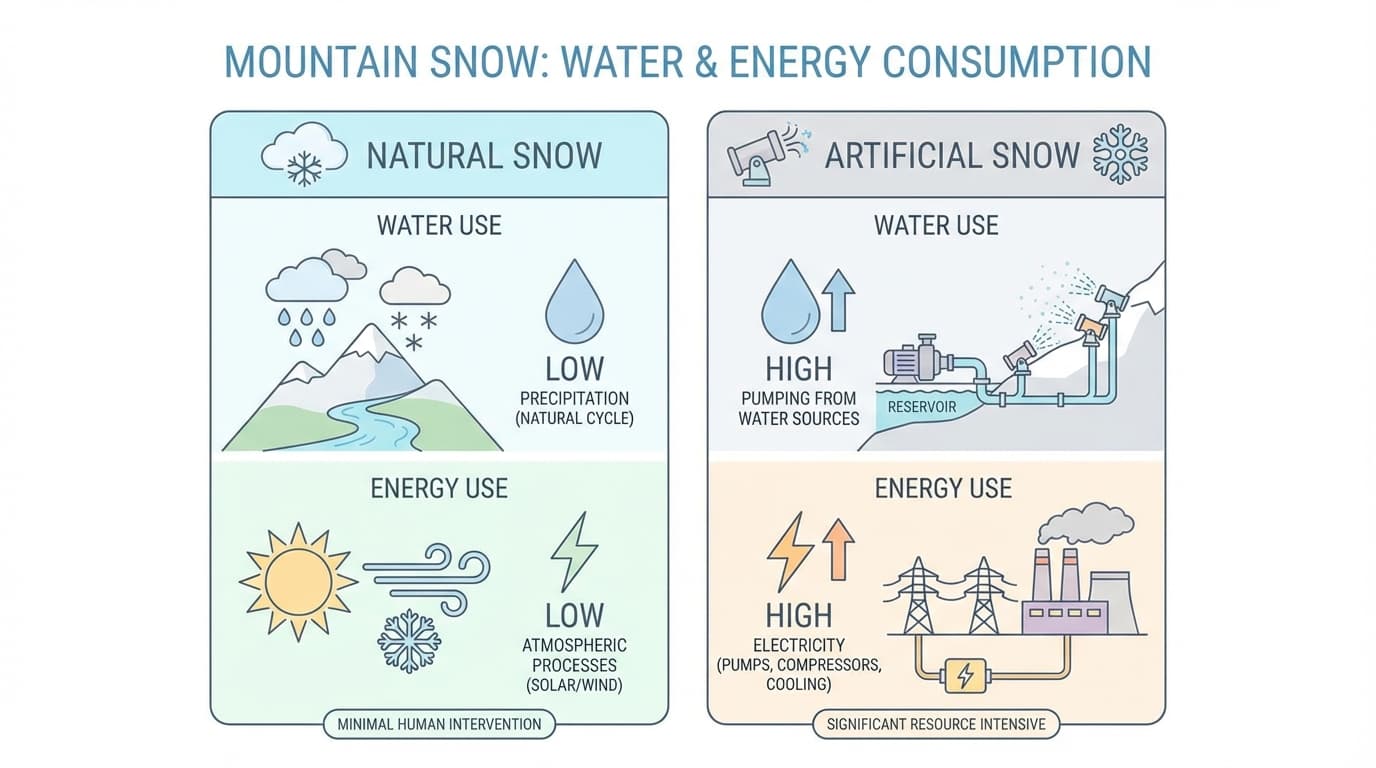
While the Dolomites provide a breathtaking aesthetic, they are the front lines of an environmental paradox. Italy has already lost 265 ski resorts to rising temperatures, forcing the 2026 organizers into a massive, industrial-scale intervention. To ensure viable surfaces, the Games have required the production of 3.1 million cubic yards of artificial snow, consuming 250 million gallons of water—the equivalent of nearly 380 Olympic-sized swimming pools.
This reliance on "fake snow" is a costly necessity; in the U.S. alone, low-snow years cost the ski industry over $1 billion and 17,400 jobs. However, the situation creates a devastating "snowball effect." The energy-intensive snowmaking machines are often powered by fossil fuels, which exacerbate the very climate change causing the snow shortage. Furthermore, this industrial snow is slicker and icier than natural powder, fundamentally changing the physics of the sport and increasing the physical risk to the athletes who navigate it.
3. Ski Mountaineering’s High-Stakes Debut
In a strategic move to capture a thrill-seeking audience and break a 24-year status quo, the IOC has introduced Ski Mountaineering, or "Skimo"—the first new discipline added to the Winter Games since Skeleton debuted in 2002. Skimo is an uncompromising test of versatility that combines cross-country skiing, climbing, and downhill racing.
The competition, featuring "sprint" and "mixed relay" formats, involves using adhesive "skins" on the bottom of skis to trek uphill. Competitors then perform a "speed hike" with their skis strapped to their backs before transitioning back to downhill mode for a high-speed race to the finish. Its inclusion signals a broader pivot toward adventurous, high-intensity disciplines as the Games attempt to remain culturally relevant to a generation that prizes raw mountain skills over traditional, static formats.
4. The Streaming Revolution and the "De-centralization" of the Spectator
The 2026 Games have completed the transition of the Olympics from a scheduled television event to a "one-stop shop" of on-demand content. While U.S. viewers must navigate a six-hour time gap with Italy, streaming has effectively integrated the Games into the logistics of daily life. Peacock has moved beyond being a mere broadcaster, offering "always-on" commentary and unique subscription bundles tied to services like Instacart+ and Walmart+.
This shift is about the de-centralization of the spectator experience. Viewers can now access first-person drone views that provide a high-speed, immersive perspective of mountain events, or they can head to select AMC Theatres to watch live daytime coverage on the big screen. By offering deep discounts to students, military, and medical professionals, the Games are no longer just an event you watch—they are a service you subscribe to, available in your pocket or at the local cinema.

5. History-Making Upsets and Individual Legacies
As of February 14, the athletic narrative has been defined by a fierce battle for the top spot. Norway and Italy are currently deadlocked in the medal lead with 18 total medals each, with the Italians drawing immense momentum from the "home soil" advantage. However, the most significant psychological shift in the tournament occurred on the curling ice, where the U.S. women’s team defeated Canada for the first time in eight Olympic games—a historic victory that shattered the sport's traditional hierarchy.
Individual milestones are equally compelling. Switzerland’s Marco Odermatt has energized the Alpine skiing world; after his performance in the Men’s Giant Slalom, he remains on a path to secure a "medal in every color" at these Games. Meanwhile, 21-year-old American Jordan Stolz is on the verge of making history in the Men's 500m speed skating, aiming to become the first American man to win the event in two decades.
A Look Toward 2030 and Beyond
As we move through the final week of competition in Milan and Cortina, the focus is already shifting to the existential ultimatum facing the Winter Olympics. The IOC has mandated that starting with the 2030 French Alps and 2034 Salt Lake City Games, all host cities must be "climate positive," implementing lasting zero-carbon solutions rather than simple offsets.
Milan Cortina’s struggle with snow production and its innovative student-housing transition are a preview of this future. As climate change continues to shrink the pool of eligible mountain locations, the global community is left with a daunting question: In a world where natural snow is no longer a guarantee, how will our definition of "winter games" change when the environment no longer supports the tradition?
Common Questions
🤔
Frequently Asked Questions
Who designed the Olympic Village for the 2026 Milan Games?▼
The Olympic Village was designed by the American architectural firm Skidmore, Owings & Merrill (SOM), utilizing modular construction techniques inspired by space exploration projects.
What is the new sport added to the 2026 Winter Olympics?▼
Ski Mountaineering, also known as 'Skimo,' is the new discipline added to the 2026 Games. It combines cross-country skiing, climbing, and downhill racing.
Why is artificial snow a controversy at the Milan Cortina Games?▼
The production of artificial snow requires massive amounts of water (250 million gallons) and energy, exacerbating climate change issues while creating slicker, more dangerous surfaces for athletes.