Blog2/18/2026
Stop Eating Local? 5 Shocking Facts About Your Food's Carbon Footprint
5 mins Read
The Briefing
Quick takeaways for the curious
Transport accounts for less than 10% of food emissions; production methods matter more than food miles.
Beef produces nearly 60kg of CO2e per kg, roughly 30 times more than beans or legumes.
The 'Rule of Thirds' suggests reducing animal protein by 33% and replacing it with plants for massive impact.
Food waste contributes to 8.6% of global emissions, making proper storage essential.
Plant-forward diets provide high carbohydrate availability, supporting endurance athletic performance.
We’ve all been there: paralyzed in Aisle 4, staring at a "local" label and wondering if it’s worth the extra three dollars for the planet’s sake. In an era of record-breaking temperatures, grocery shopping has become a source of genuine climate anxiety. We want to do right by the Earth, but the labels—organic, grass-fed, plastic-free—often feel like a maze of conflicting priorities. To make this easier, many shoppers are turning to durable to start their sustainable journey.
Enter the "Climatarian" diet. A portmanteau of "climate" and "vegetarian," the term was recognized by The New York Times as a top new food word as early as 2015. But don't let the name fool you: this isn't a strict mandate for veganism. It is a pragmatic, data-driven lifestyle focused on one core mission: eating to reverse climate change. By bridging the gap between life-cycle assessments and our dinner plates, the Climatarian approach shifts the focus from rigid rules to high-impact choices.
Here are five surprising truths about how your next grocery trip can reshape the map of our planet.
1. The Local Food Myth: Why "What" Matters More Than "Where"
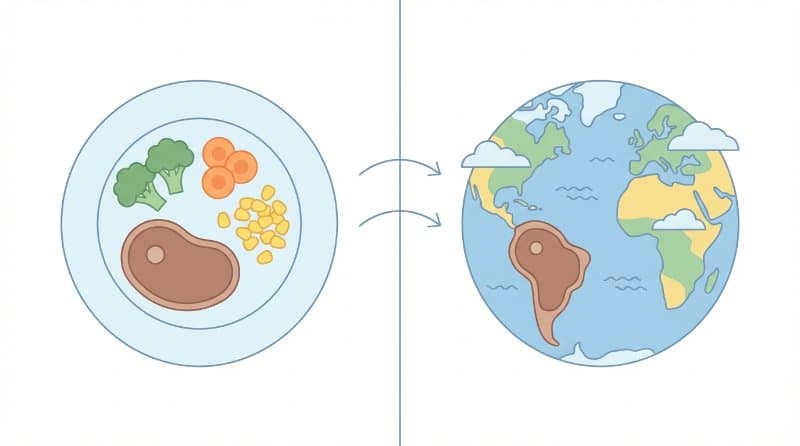
It is one of the most enduring pieces of advice in the green movement: eat local to save the planet. While supporting neighborhood farmers is fantastic for the local economy, the scientific reality is that for the vast majority of foods, transport accounts for less than 10% of the total carbon footprint. For beef, transport emissions are often as low as 0.5%.
The environmental impact of our food is overwhelmingly determined by what happens at the farm stage—land use, methane production, and fertilizer—rather than how many miles the truck traveled. This leads to a counter-intuitive reality: a plant-based meal from another continent often has a significantly lower footprint than a local steak. As the research in Science indicates:
"Especially for foods with a large footprint, transport as a share of the food's total emissions is fairly insensitive to the distance traveled."
2. The Heavy Hitters: Why Beef and Lamb Dominate the Map
If you’re looking for the "number one" offender in the food system, look no further than red meat. A landmark 2014 study revealed that beef is in a league of its own, using 28 times more land and 11 times more water than the production of pork or poultry. Because ruminant animals like cows and sheep produce methane during digestion and require vast amounts of feed, their footprint is staggering compared to other proteins.
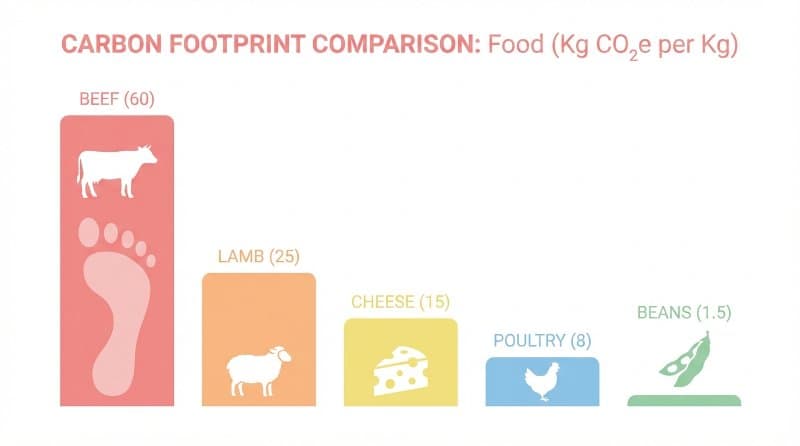
To visualize the hierarchy of impact, here is the greenhouse gas (GHG) emissions breakdown per kilogram of food, measured in kilograms of carbon dioxide equivalents (kg CO2e):
- Beef (Meat): 59.6 kg CO2e
- Lamb & Mutton: 24.5 kg CO2e
- Cheese: 21.2 kg CO2e
- Poultry: 6.1 kg CO2e
- Beans/Legumes: < 2.0 kg CO2e
Choosing beans over beef isn't just a slight improvement; it's a 30-fold reduction in emissions.
3. The "Protein Flip": Mastering the Rule of Thirds
The beauty of the Climatarian diet is its commitment to "progress over perfection." You don't have to go 100% vegan to make a massive dent in your footprint. In fact, swapping just 10% of your daily calories from beef and processed meats to plant-based alternatives like nuts or legumes can cut your food-based carbon footprint by 33%. For inspiration, a good can provide easy alternatives.
A core strategy here is the "Rule of Thirds" for a sustainable Protein Flip:
- Reduce your current animal protein intake by one-third.
- Replace that third with high-quality plant-based sources like lentils, tofu, or chickpeas.
- Refine the final third by choosing medium-GHG proteins like poultry or pork, or opting for grass-fed beef.
This three-part strategy ensures you’re hitting your nutritional goals while making a scientifically significant impact on global emissions.
4. Your Crisper Drawer: The Front Line of Climate Change
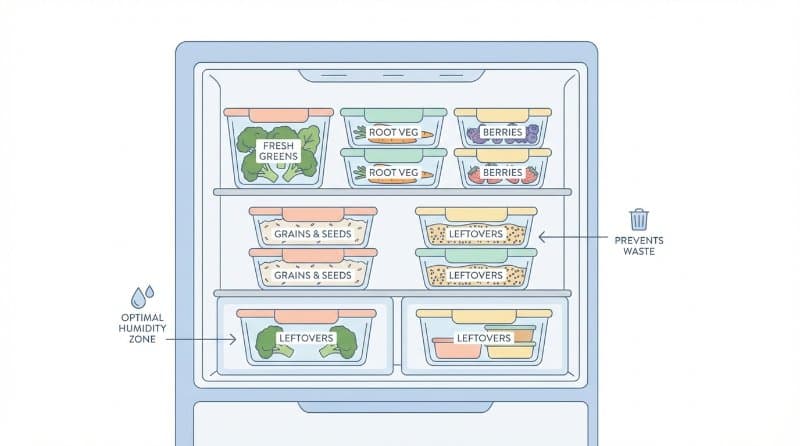
The most effective climate-saving tool in your house isn't a solar panel—it's your trash can. Food waste accounts for a staggering 8.6% of global GHG emissions. When we toss a wilted bag of spinach, we aren't just wasting an ingredient; we are wasting the 70% of global freshwater and 40% of habitable land used to grow our food.
Improving your "food literacy" is a vital climate skill. To avoid "leftover fatigue," try storing prepared ingredients separately using high-quality rather than as finished meals. This allows you to mix and match flavors throughout the week. Additionally, look for recipe cards at farmers' markets to help you navigate unfamiliar seasonal produce. As the data shows:
"The avoidance of food waste could reduce the environmental impact of food by 30-40 percent."
5. Elite Performance on a Low-Carbon Plate
There is a lingering myth that high-performance athletics requires a diet heavy in animal products. On the contrary, plant-forward diets can offer a distinct "performance win": carbohydrate availability. Plant-based plates naturally support the high carbohydrate needs of endurance athletes, which is essential for maintaining glycogen stores during heavy training. Many athletes now supplement with to ensure recovery without the environmental cost.
Tools like the "Athlete’s Plate" or the "Planetary Health Diet for Athletes" show that a well-planned, plant-forward diet can actually improve health markers like blood pressure and cholesterol without compromising aerobic performance. By focusing on nutrient-dense plants, athletes can fuel their training and their recovery while significantly reducing the ecological footprint of their high-energy requirements.
Conclusion: The Future is Ultra-Flexitarian
As our global population marches toward 10 billion, the shift toward an "ultra-flexitarian" future—one of mostly plants where animal products are used in extreme moderation—is becoming a necessity.
The stakes are written in our landscape: our current food system utilizes 40% of the Earth's habitable land and 70% of its freshwater. Every time you open your wallet at the grocery store, you are casting a vote for how that land and water are used. By embracing the Climatarian approach, your next meal isn't just fuel—it's a conscious act of reshaping the map of our planet for the better.
Common Questions
🤔
Frequently Asked Questions
What is the Climatarian diet?▼
The Climatarian diet is a lifestyle focused on choosing foods with the lowest environmental footprint, such as reducing red meat and avoiding food waste, rather than strictly eliminating all animal products.
Is eating local better for the environment than eating vegan?▼
Generally, no. Transport usually accounts for a small fraction of emissions. Eating plant-based foods, even if imported, often has a lower carbon footprint than eating locally sourced red meat.
How does food waste affect climate change?▼
Food waste accounts for roughly 8.6% of global greenhouse gas emissions. Wasting food also wastes the massive amounts of water and land resources used to produce it.