Blog2/14/2026
Super Bowl LX Analysis: 5 Ways the 'Benito Bowl' & AI Just Changed the NFL Forever
5 minutes Read
The Briefing
Quick takeaways for the curious
Bad Bunny's halftime show viewership (128.2M) surpassed the game itself, signaling a cultural shift.
The NFL is officially adopting AI and replay assistants to modernize officiating.
International expansion accelerates in 2026 with new games in Paris and Melbourne.
The Bay Area projects a $1.4 billion economic impact from the Super Bowl and upcoming World Cup.
The Seattle Seahawks won 29-13 using traditional defense and a record-breaking kicking performance.
Beyond the Scoreboard: The 5 Most Impactful Takeaways from Super Bowl LX and the "Benito Bowl"
In the sterile, silicon shadows of Levi’s Stadium, the final box score offered a comfortable lie of traditionalism. A 29-13 victory for the Seattle Seahawks over the New England Patriots suggests a weekend defined by point spreads and defensive schemes. But the fiscal gravity and cultural friction of Super Bowl LX tells a deeper story. This was the moment the "National" in the NFL officially became the opening act for a Global Entertainment Syndicate—a weekend where the game itself was outpaced by its own cultural and technological momentum.
As the dust settles in Santa Clara, we are left to parse a blueprint for a league that is no longer just a sport, but a borderless, tech-integrated, and politically assertive juggernaut.
1. The Halftime Show as a Cultural Manifesto
The "Benito Bowl" confirmed a seismic shift in the hierarchy of American attention. Bad Bunny’s halftime performance didn't just provide an interlude; it seized the throne, drawing a staggering 128.2 million viewers and effectively eclipsing the game’s average viewership of 124.9 million. When the halftime show outdraws the championship, the league’s primary product is no longer the touchdown—it is the cultural moment.
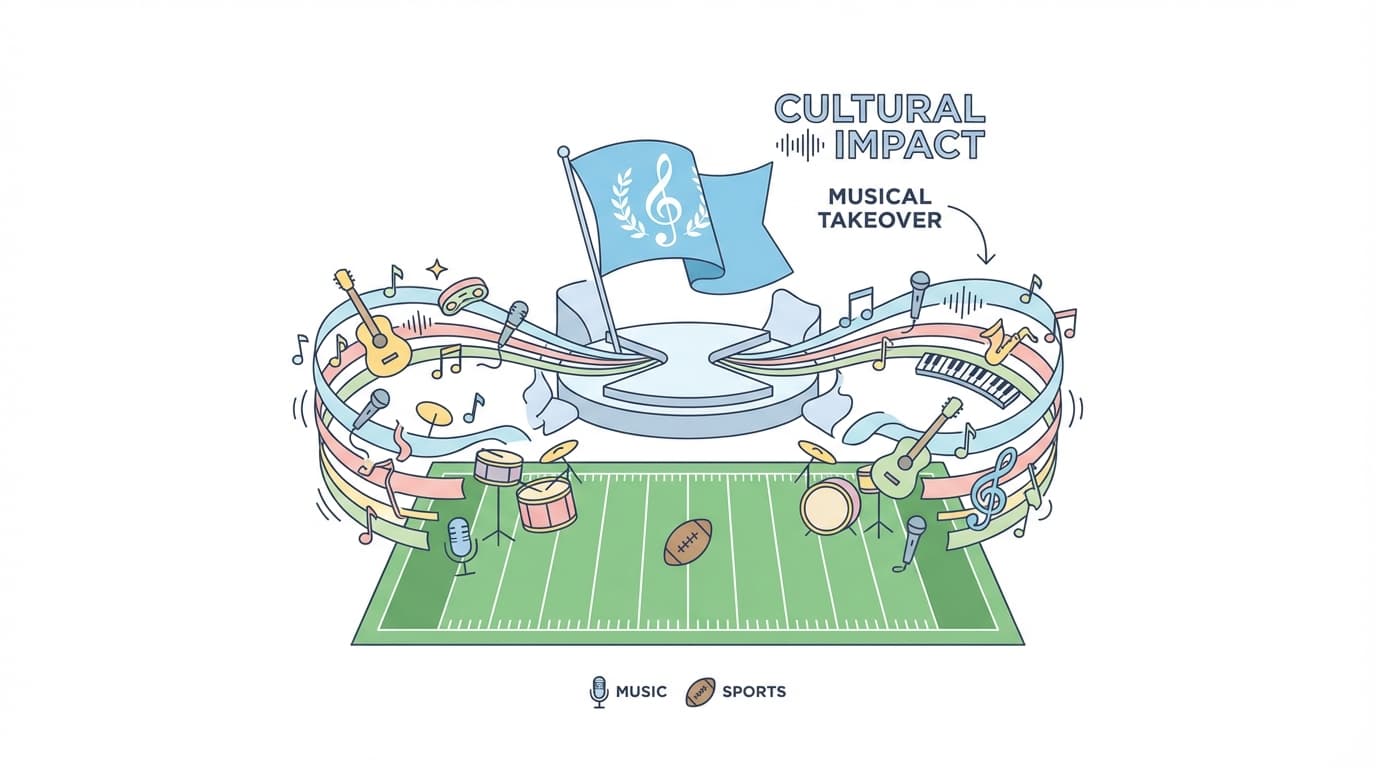
Benito Martínez Ocasio utilized this "compromised" stage to deliver a thrilling ode to Boricua joy, but he did so without sanitizing the political stakes. Earlier in the week, during a historic Grammy acceptance speech, he had issued a viral "ICE out" mandate regarding immigration enforcement. At Levi’s Stadium, he delivered on that promise, running the light-blue flag of Puerto Rican independence across the field amid a set designed to evoke the island's decaying energy infrastructure.
“We're still here... Together, we are America.”
By spiking a football emblazoned with that message, Bad Bunny forced a global audience to reconcile the NFL's domestic branding with the complex, "ongoing occupation" of the communities that fuel its modern relevance.
2. The Rise of the Machine: AI and the Labor of Officiating
Officiating is no longer merely a human endeavor; it is a clinical mandate for perfection. During his annual press conference, Commissioner Roger Goodell signaled a decisive evolution in the league’s labor model, framing the move toward AI and "replay assistants" as a necessary upgrade for the modern professional.
The league is grappling with a "fast game" that has outrun the human eye. With three times the number of camera angles available compared to just a few years ago, the NFL is moving toward a decentralized officiating model where stadium-based assistants or off-site AI can correct "obvious errors" in real-time.
- The Goal: Correct obvious errors instantly.
- The Method: Decentralized AI and off-site assistants.
- The Result: A trade-off between human spontaneity and digital perfection.
This is an HR evolution disguised as a gadget update. By embracing AI, the NFL is admitting that its "dedicated professionals" can no longer maintain the integrity of the score without a digital safety net.
3. The NFL’s Global "Passport": 2026 and the 16-Game Ambition
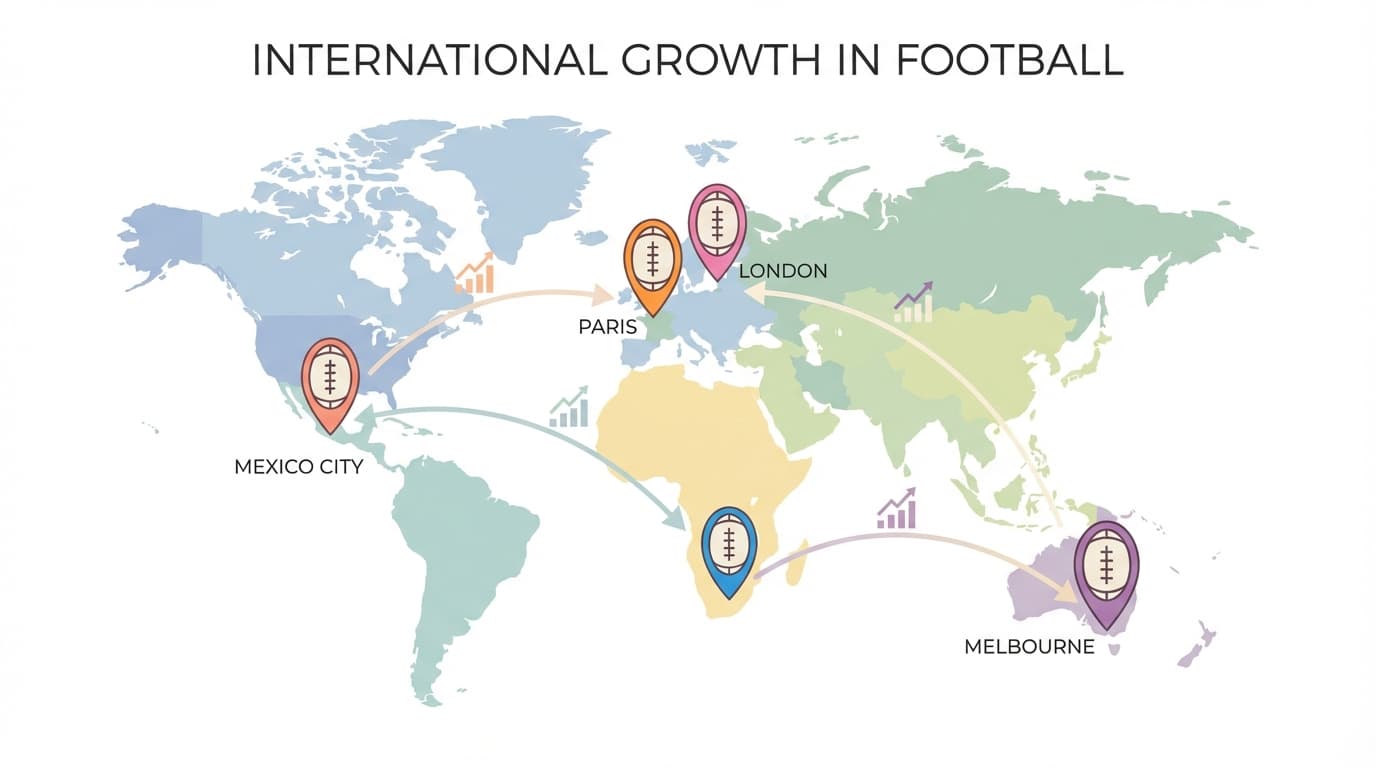
The "National" Football League is officially an international circuit. Goodell confirmed an aggressive 2026 expansion, pushing the international slate to nine games with an ultimate goal of 16 games annually. This trajectory ensures that soon, every team will play abroad every season, effectively dissolving the geographic boundaries of the American market.
The strategy is a response to overwhelming global demand, with cities worldwide viewing the NFL as a prerequisite for status as a premier destination. The 2026 host cities represent a massive leap in the league’s "passport":
- Paris, France (First-time host)
- Melbourne, Australia (First-time host)
- Mexico City, Mexico (Returning for the first time since 2022)
- Madrid, Spain
- Rio de Janeiro, Brazil
- Munich, Germany
- London, England (3 games)
4. The $1.4 Billion Economic "Touchdown"
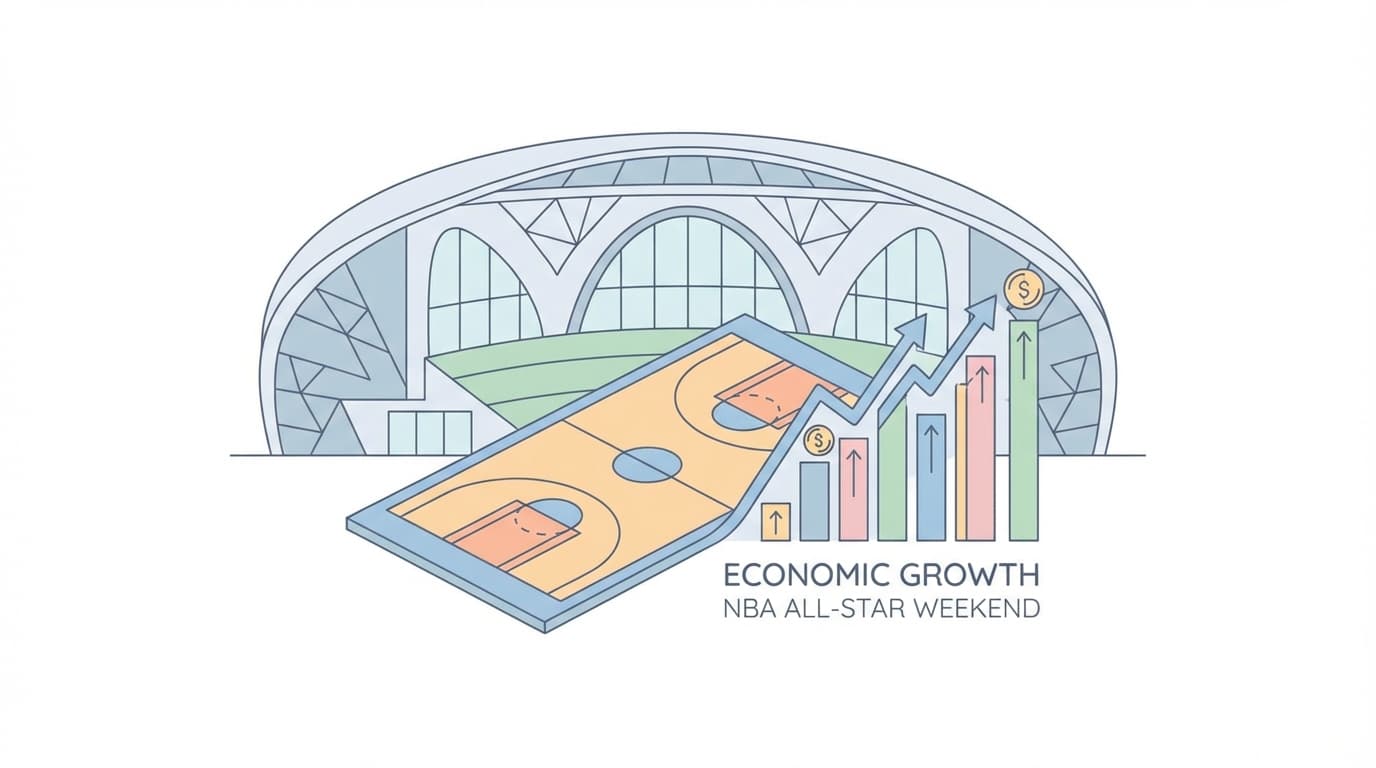
Super Bowl LX was merely the opening salvo of a 1.4 billion "Mega-Event" cycle in the Bay Area. While the Super Bowl itself generated a significant $370M to $630M, it is part of a broader fiscal engine that includes the 2026 FIFA World Cup and the NBA All-Star game.
The Bay Area Host Committee’s report emphasizes that the true value of these events lies in "intangible impacts." They serve as a "magnet for top talent" and a booster for the region's global reputation.
| Event / Metric | Economic Impact | Visitors (Outside Bay Area) |
|---|---|---|
| Super Bowl LX | $370 - $630 Million | ~90,000 |
| FIFA World Cup 2026 | $480 - $630 Million | ~260,000 |
| Total 2025-26 Cycle Jobs | ~13,000 FTE Jobs | (Includes NBA All-Star) |
5. The Subversion of the Modern Game
The greatest irony of the weekend occurred between the whistles. In a season defined by "explosive offenses" and the rise of MVP runner-up Drake Maye, the championship was decided by the most traditional, "old school" means imaginable: a punishing ground game and a historic leg.
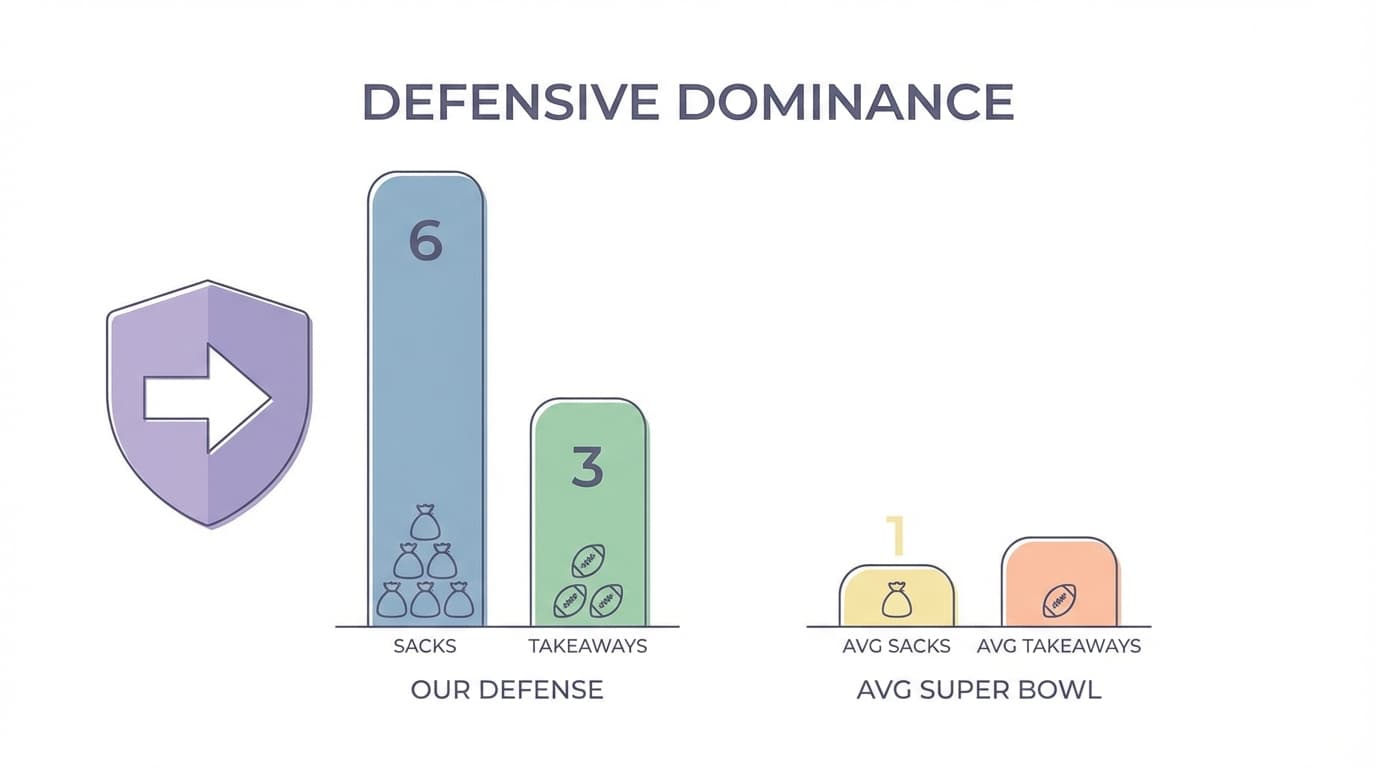
Seattle’s defense took a shutout into the fourth quarter, racking up six sacks and three takeaways. Meanwhile, running back Kenneth Walker III rushed for 135 yards—the most in a Super Bowl in 28 years—stealing the spotlight from the high-flying quarterback narrative. Kicker Jason Myers provided the clinical finishing, setting a record with five field goals and passing LaDainian Tomlinson for the most points scored in a single season (including playoffs).
In a weekend defined by AI and global expansion, the Seahawks’ victory was a stubborn reminder of football's physical, traditional roots.
Conclusion: The Birth of the Syndicate
Super Bowl LX served as a bridge between two worlds. On the turf, it was a gritty throwback to defensive dominance; in the stands and on the screens, it was a showcase for global ambition and technological perfection. As the league prepares to plant its flag in Paris and Melbourne, we must ask if the "National" identity of the NFL can survive its own success as a borderless brand.
The "National" Football League died in Santa Clara; a Global Entertainment Syndicate was born in its place.
Common Questions
🤔
Frequently Asked Questions
Who won Super Bowl LX?▼
The Seattle Seahawks defeated the New England Patriots with a score of 29-13.
What was the 'Benito Bowl'?▼
It is a nickname for Super Bowl LX, highlighting the fact that Bad Bunny's halftime show drew more viewers (128.2 million) than the game itself.
Which new cities will host NFL games in 2026?▼
The NFL confirmed that Paris, France, and Melbourne, Australia, will host games for the first time in 2026.