Blog2/21/2026
Soil is Obsolete: 5 Hydroponic Secrets to Double Your Plant Growth
4 minutes Read
The Briefing
Quick takeaways for the curious
Soil acts as a buffer, but plants absorb nutrients faster directly from water.
The Kratky method allows for passive, electricity-free hydroponic gardening.
Maintaining pH between 5.5 and 6.5 is critical to prevent nutrient lockout.
Microbubbles provide superior oxygenation compared to standard air stones.
Nutrient balance is more important than quantity to avoid chemical antagonism.
The Soil is a Middleman: 5 Surprising Realities of Growing Plants in Water
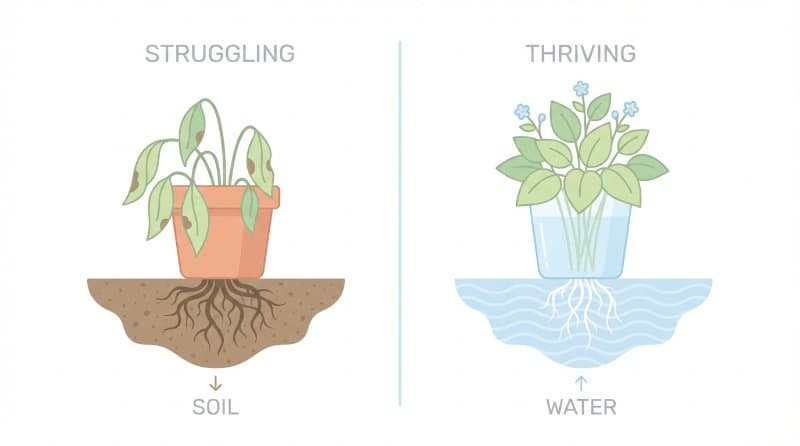
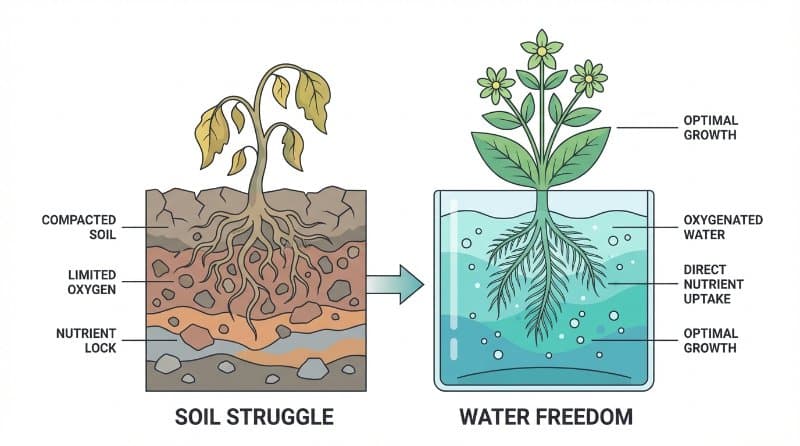
In the traditional garden, we treat soil as a biological necessity—an essential foundation we till, fertilize, and weed with religious devotion. We operate under the ancient assumption that plants "eat" dirt. However, a closer look at the mechanics of botany reveals a more provocative truth: soil is merely a middleman. It functions as a reservoir and a buffer, but plants only consume nutrients once they are dissolved in water.
Hydroponics is the high-efficiency bypass of this terrestrial middleman. By suspending roots directly in a nutrient-rich, oxygenated solution, we remove the friction of the soil environment. This allows the plant to divert energy—normally spent "mining" the earth for minerals—into rapid foliage and fruit production. In the fluid world of the reservoir, plants move at double-time; growth is generally twice as fast as soil-based counterparts, with some varieties maturing three times as quickly.
For the modern urban cultivator, shifting from soil to water is less about "perfecting nature" and more about upgrading the home's operating system. Beyond the glow of LED arrays , there are several counter-intuitive realities that make this future-tech surprisingly practical for the design-conscious grower. Here are five takeaways that redefine the modern kitchen garden.
The Power of Passive: Growing Without a Single Plug
The most persistent barrier to entry for hydroponics is the perceived technical complexity. Many assume a system requires a loud network of pumps, timers, and a constant draw on the electrical grid. The Kratky method—a non-circulating, passive technique—proves that high performance doesn't require high complexity. Named after researcher Bernard Kratky, this method functions without a single moving part.
This is the ultimate "set it and forget it" system for the minimalist home. A plant is suspended over a reservoir, often using simple net cups ; as it consumes the water, the level drops, creating a slowly expanding gap of moist air. In this space, the plant adapts by growing specialized "lateral oxygen roots" to breathe, while the remaining root tips stay submerged in the nutrient "grocery store" below. It is a self-sustaining cycle that requires zero electricity and zero mechanical noise. As researcher Nigel Atkinson famously described it, this is "the simplest hydroponic system."
The pH Barrier: Avoiding the Plexiglass Effect
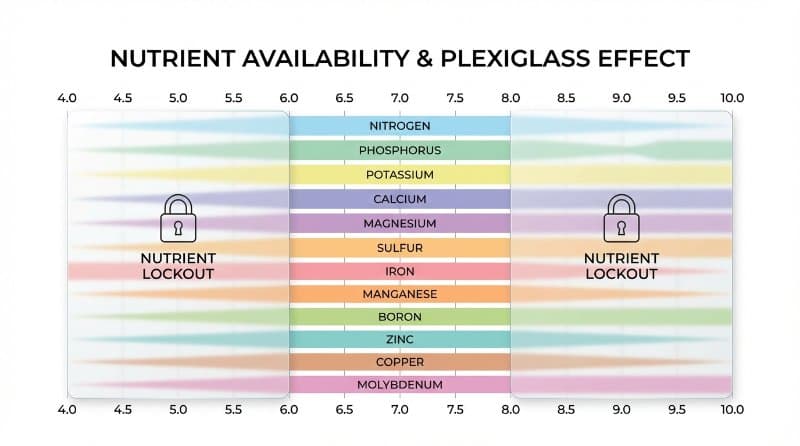
In the world of water-based growth, pH and EC act as the "Twin Guardrails" of chemistry. Of the two, pH is the most critical. To understand its impact, imagine your plant is standing in a luxury grocery store filled with fresh produce. If the pH level is in the "sweet spot" of 5.5 to 6.5, the aisles are open, and the plant can take exactly what it needs for optimal development. You can monitor this easily with a standard meter .
However, if the pH swings too high (alkaline) or too low (acidic), a chemical barrier emerges. It is as if that same produce is suddenly locked behind a wall of thick plexiglass. The nutrients are physically present—you may have just added a premium dose of minerals—but the plant is starving in a sea of food. It cannot touch the minerals because the chemical state of the water prevents root uptake. Maintaining this specific range is the single most important task to ensure the "grocery store" remains accessible.
The EC Myth: Why the "Salt Buzz" is a Blunt Instrument
Beginners are often told to obsess over Electrical Conductivity (EC), a metric used to track nutrient concentration. While it sounds like sophisticated data, EC is often an overhyped complication for the hobbyist. The fundamental physics of water tell the real story: pure water is actually a poor conductor of electricity. It only becomes conductive when you add "stuff"—specifically salts and contaminants.
EC essentially measures the "electrical buzz" of these salts in the water. The problem? It is a blunt instrument. A high EC reading tells you there is a high concentration of matter, but it cannot distinguish between high-quality nutrients and useless contaminants. For a small-scale kitchen garden, chasing a specific EC number adds a layer of complexity that doesn't guarantee success. Using high-quality, specified hydroponic nutrients and keeping your pH stable is far more impactful than micromanaging the "buzz" of the reservoir.
Oxygen Roots: The Physics of the Microbubble
It is the primary fear of the novice: won't the roots drown if they are submerged? In stagnant water, yes. Roots require oxygen for respiration, a process essential for the uptake of fertilizer salts. In active systems, we solve this with air stones, but not all bubbles are created equal.
Standard aquarium stones create large, lazy bubbles. In contrast, "microbubble" stones use porous materials to create a massive population of tiny bubbles. The science here is about surface area: smaller bubbles provide a vastly greater cumulative surface area for oxygen to diffuse into the water. This increased diffusion efficiency is what prevents root rot and fuels vigorous growth. Whether through these high-tech microbubbles or the "lateral oxygen roots" of the passive Kratky method, ensuring your garden can breathe is the secret to a resilient root zone.
Nutrient Antagonism: The Perils of the Chemical Bully
In sustainable tech, we often seek "more," but hydroponics rewards balance. This is best illustrated by "nutrient antagonism." If you succumb to the "more is better" fallacy and over-fertilize with one element—Potassium, for example—you create a friction-filled environment.
Excess Potassium acts as a chemical bully; even if your reservoir is plenty full of Nitrogen, the surplus Potassium can physically block the plant's ability to take it up. You end up with a Nitrogen deficiency in a reservoir that is technically "full" of it. Success in the reservoir isn't about the volume of fertilizer used; it's about the "secret sauce" of a perfectly balanced, frictionless solution where no single nutrient crowds out the others.
The Future is Fluid
Hydroponics represents a fundamental shift in our domestic architecture. It is an effort to provide an ideal, frictionless environment where plants like lettuce, basil, and mint can thrive without the limitations of soil quality or space. By removing the middleman, we gain total control over the variables that dictate life: oxygen, pH, and balanced nutrition.
If we can grow a lush head of lettuce in a mason jar with zero soil and zero electricity, we have to ask: what does the future of our kitchens look like? As we move toward more integrated, sustainable ways of living, the soil-free reservoir might just become as standard a kitchen appliance as the refrigerator.
Common Questions
🤔
Frequently Asked Questions
Do I need electricity to grow plants hydroponically?▼
Not necessarily. The Kratky method is a passive hydroponic technique that requires no pumps or electricity, relying on a gap of moist air for root oxygenation.
Why is pH important in hydroponics?▼
pH controls nutrient availability. If the water is too acidic or alkaline, plants cannot absorb minerals even if they are present, a phenomenon known as nutrient lockout.
Do plants grow faster in water or soil?▼
Plants generally grow about two times faster in water because they don't have to expend energy searching for nutrients through soil friction.