
Blog2/13/2026
Milano Cortina 2026: 5 Radical Ways Italy Is Reinventing the Winter Olympics
5 minutes Read

The Briefing
Quick takeaways for the curious
Milano Cortina 2026 utilizes a decentralized model, spreading events across five distinct Italian destinations.
The Closing Ceremony will be held in the Arena di Verona, a 2,000-year-old Roman amphitheater.
Climate change has forced the use of 3 million cubic yards of artificial snow due to rising temperatures in Cortina.
The Olympic Village in Milan was built in record time and will convert into affordable student housing post-Games.
The 2026 Games feature the highest number of out LGBTQ+ athletes in Winter Olympic history.
1. The Olympic Renaissance: A Logistical Gamble
For decades, the Olympic model has favored the "fortress" approach—monolithic, purpose-built clusters that often leave behind "white elephant" stadiums and ghost villages. Milano Cortina 2026 represents a logistical gamble that prioritizes cultural preservation over modern efficiency. By sprawling across the provinces of Lombardy and Veneto, Italy is attempting a radical, decentralized experiment.
The central tension of these Games is whether such a massive, fragmented event can survive in a rapidly warming world while simultaneously honoring 2,000 years of heritage. It is less a sports tournament and more a regional takeover, forcing a conversation on how global spectacle can adapt to the constraints of the 21st century without losing the "soul" of its host.
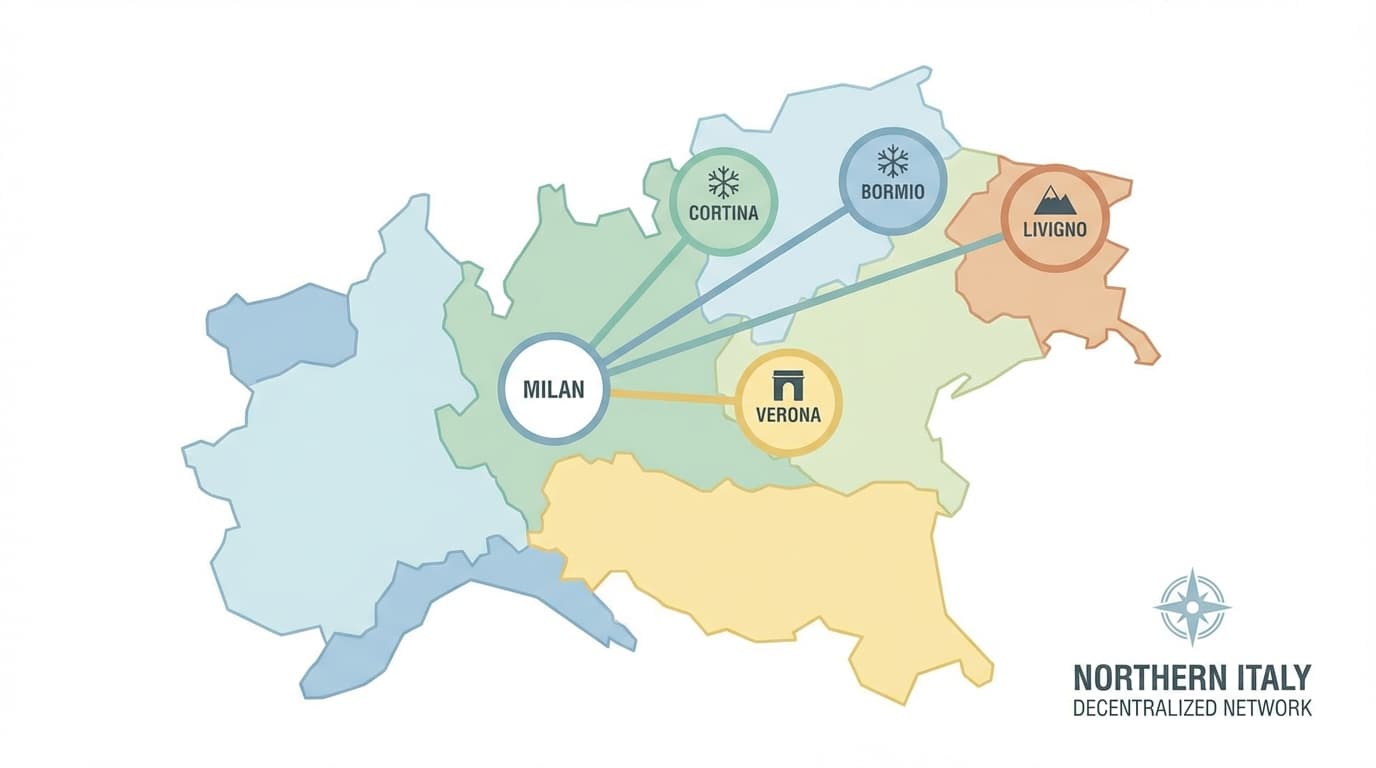
2. The Great Italian Sprawl: A Five-Destination Masterpiece
The 2026 Games are unprecedented in their geographic reach, eschewing the traditional Olympic village for five distinct destinations that offer a cultural weight no previous host has matched.
- Milan: The fashion gateway. The city has transformed into a luxury hospitality rival to Paris, hosting the Opening Ceremony at the iconic San Siro Stadium. The event features a high-octane lineup including Mariah Carey, Andrea Bocelli, and Laura Pausini. For the insider, the city’s heart is now the Quadrilatero, where Louis Vuitton and Fendi have opened flagship spaces with in-house ateliers and dining.
- Cortina d’Ampezzo: The "Queen of the Dolomites" reclaiming its 1956 glory. Long a bastion of postwar glamour, the town's hospitality is finally catching up to its scenery with the Mandarin Oriental Cristallo, a Herzog & de Meuron renovation of the hotel where Frank Sinatra once held court.
- Bormio: A sanctuary of "Deep Time." While it hosts the men's alpine skiing on the technical Stelvio slope, it is better known for 2,000 years of thermal bathing traditions first documented by Pliny the Elder.
- Livigno: A high-altitude anomaly. Beyond hosting freestyle skiing, this town operates in its own economic universe. Thanks to a Napoleonic-era tax quirk, it remains VAT-exempt, offering a 22% discount on luxury goods.
- Verona: The historic finale. A 90-minute train from Milan, this city provides the Roman backdrop for the Games' conclusion.
3. A Closing Act 2,000 Years in the Making
The choice of the Arena di Verona for the Closing Ceremony is a poetic masterstroke. This Roman amphitheater predates Christianity and has survived two millennia of public performance. The ceremony, titled "Beauty in Action" and directed by Alfredo Accatino, features the legendary dancer Roberto Bolle.
There is an intellectual irony in watching a "Winter" Games conclude within the sun-drenched, ancient stone of a Roman ruin. It forces a comparison between the longevity of human architecture and the fragility of the alpine ice that makes these sports possible.
"...no previous Winter Olympics has featured a 2,000-year-old Roman amphitheater." — The Observer
4. The Climate Paradox vs. Human Efficiency
The environmental reality of 2026 is stark. Data from Climate Central reveals that Cortina has warmed by 6.4°F (3.6°C) since it first hosted the Games in 1956, leading to 41 fewer freezing days annually. To ensure fair competition, organizers must deploy a staggering 3 million cubic yards of artificial snow—a technical necessity that highlights the "snow-chasing" future of the industry.

However, Italy has countered this climate anxiety with a display of modern efficiency. The Olympic Village in Milan’s Porta Romana district, designed by Skidmore, Owings & Merrill (SOM), was completed in just 30 months and delivered 30 days ahead of schedule. The project meets Nearly Zero Energy Building (NZEB) requirements and LEED Gold standards. Its true legacy is social: within four months of the Games’ end, it will be converted into Italy’s largest student housing development, providing 1,700 affordable beds.
5. Inclusion as Friction: The Rise of Team LGBTQ+
Milano Cortina 2026 marks a historic peak for diversity, with over 47 out LGBTQ+ athletes from 13 countries—the highest in Winter Olympic history. This visibility is not without tension; athletes are competing in a country where current legislation is described by advocates as challenging for the community.
Key profiles include Breezy Johnson, the American bisexual downhill skier who secured the first U.S. gold of the Games by a record-thin 0.4 seconds. There is also the compelling narrative of spouses Kim Meylemans (Belgium) and Nicole Silveira (Brazil). Competing against each other in skeleton, they have used their platform to "shine a light on marriage equality" in a political climate they describe as increasingly hostile to LGBTQ+ rights. Their presence transforms the track into a stage for human rights as much as athletic prowess.
6. The "Napoleonic" Loophole and Thermal Secrets
The savvy spectator’s experience is defined by regional anomalies. In Livigno, the VAT-exempt status is a relic of the Napoleonic era, intended to keep the remote mountain pass populated. Today, it allows for a 22% savings on everything from Gucci to Barolo.
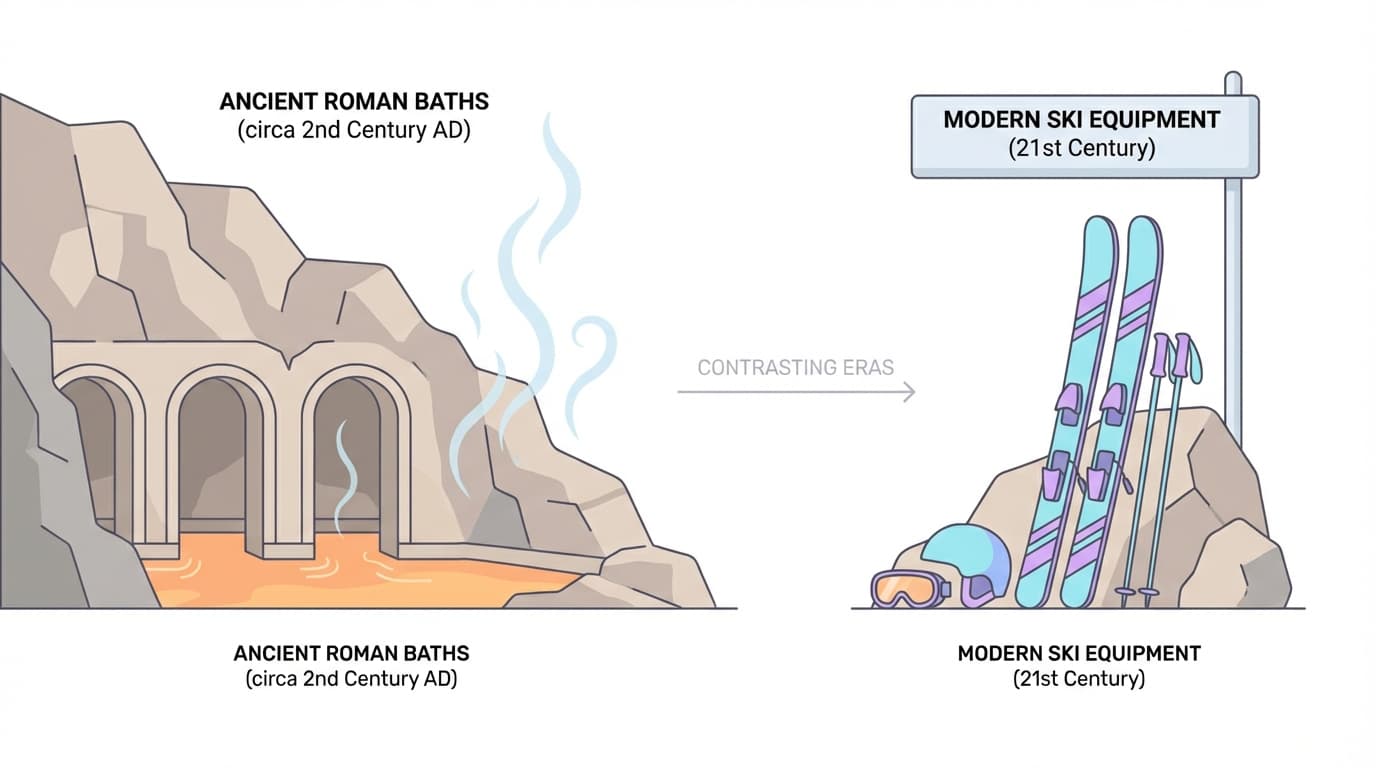
Meanwhile, in Bormio, the QC Terme Bagni Vecchi allows visitors to soak in Roman-era baths carved directly into the rock. This isn't just a spa day; it is a restorative tradition that connects the modern traveler to the same mineral springs that Pliny the Elder observed two thousand years ago. These "insider" perks elevate the 2026 Games into a curated lifestyle event.
Conclusion: The Legacy of the "Dual Cauldron"
In a final nod to the decentralized "sprawl," the Games feature a historic Dual Cauldron. For the first time, two Olympic flames are lit and extinguished simultaneously—one at the Arco della Pace (Arch of Peace) in Milan and the other at the Piazza Dibona in Cortina.
This innovative concept, inspired by Leonardo da Vinci’s vision of harmony between nature and man, symbolizes the bridge between the urban energy of Lombardy and the alpine majesty of Veneto. As the Olympic Village transitions into student housing and the Arena di Verona returns to its quiet vigil, one question remains: In an era of climate uncertainty, is Italy’s model of "reusing history" the only way to save the Games?
Common Questions
🤔
Frequently Asked Questions
Where will the Closing Ceremony of the 2026 Winter Olympics be held?▼
The Closing Ceremony will take place at the Arena di Verona, a historic Roman amphitheater that is over 2,000 years old.
How is Milano Cortina 2026 addressing climate change challenges?▼
Organizers are using 3 million cubic yards of artificial snow to combat warming temperatures and have constructed the Olympic Village to NZEB (Nearly Zero Energy Building) standards.
What is the legacy plan for the Milan Olympic Village?▼
Four months after the Games, the Olympic Village in the Porta Romana district will be converted into Italy's largest student housing development, offering 1,700 affordable beds.