Blog2/20/2026
Turn Kitchen Scraps into Superfood in 14 Days: The Sandwich Compost Hack
5 minutes Read
The Briefing
Quick takeaways for the curious
The 'Sandwich' method uses a 3:2 ratio of raw-to-cooked waste and Bokashi bran to compost in just 14 days.
Priming seeds with compost leachate (liquid runoff) can improve germination speed by 33.2%.
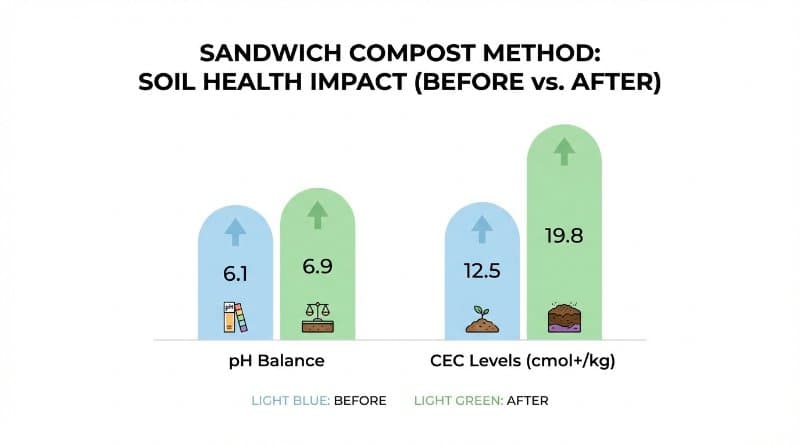
A 1:1 soil-to-compost ratio significantly improves soil pH and nutrient retention (CEC) after four weeks.
Crops grown with this method, such as Bok Choy, show significantly higher carotenoid levels than conventionally grown produce.
Avoid planting root crops like carrots in the first two cycles; the soil is too 'hot' and better suited for leafy greens initially.
1. The Relatable Paradox of Modern Living
We live in a world of staggering irony: while the modern city dweller increasingly prizes organic, nutrient-dense food, our society is simultaneously buried under a mountain of food waste. Globally, 1.3 billion tonnes of food—valued at a shocking $1 trillion—is wasted annually. In Malaysia, the crisis hits close to home, with 3 kilo tonnes (approximately 3,000kg) of edible food dumped into landfills every single day.
As a soil scientist and urban homesteader, I view this waste not just as an environmental hazard, but as a missed opportunity for self-sufficiency. This "waste" is the raw material for a revolution. "Sandwiched Compost" serves as the vital bridge between your kitchen scraps and your garden, promising to transform hazardous landfill-bound materials into life-sustaining nutrients in as little as two weeks.
2. The 14-Day "Sandwich" Revolution
Traditional composting is a slow, months-long process that requires space many urbanites simply don't have. However, the data confirms that a modified anaerobic fermentation process—the "Sandwich" method—can achieve superior results in a fraction of the time.
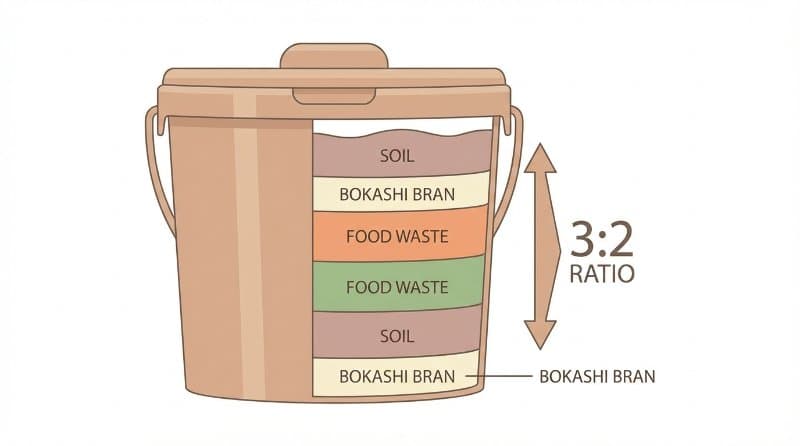
Based on research from Universiti Putra Malaysia (UPM), the mechanics of this method rely on a precise 3:2 ratio of raw-to-cooked food waste. This includes both plant and animal materials, layered meticulously with Bokashi bran inoculated with Effective Microorganisms (EM). Unlike traditional heaps, this process happens in a sealed environment. The resulting acidic and anaerobic conditions ensure the bucket remains odorless and pathogen-free, making it perfect for apartment living.
By bypassing the months of turning and waiting, we move closer to global sustainability goals. In our work, we’ve seen how this technique directly supports the path toward food security:
"Sandwiched compost... helps to protect, restore, and reverse land degradation, meeting SDG 15 (Life on Land). It offers a path away from the toxic accumulation of mineral fertilizers, aligning our kitchens with SDG 2 (Zero Hunger) and SDG 3 (Good Health and Well-Being)."
3. The 33% Growth Hack: Why You Should "Prime" Your Seeds
For the urban gardener, space and time are the ultimate commodities. One of the most impactful takeaways from recent studies is the power of "leachate"—the nutrient-rich liquid runoff that collects at the bottom of your sandwich compost bucket .
While most people might see this liquid as a byproduct to be discarded, the resourceful homesteader sees it as a "growth hack." Data shows that "bio-nutri-priming" seeds in a 0.2% concentration of this leachate significantly outperforms standard water-soaking. In our trials, priming with sandwiched compost leachate improved germination time by 33.2%.
Furthermore, these plants displayed a 28.6% increase in SPAD units. In the lab, this measures chlorophyll; in your garden, it translates to a vibrant, deep greenness that indicates a high-performance, nutrient-dense plant. Using a byproduct that others pour down the drain to shave a third off your wait time is the very definition of homesteading resourcefulness.
4. The 1:1 Ratio: Rehabilitating "Dead" Soil
Urban soil is often "dead"—compacted and stripped of its biological engine. To fix this, we recommend a soil amendment strategy rather than just a top-dressing. The research indicates that the most impactful results for soil rehabilitation come from a 1:1 soil-to-substrate ratio, incubated for four weeks using a standard garden trowel to mix thoroughly.
This amendment fundamentally changes the soil's chemistry:
- Neutralizing pH: Balancing acidity to create a hospitable environment for roots.
- Boosting Cation Exchange Capacity (CEC): Think of CEC as your soil's battery capacity. A higher CEC means the soil has a much greater ability to "hold onto" and store food for your plants.
- Increasing Urease Activity: This is the biological "key" that unlocks nitrogen, making it readily available for your crops to thrive.
5. Growing "Super" Bok Choy: Beyond Just Calories
When you move from a consumer to a producer, you gain the power to control the quality of your fuel. When we apply sandwiched compost to Brassica crops like Bok Choy , we aren't just growing leafy greens; we are growing superfoods.
The nutritional data is remarkable. By the fourth growing cycle—highlighting the cumulative benefits of this method as the soil improves over time—we observed a total carotenoid content of 521.60 mg g⁻¹. This is significantly higher than store-bought varieties grown with conventional mineral fertilizers, which often provide "empty calories" without the same phytonutrient density. By the third cycle, leaf area is at its peak, providing a harvest that is as bountiful as it is healthy.
6. The Counter-Intuitive Catch: Why Your Carrots Might Have to Wait
Every expert knows that nature requires patience alongside grit. While the sandwich method is a miracle for leafy greens, there is a pro-tip for root crops: wait.
The compost is highly concentrated or "hot" in its initial stages. Our research indicates that the substrate may not be suitable for root crops in the first two growing cycles. This is due to the potential presence of arbuscular mycorrhizal fungi and initial chemical properties, such as salinity, that can hinder delicate early root development. For the best results, start with high-yielding leafy greens like Bok Choy or lettuce . Let the soil mature and stabilize before you introduce carrots or beets.
7. The "Closet-Sized" Homesteader Mindset
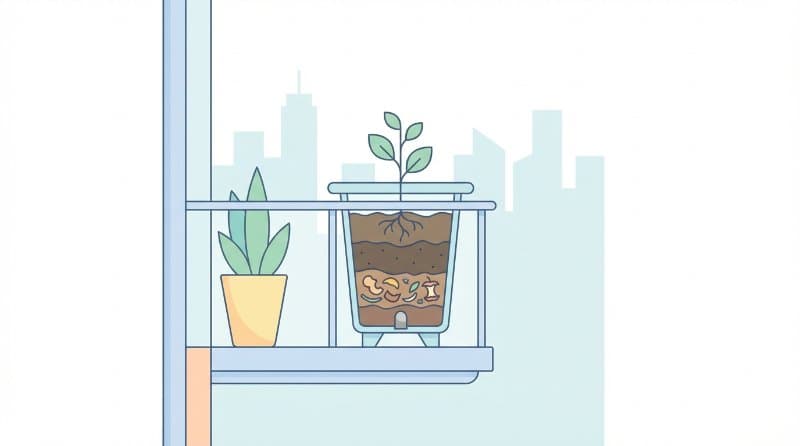
You don't need acres of land to claim the title of a homesteader; you just need a kitchen and a bucket. Modern homesteading is about production over consumption. It is the realization that self-sufficiency is a series of small, manageable skills rather than an all-or-nothing lifestyle.
Whether you are in a high-rise or a suburban lot, the philosophy remains the same: use what you have. This requires a specific kind of character that the Homesteading Quickstart Guide identifies perfectly:
"Homesteaders are known for their grit, determination and resourcefulness, and for their ability to overcome all sorts of obstacles that might lead someone else to throw in the towel."
Transforming your waste into food is an act of grit. It is a refusal to be a passive consumer in a waste-filled world.
8. Conclusion: The Future in a Bucket
The "Sandwich" method proves that the solution to our massive food waste problem is literally sitting under our sinks. By redirecting our scraps into a simple fermentation bucket, we can reduce landfill hazards, speed up plant growth by over 30%, and boost the nutritional value of our food to "superfood" levels.
The future of sustainable agriculture isn't just in the fields; it's in your kitchen. If your dinner scraps hold the secret to 33% faster growth and nutrient-dense harvests, why are they still in the trash?
Common Questions
🤔
Frequently Asked Questions
What is the Sandwich composting method?▼
The Sandwich method is a modified anaerobic fermentation technique that layers food waste with Bokashi bran and soil in a sealed bucket, converting waste to nutrients in about 14 days.
Can I compost cooked food waste using this method?▼
Yes, unlike traditional composting, the Sandwich method allows for a 3:2 ratio of raw to cooked food waste, including meat and dairy, thanks to the Effective Microorganisms (EM) in the bran.
How does compost leachate help plant growth?▼
The liquid runoff, or leachate, is nutrient-rich. Research shows that soaking seeds in a 0.2% concentration of this liquid (bio-nutri-priming) can speed up germination by over 30%.