Blog3/5/2026
Adaptive AI Home Security: The New Peaceful Protection Era
9 mins Read
The Briefing
Quick takeaways for the curious
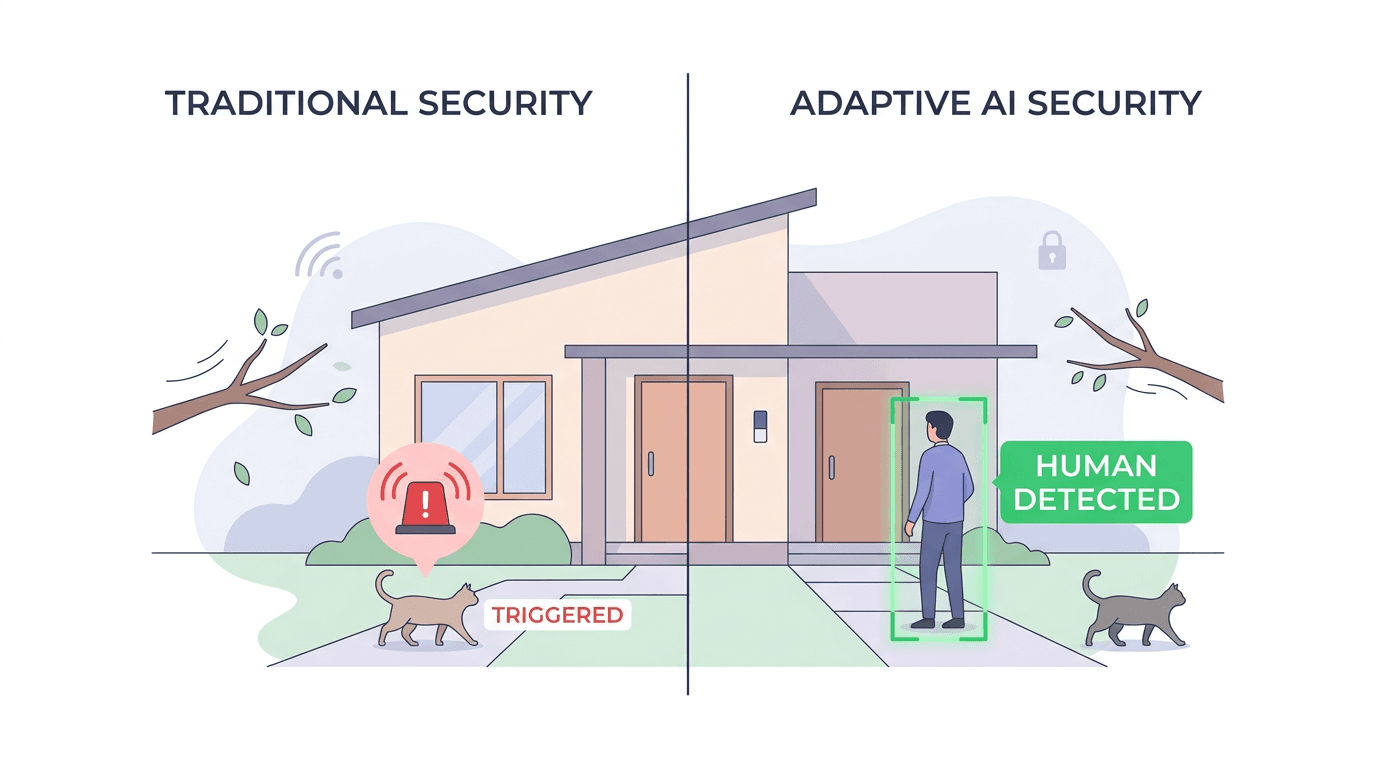
Adaptive AI home security shifts the paradigm from simple motion detection to contextual understanding, dramatically reducing false positives by learning the patterns of your environment.
Deep learning-based object classification enables cameras to distinguish humans, vehicles, and pets, turning alerts into meaningful, behavior-aware notifications.
The system continually learns the baseline of your life—such as family member gait and delivery schedules—so alerts become more accurate over time.
From reactive alerts to proactive guardianship, adaptive AI aims to reclaim mental bandwidth by providing intelligent, actionable security insights.
Market trends indicate rapid growth for AI-enabled security, with the AI in security market projected to reach about $38.2 billion by 2030 and a CAGR of roughly 18.6%.
The Sentinel Shift: Why Adaptive AI is the New Architecture of Peace of Mind
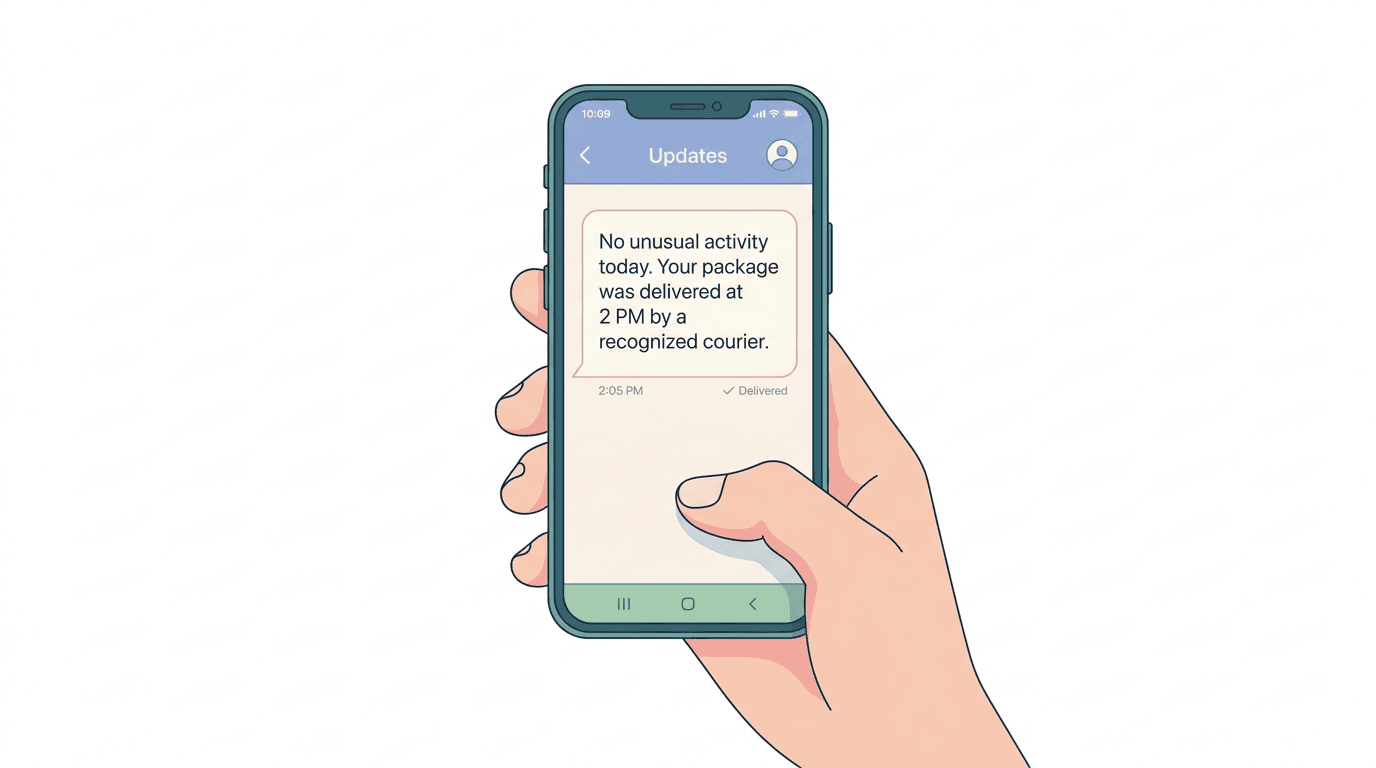
We are currently navigating a profound technological recalibration, a cultural pivot where the "dumb" motion sensor—once the gold standard of domestic protection—is being replaced by a sophisticated, self-learning digital consciousness. For decades, home security was a binary affair: a sensor was either tripped or it wasn't, resulting in a relentless barrage of "false positives" triggered by a swaying branch, a passing stray cat, or a shift in evening shadows. But the tide has turned. We are moving away from the era of "reactive alerts" and into an era of "contextual awareness." The rise of adaptive AI in home security represents more than just a hardware upgrade; it is a strategic reclamation of our mental bandwidth. It is no longer about simply recording footage; it is about a system that understands the difference between a courier delivering a package and a stranger lingering at the threshold. This is the new "Golden Age" of domestic intelligence—a time when our homes are learning to see, think, and protect with a level of discernment that mirrors human intuition.
The Cognitive Fortress: Moving Beyond Motion to Meaning
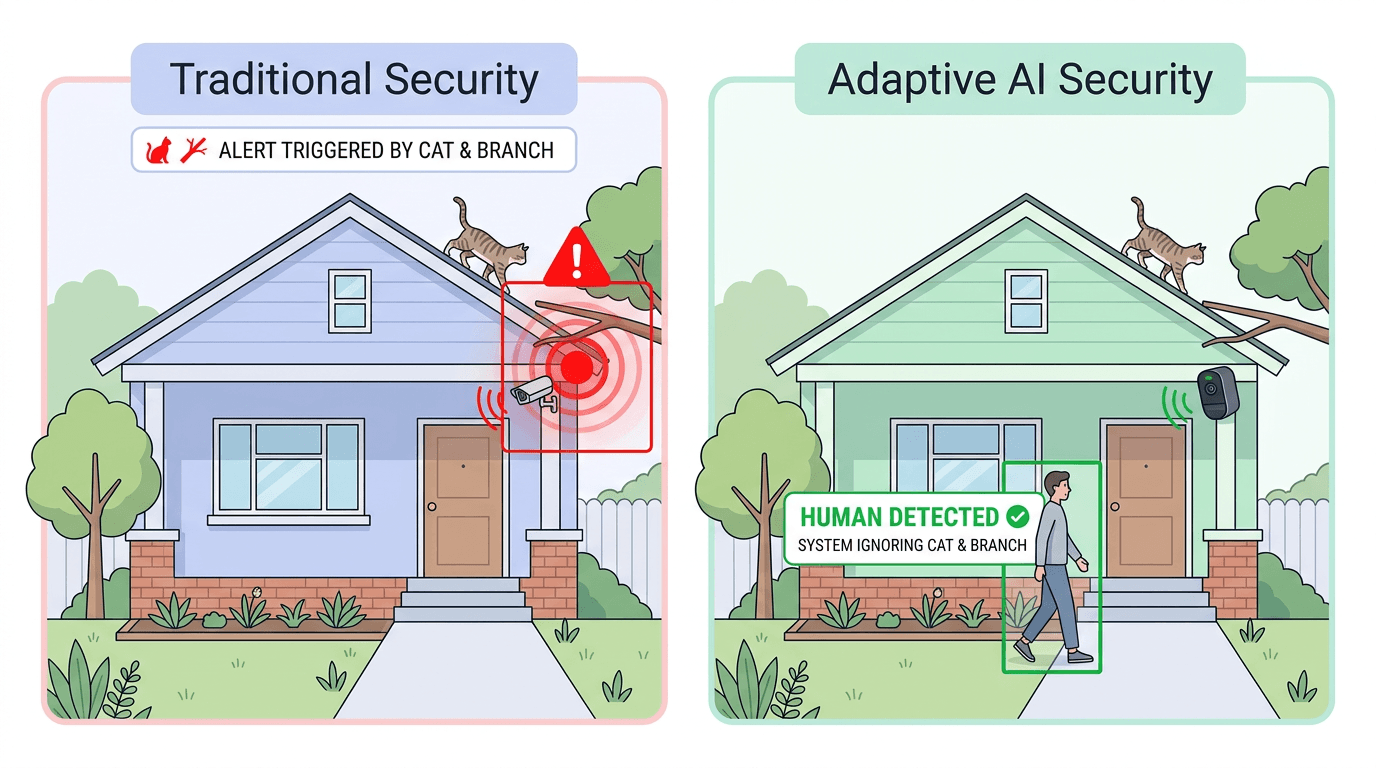
To understand why adaptive AI has become the obsession of the tech-forward homeowner, we must first address the "Notification Fatigue" that has plagued the first generation of smart homes. Traditional systems operate on simple pixel-change detection. If a pixel moves, the alarm sounds. Adaptive AI, however, utilizes Deep Learning Neural Networks to analyze the geometry and behavior of objects within the frame. According to a 2023 report by MarketsandMarkets, the AI in security market is projected to grow at a CAGR of 18.6%, reaching nearly $38.2 billion by 2030. This growth is fueled by the transition from "motion detection" to "object classification."
When your camera "sees" a shape, an adaptive system doesn't just register movement; it runs that shape against a database of millions of images to identify it as a human, a vehicle, or a pet. More impressively, "Adaptive" means the system learns your specific environment over time. It learns that the maple tree in your front yard moves in the wind, and it eventually filters that movement out entirely. It learns the specific gait of your family members and the schedule of your mail carrier. We are witnessing a shift where security systems are evolving from passive observers into proactive guardians that understand the "baseline" of your life.
The Edge Computing Revolution: Speed, Privacy, and Local Intelligence
One of the most critical developments in adaptive AI security is the move toward Edge Computing. Historically, AI processing happened in the cloud. Your camera would capture video, send it to a server thousands of miles away to be analyzed, and then send an alert back to your phone. This created a "latency gap" and raised significant privacy concerns. Today’s premium systems are shifting that "brain" directly into the device itself.
By processing data "at the edge"—on the camera’s internal processor—the system can make split-second decisions without an internet connection. This isn't just a matter of convenience; it’s a matter of life safety. If a system can identify a fire or an intruder in milliseconds rather than seconds, the outcome of an emergency changes entirely. Furthermore, edge computing addresses the "Privacy Paradox." When your AI analyzes data locally, your most intimate moments never leave the four walls of your home.
"The future of domestic security isn't defined by how much data we collect, but by how intelligently we process it at the source. True privacy and high-level security are no longer mutually exclusive; they are becoming two sides of the same algorithmic coin." — Julian Vance, Lead Systems Architect at CyberHome Labs.
The Sentient Ecosystem: How AI Synchronizes the Modern Home
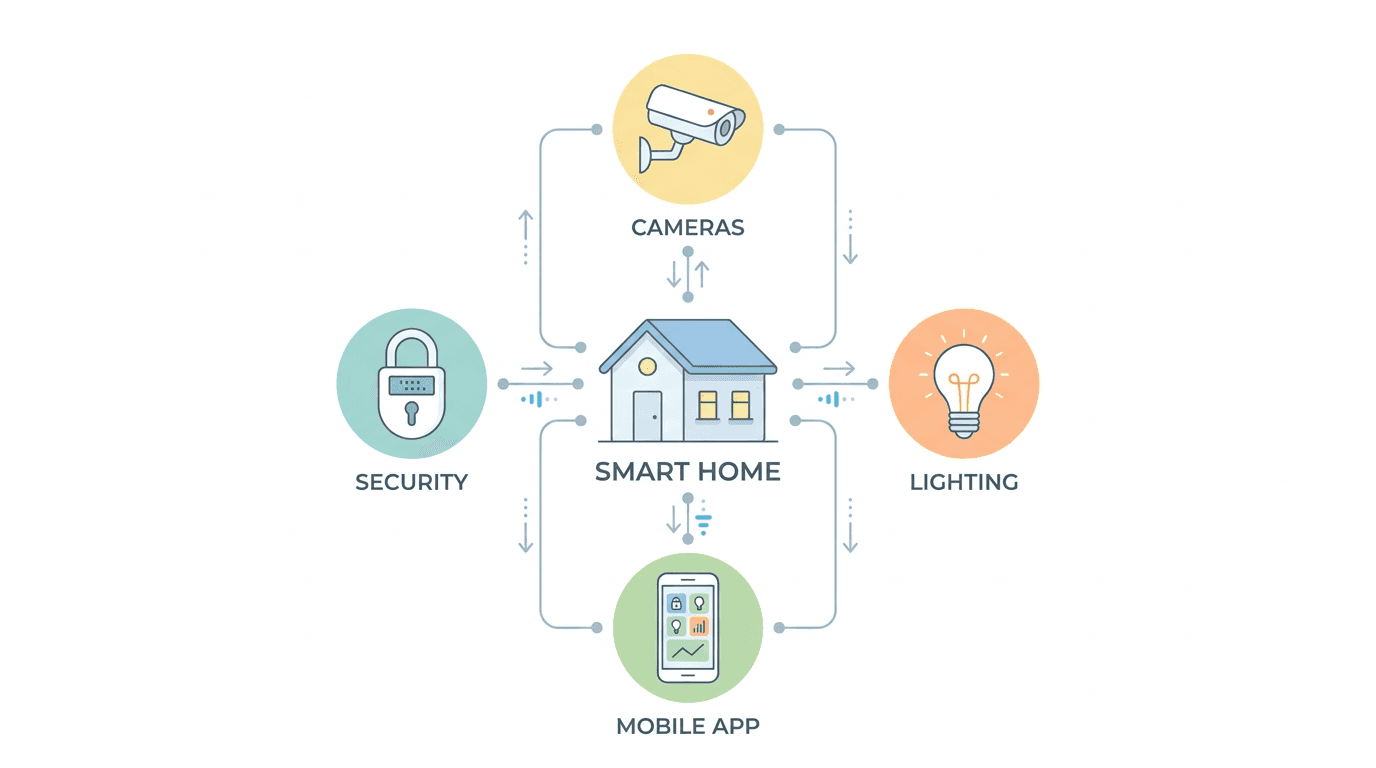
Adaptive AI does not exist in a vacuum. Its true power is unlocked when it acts as the "central nervous system" for a broader smart home ecosystem. In a truly adaptive home, a "Human Detected" event at 2:00 AM doesn't just send a push notification to a sleeping homeowner. Instead, it triggers a coordinated response protocol:
- Deterrence Lighting: The outdoor floodlights pulse in a specific pattern to alert the intruder that they have been spotted.
- Audio Intervention: The system can play the sound of a barking dog or a simulated conversation through internal speakers.
- Smart Locks: The system automatically audits all points of entry, ensuring deadbolts are engaged across the entire perimeter.
- Visual Verification: The indoor hub displays the live feed of the specific zone where the activity was detected, bypassing the need for the user to navigate an app.
This level of integration transforms security from a "burglar alarm" into a "lifestyle concierge." For instance, an adaptive system can recognize when you are struggling with heavy groceries and automatically unlock the door, or detect a fall in the hallway and alert emergency contacts. We are moving toward a "frictionless" existence where the home anticipates our needs while simultaneously shielding us from threats.
The HootFinds Curated Selection: The Best in Adaptive AI Security
Choosing the right system requires a balance between hardware capability and software intelligence. We have curated a list of the most robust, AI-forward products currently defining the market.
The All-Rounder:
The Arlo Ultra 2 remains the gold standard for high-definition 4K surveillance combined with sophisticated AI. Its "Arlo Secure" subscription offers some of the most accurate person, vehicle, and package detection in the industry. The adaptive nature of its software allows users to define specific "Activity Zones" that are processed with high-priority neural mapping.
The Privacy Powerhouse:
For those wary of the cloud, Eufy’s S330 (eufyCam 3) is a revelation. It features "BionicMind" AI that claims 99% accuracy in facial recognition. Crucially, all of this processing happens locally on the HomeBase 3, meaning your facial data stays in your home. The system even learns to recognize "strangers" versus "frequent visitors" over time.
The Doorstep Guardian:
Ring has evolved far beyond simple video. The Pro 2 utilizes 3D Motion Detection and "Bird’s Eye View," which uses radar technology to show the exact path a visitor took on your property on an aerial map. This spatial AI provides a level of context that traditional 2D cameras simply cannot match.
The Integrated Hub:
If you want a system that acts as a brain for your entire home, Abode is the enthusiast's choice. Its IOTA hub includes a built-in camera with person detection and serves as a Z-Wave and Zigbee bridge, allowing your AI security to talk to thousands of other smart devices seamlessly.
The Google Intelligence:
The Nest Cam excels in "Familiar Face" alerts. Integrated deeply with the Google Home ecosystem, it can announce via your smart speakers exactly who is at the door, rather than just telling you "someone" is there. Its on-device processing ensures that even if the Wi-Fi drops, the camera can still record and process events for up to an hour.
The Predictive Frontier: What Happens When AI Knows the Future?
As we look toward the next five years, the "Adaptive" in Adaptive AI is set to become Predictive. We are entering the era of "Anomaly Detection." Currently, AI is great at telling us what is happening. The next generation of systems will be able to tell us what might happen based on deviations from established patterns.
Imagine a system that notices a vehicle has circled the block three times in ten minutes—a pattern often associated with "casing" a neighborhood. Or a system that detects the sound of a window being "tapped" (testing for weaknesses) before it is actually broken. Research from the University of Southern California into "Predictive Policing" algorithms is already being adapted for domestic use, focusing on identifying the "pre-incident" signatures of a break-in.
Furthermore, Generative AI is beginning to play a role. Soon, you won't just look at a timeline of clips; you will be able to ask your home security system a natural language question: "Did anyone I don't know come to the back door while I was at work today?" The AI will synthesize the day's footage and give you a summarized report, much like a personal security detail.
Conclusion: Investing in the Invisible
The transition to adaptive AI home security represents a shift in how we define "safety." It is no longer a matter of building higher walls or installing louder sirens; it is about increasing the informational density of our living spaces. By embracing systems that learn, adapt, and discern, we are offloading the mental burden of vigilance to an entity that never sleeps, never gets distracted, and never suffers from "false alarm fatigue."
As you look to upgrade your own domestic sanctuary, remember that the most powerful security feature isn't the resolution of the lens or the lumens of the spotlight—it's the intelligence of the algorithm behind them. We are living in an era where our homes are finally beginning to look out for us, not just look at us. In the "Mineral Renaissance" of the digital age, clarity, context, and calm are the ultimate luxuries. The sentinel has shifted; it's time to let your home take the watch.
Common Questions
🤔
Frequently Asked Questions
What is adaptive AI home security and how does it differ from traditional motion sensors?▼
Adaptive AI home security uses deep learning to classify objects in video feeds rather than just detecting any pixel movement, so it can tell apart a person from a pet or a tree branch. It also learns the specific environment of your home over time, reducing false alerts caused by wind or routine activity. This shift from reactive alerts to context-aware protection turns security into proactive guardianship that aligns with your daily life.
How does adaptive AI distinguish between a person and a pet or a branch in a home security feed?▼
The system runs shapes against a database of millions of images to identify objects as humans, vehicles, or pets. It uses deep learning neural networks to analyze geometry and behavior, not just motion. It learns your environment to filter out irrelevant movement, such as a tree moving in the wind, over time. Because of this, alerts are more meaningful and fewer false positives reach you.
What does it mean for the system to learn the baseline of your life, and why is that important?▼
The baseline includes patterns like family member gait and the typical schedule of deliveries. By understanding these patterns, the system can distinguish normal variation from potential threats. It continuously adapts as your routines change, which further reduces nuisance alerts while preserving security. We end up with context-aware alerts that require your attention only when something unusual occurs.
What are the market and technology trends driving the shift to adaptive AI in home security?▼
Industry analysis shows AI-enabled security moving from simple motion detection to object classification. Forecasts cite a CAGR around 18.6% and a market size approaching $38.2 billion by 2030. These trends reflect a broader shift toward a 'Golden Age' of domestic intelligence where homes learn, see, and protect with greater discernment.