
Blog3/5/2026
Best Retro Mechanical Keyboards: The Soul of Modern Workspaces
9 mins Read
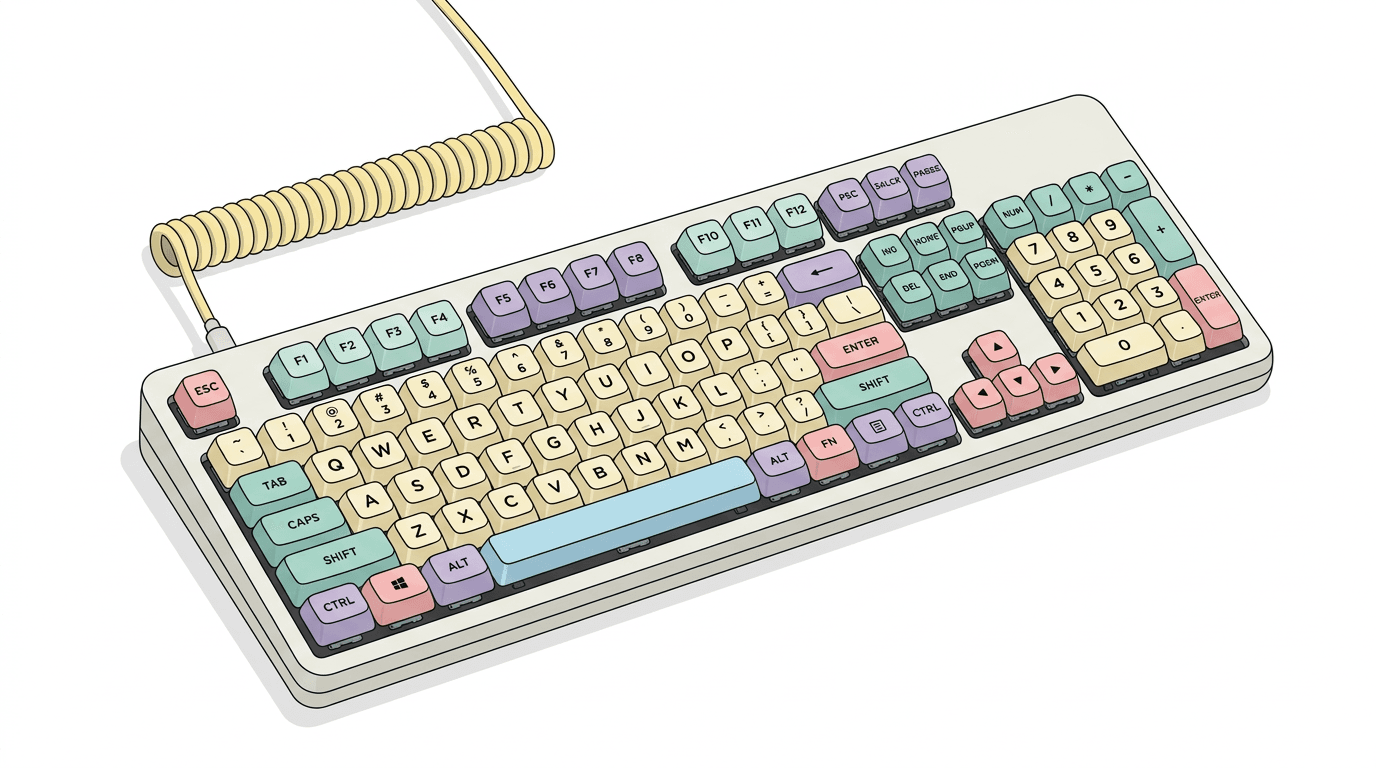
The Briefing
Quick takeaways for the curious
The retro mechanical keyboard movement marks a deliberate shift from ultrathin, frictionless input to tactile intentionality, using audible feedback and heavier key travel to command attention and improve focus.
Market dynamics show robust growth—from about $1.3B in 2022 to over $2.5B by 2030 at roughly 6.2% CAGR—driven by professionals beyond gamers who seek nostalgic aesthetics paired with modern features like Bluetooth and hot-swappable boards.
Tactile bottoming and the characteristic click create a cognitive loop that can improve typing accuracy and reduce mental fatigue compared to silent membrane keyboards.
The trend reflects a broader design philosophy that favors durable, industrial-inspired hardware over acts of thinness, signaling a quality-first desktop era.
This movement redefines the keyboard as the most intimate human-machine interface, offering sensory feedback that makes ideas feel tangible and anchoring work as a deliberate, creative act.
Title: The Click-Clack Renaissance: Why Retro Mechanical Keyboards are the Soul of the Modern Workspace
We are currently navigating a profound technological recalibration, a cultural pivot where the "chiclet" keyboard—once the sleek, silent hallmark of the minimalist laptop era—is being unceremoniously sidelined for the heavy, resonant, and unapologetically tactile experience of the retro mechanical keyboard. For decades, our relationship with digital input was defined by a race toward invisibility: thinner frames, shorter travel distances, and membranes so soft they felt like typing on wet cardboard. But the tide has turned. We are moving away from the era of "frictionless utility" and into an era of "tactile intentionality." The rise of the retro mechanical movement represents more than just a nostalgic aesthetic for those who remember the 1980s; it is a strategic reclamation of our primary interface with the digital world. It is no longer about simply entering data; it is about a system that provides acoustic feedback for every thought, a weighted resistance that demands presence, and a physical durability that mirrors the industrial-grade machinery of the mid-20th century. This is the new "Golden Age" of the desktop—a time when our most essential tool is being redesigned to satisfy the human craving for sensory feedback in an increasingly ephemeral, digital-first existence.
The Physics of Thought: Why Tactility Trumps Efficiency
To understand why the retro mechanical keyboard has become the obsession of the modern professional and creative, we must first address the "Sensory Void" created by modern mobile-first design. For years, the industry prioritized portability over experience. However, research into haptic feedback suggests that the physical sensation of a key "bottoming out" and the auditory "click" of an actuation point create a cognitive loop that improves typing accuracy and reduces mental fatigue. When you type on a modern retro mechanical board, you aren't just pushing a button; you are engaging a spring-loaded mechanism that has been engineered with the precision of a Swiss watch.
Market data reflects this shift toward high-fidelity hardware. The global mechanical keyboard market was valued at approximately $1.3 billion in 2022 and is projected to reach over $2.5 billion by 2030, growing at a CAGR of 6.2%. This isn't driven by gamers alone. The "Office Enthusiast" segment is the fastest-growing demographic, seeking out keyboards that mimic the legendary IBM Model M or the Commodore 64 aesthetics while hiding modern features like Bluetooth 5.0 and hot-swappable PCB boards under the hood.
"The keyboard is the most intimate connection between a human and the digital machine. When that connection is mushy and unresponsive, the creative process suffers. A mechanical switch provides a physical confirmation of an idea—it turns a fleeting thought into a definitive strike." — Marcus Thorne, Industrial Design Lead

The Engineering of Nostalgia: Switches, Springs, and Soul
The heart of the retro mechanical experience lies in the switch. Unlike the rubber domes found in standard office peripherals, mechanical switches use individual physical springs and metal contacts. For the retro purist, the "Clicky" switch (often categorized as Blue or Green switches) is the gold standard. These switches provide a sharp, audible snap that mimics the electric typewriters of the 1970s. However, the modern retro movement has evolved to include "Tactile" (Brown) and "Linear" (Red/Yellow) switches that offer a "thocky" sound—a deep, resonant bass note that feels premium rather than piercing.
Key concepts in the retro keyboard architecture include:
- PBT Keycaps: Unlike the cheap ABS plastic that turns shiny and greasy over time, high-quality retro boards use PBT (Polybutylene Terephthalate). This material is thicker, has a textured feel, and uses "dye-sublimation" to ensure the letters never fade, even after millions of keystrokes.
- Gasket Mounting: This is a modern engineering feat often found in high-end retro-style boards. The internal plate is suspended by foam or silicone gaskets, allowing for a "bouncy" typing feel that reduces strain on the fingers during long sessions.
- NKRO (N-Key Rollover): A technical standard that ensures every single keypress is registered simultaneously, a far cry from the "ghosting" issues of actual 1980s hardware.
- The "Thock" Factor: Enthusiasts spend hundreds of dollars on "lubing" their switches and adding "case foam" to achieve a specific acoustic profile that sounds like heavy raindrops on a wooden table.
Designing the Desktop Time Machine: Aesthetics and Ergonomics
The "Retro" in retro mechanical isn't a monolith; it spans several distinct eras of design. We see the "Industrial Gray" of the 1980s IBM era, characterized by beige and "pebble" colorways. Then there is the "Cyberpunk 70s" aesthetic, which utilizes wood accents, rounded keycaps, and warm, incandescent-style backlighting. Finally, there is the "Pop-Art" retro, inspired by the bold colors of the 1960s Olivetti typewriters.
Choosing a layout is the first step in building your retro sanctuary. While the "Full-Size" keyboard (104 keys) offers the classic numpad, many modern users are gravitating toward the "75%" or "TKL" (Tenkeyless) layouts. These smaller footprints allow for better ergonomics by keeping the mouse closer to the center of the body, reducing shoulder strain while maintaining the chunky, vintage aesthetic.

The Buyer’s Guide: Top Retro Mechanical Picks for the Modern Professional
When selecting a retro mechanical keyboard, you are looking for a balance between "Period-Correct Aesthetics" and "Modern Reliability." Here are the standout performers currently dominating the market:
1. The All-Rounder:
Inspired by the NES and Famicom consoles, this board is a masterclass in nostalgic branding. It features "Super Buttons"—massive, programmable dual-button pads that sit next to the keyboard. It uses Kailh Box White switches for that signature click and offers a triple-mode connection (Bluetooth, 2.4G, and USB-C).
2. The Boutique Heavyweight:
For those who want retro-futurism with a focus on health, the Q10 utilizes the "Alice" ergonomic split layout. With a full CNC-machined aluminum body, it feels like a piece of heavy machinery from a 1970s laboratory. It’s heavy, stays planted on your desk, and offers a premium gasket-mount typing feel.
3. The Modern Typewriter:
If the Bauhaus movement designed a keyboard in 2024, it would be the Lofree Block. It moves away from the "beige box" look toward a sophisticated, minimalist retro vibe. The keycaps are square with rounded corners, and the sound profile is meticulously dampened to provide a creamy, muted "thock."
4. The Feature-Rich Classic:
This board captures the "90s office" aesthetic perfectly but adds a unique twist: a removable "mini-display" that looks like a tiny CRT monitor. This screen can show CPU usage, time, or custom GIFs, bridging the gap between old-school looks and new-school data visualization.
5. The Luxury Heirloom:
Crafted with genuine leather and zinc alloy frames, the Azio is for the person who wants their desk to look like an 18th-century explorer's study. It mimics the circular keys of a manual typewriter and features a tactile "click" that is both authoritative and satisfying.
6. The Budget Powerhouse:
For those dipping their toes into the hobby, the RK84 Retro Edition provides the "coffee and cream" colorway of the 80s at a fraction of the cost. It is fully hot-swappable, meaning you can pull the switches out and replace them without soldering—a perfect gateway into the world of keyboard customization.
The Psychological Edge: Why "Old" Tech Makes Us Better Workers
There is a burgeoning field of study regarding "Environmental Anchoring." This theory suggests that the physical objects in our workspace act as anchors for our mental states. A flimsy, generic plastic keyboard signals to the brain that the work being done is transient and unimportant. Conversely, a heavy, mechanical tool signals a "Deep Work" state.
The intentionality required to maintain and use a mechanical keyboard—choosing the switches, cleaning the keycaps, perhaps even building it from a kit—fosters a sense of ownership over the digital workspace. In an age of "Planned Obsolescence," where most tech is designed to be replaced in 24 months, a retro mechanical keyboard is a defiant outlier. Most are built to last for 50 to 100 million keystrokes. That is a lifetime of writing.

Customization: The Final Frontier of the Desktop
The true magic of the retro mechanical world is that "out of the box" is only the beginning. The community surrounding these devices is vast and incredibly helpful. You can swap your keycaps for a "GMK 9009" set to perfectly replicate the look of a 1980s Reuters terminal. You can add "O-rings" to the stems to shorten the travel distance and silence the bottom-out sound.
This modularity is a form of digital craftsmanship. We spend 8 to 12 hours a day with our hands on these devices; why shouldn't they be tuned to our exact preferences? Whether you prefer the "linear" smoothness of a modern switch or the "buckling spring" violence of a vintage IBM, the retro mechanical world allows you to curate an interface that is as unique as your own handwriting.
Conclusion: Reclaiming the Rhythm of the Keystroke
We are witnessing a shift from the digital to the "Phygital"—a hybrid world where we demand the convenience of modern software but refuse to sacrifice the visceral satisfaction of the physical world. The retro mechanical keyboard is the vanguard of this movement. It reminds us that technology doesn't always have to be thinner, lighter, and quieter to be better. Sometimes, progress means looking back at what we lost—the weight, the sound, the resistance—and realizing that those "imperfections" were actually the things that made the experience human.
By choosing a high-quality mechanical board, you aren't just buying a peripheral; you are investing in a daily ritual. You are choosing to hear your progress, to feel your words, and to anchor your digital life in something substantial. In the end, the "click" isn't just a sound—it’s the heartbeat of a more intentional way of working.
Common Questions
🤔
Frequently Asked Questions
What are retro mechanical keyboards and why are they popular now?▼
Retro mechanical keyboards recreate the classic, heavy, tactile feel of vintage models while incorporating modern features. They use mechanical switches that provide tactile feedback and audible clicks, which many typists find enhances accuracy and presence. Interest is driven by professionals seeking a more engaging, distraction-free workspace and by collectors drawn to nostalgia. Market data shows growing demand beyond gaming audiences, including Office Enthusiasts who want the look and feel without sacrificing modern connectivity.
How does tactile feedback impact typing performance?▼
Tactile feedback originates from the mechanical switch actuation and the key bottom-out, delivering a physical confirmation of each press. That tactile cue creates a cognitive loop that can improve accuracy and help sustain focus during long typing sessions. The accompanying audible click provides additional feedback that reinforces correct timing.
What features should I look for in a modern retro mechanical keyboard?▼
Look for a sturdy case, a preferred switch type (linear, tactile, or clicky) with satisfying actuation, and keycaps that evoke retro aesthetics. Modern convenience features such as Bluetooth 5.0, USB-C, and hot-swappable PCBs let you customize without soldering. Consider layout options (full-size, TKL, or 75%) that fit your workspace, and ensure compatibility with your operating system. Durable materials and legends that resist wear help preserve the retro look over time.
Is the retro mechanical keyboard trend a lasting shift or a passing fad?▼
Market growth data and the expansion of the Office Enthusiast segment suggest durable demand beyond trends. These keyboards emphasize tactile, durable hardware rather than ephemeral features. While gaming remains a factor, the appeal now extends to professionals and creators seeking a more intentional interaction with the computer. Overall, the retro mechanical movement appears positioned to endure as a staple of the modern workspace.