Blog3/4/2026
Home Mushroom Cultivation: The Fungal Renaissance Begins
9 mins Read
The Briefing
Quick takeaways for the curious
Home mushroom cultivation marks a broader cultural shift from sterile urban life toward intimate biological practices that blend food, wellness, and technology.
The home mycology movement is fueled by the Grow Your Own trend, bio-hacking wellness, and fascination with fungal intelligence, with the global mushroom market projected to reach over $86 billion by 2028 driven by functional species like Lion’s Mane and Reishi.
Mushrooms demonstrate biological efficiency by thriving in vertical, low-light spaces and upcycling waste streams such as coffee grounds, cardboard, and sawdust into nutrient-dense protein.
This movement reframes mushrooms as living bio-architecture—an aesthetic, sustainable, and resilient addition to urban interiors that connects people to the circular economy.
Understanding the life cycle and flush dynamics helps home growers predict timing, optimize conditions, and harvest gourmet and medicinal mushrooms from a kitchen or home lab.
The Fungal Renaissance: Why Home Mycology is the Ultimate New Lifestyle Frontier
We are currently witnessing a biological homecoming, a profound cultural pivot where the high-tech sterility of our modern lives is being softened by the ancient, rhythmic pulse of the fungal kingdom. For decades, the average consumer’s relationship with mushrooms was defined by a narrow, uninspiring binary: the ubiquitous, plastic-wrapped white button mushroom at the supermarket, or the fearful avoidance of anything growing "wild" in the backyard. But the tide has turned. We are moving away from the era of "mycophobia" and into an era of "mycelial intimacy." The rise of the home mushroom cultivation movement represents more than just a culinary hobby; it is a sophisticated reclamation of our connection to the circular economy of nature. It is no longer about simply adding a topping to a pizza; it is about cultivating a living, breathing piece of biological architecture on your kitchen counter. This is the new "Golden Age" of home mycology—a time when the gap between a laboratory-grade cleanroom and a domestic bookshelf has narrowed to a sliver, allowing us to harvest gourmet, medicinal, and aesthetically stunning organisms in the heart of our urban environments.
The Mycelial Awakening: Why We’re Trading Dirt for Spores
The sudden explosion of interest in home mushroom cultivation isn't an accident. It is the intersection of three major cultural shifts: the "Grow Your Own" food movement, the bio-hacking wellness trend, and a growing fascination with the sheer alien intelligence of fungi. According to market research, the global mushroom market is projected to reach over $86 billion by 2028, driven significantly by the demand for "functional" fungi like Lion’s Mane and Reishi. But beyond the economics, there is a psychological pull. In an increasingly ephemeral digital world, there is something deeply grounding about watching a "flush" of Oyster mushrooms double in size overnight.
Cultivating mushrooms at home is the ultimate exercise in biological efficiency. Unlike traditional gardening, which requires vast amounts of horizontal space, sunlight, and soil, mushrooms thrive in the vertical, the shaded, and the recycled. They are the planet’s greatest upcyclers, turning waste products like coffee grounds, cardboard, and sawdust into nutrient-dense protein. This "Value Realism" appeals to the modern urbanite: we are no longer fighting against our lack of a backyard; we are leveraging the hidden potential of our indoor shadows.
"Fungi are the grand recyclers of the planet and the guardians of the ecosystem. When we bring them into our homes, we aren't just growing food; we are inviting a masterclass in resilience and transformation into our living spaces." — Inspired by the philosophy of Paul Stamets, Mycologist.
The Science of the Flush: Understanding the Life Cycle
To the uninitiated, mushrooms seem to appear by magic. One day there is nothing, and the next, a cluster of velvet-capped Oysters has exploded from a log. However, the process is a masterpiece of biological engineering. To grow mushrooms successfully at home, one must think less like a gardener and more like a curator of micro-climates. The process generally follows four distinct phases: Inoculation, Colonization, Pinning, and Fruiting.
During the colonization phase, the mycelium—the white, root-like network of the fungus—consumes the substrate (your growing medium). This is the secret life of the mushroom, a hidden intelligence network that breaks down complex lignins and cellulose. The fruiting phase is the "show" we all wait for. It is triggered by a change in environment—usually an increase in humidity and a drop in CO2 levels. This is where the home grower becomes a "climate architect," using misters and humidity tents to signal to the mycelium that it is time to reproduce.

From Kitchen Counter to Gourmet Plate: Varieties to Grow
The beauty of the home mushroom movement is the sheer variety of species that are now accessible to the amateur grower. We are no longer limited to the bland offerings of the grocery store.
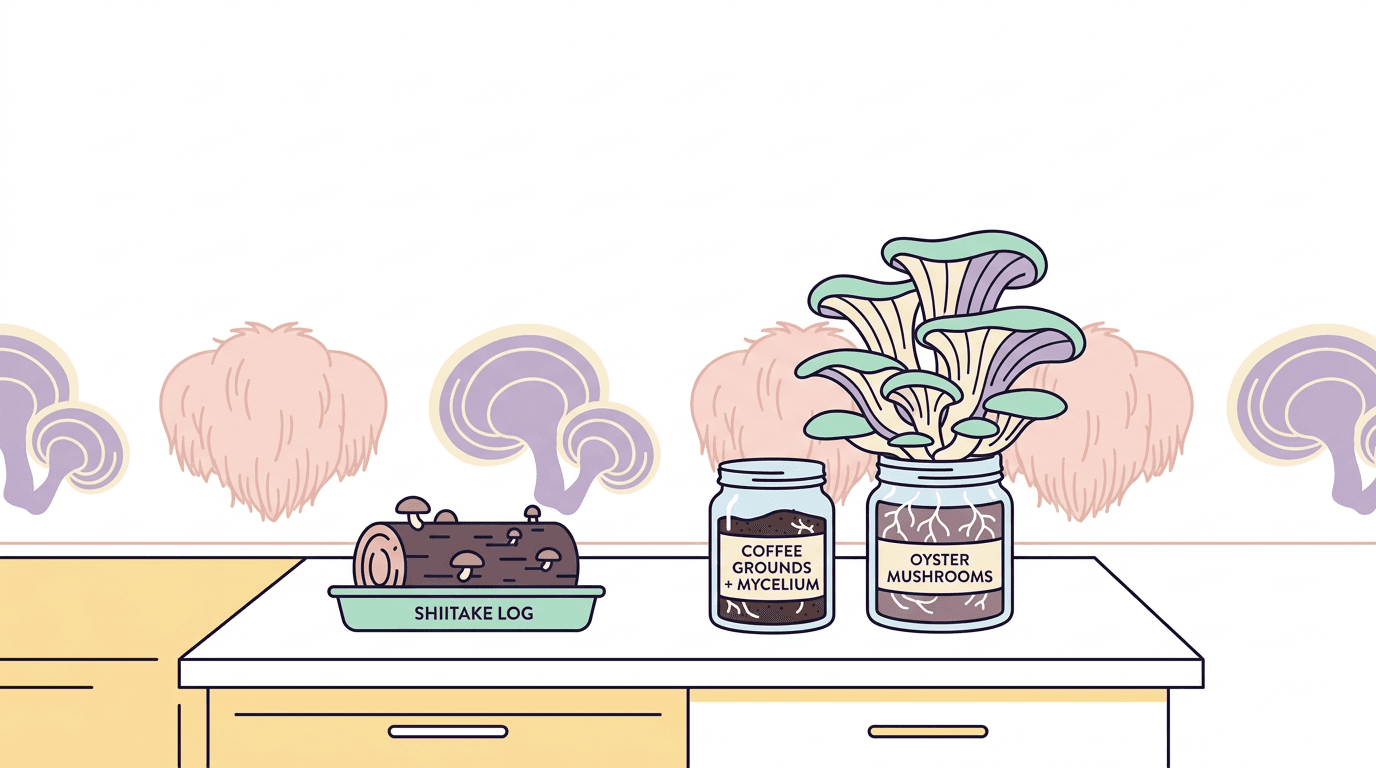
- Oyster Mushrooms (Pleurotus ostreatus): The "gateway drug" of mycology. They are incredibly resilient, grow on almost anything (including old jeans or books), and come in a stunning array of colors—pearl, blue, pink, and golden.
- Lion’s Mane (Hericium erinaceus): Often called the "smart mushroom," this variety looks like a cascading white waterfall of icicles. It is prized by the bio-hacking community for its neuroprotective properties and its ability to stimulate Nerve Growth Factor (NGF).
- Shiitake (Lentinula edodes): For those with a little more patience, Shiitake logs provide a savory, umami-rich harvest that far exceeds the quality of store-bought versions.
- Wine Cap (Stropharia rugosoannulata): Perfect for those with a small outdoor patch or even a large indoor planter, these "garden giants" help build soil health while providing meaty, delicious caps.
The Psychology of Mycology: Mindfulness in the Mist
There is a meditative quality to the "Mushroom Lifestyle." Unlike a high-maintenance pet or even a thirsty houseplant, mushrooms require a specific type of passive-active attention. You set the conditions, and then you wait. The act of misting a grow kit twice a day becomes a ritual of mindfulness—a moment to step away from the blue light of the smartphone and engage with a living organism that operates on a completely different timescale.
Furthermore, the "aesthetic permanence" of a well-maintained mushroom setup is undeniable. A fruiting block of Pink Oysters is as visually striking as any exotic orchid, but with the added benefit of being edible. We are seeing a shift where the "indoor garden" is being replaced by the "indoor laboratory-chic," where functional beauty is the highest currency.
The HootFinds Buyer’s Guide: Tools for the Modern Mycologist
If you’re ready to transition from a mushroom admirer to a mushroom grower, the barrier to entry has never been lower. Here are the curated essentials to start your fungal journey:
- For the Absolute Beginner: . This is the quintessential "entry point." It is a pre-colonized block of Oyster mushrooms that requires nothing more than a kitchen counter and a spray bottle. It’s foolproof and provides a harvest in as little as ten days.
- The Cognitive Booster: . If you are interested in the medicinal benefits of fungi, this kit offers a high-yield way to grow your own "brain food." The texture is remarkably similar to crab meat when cooked.
- The Serious Hobbyist’s Hub: . For those ready to move beyond pre-made blocks, this kit provides the containers, air pumps, and lighting needed to create a controlled "fruiting chamber" for multiple varieties.
- Environmental Control: . Mushrooms breathe like we do, but they need 80-90% humidity. This ultrasonic humidifier is specifically designed to maintain the "foggy morning" conditions that fungi love.
- The Knowledge Base: . Often referred to as the "Bible of Mycology," this book is essential for anyone looking to understand the deeper science of agar work and liquid cultures.
- The Culinary Companion: . A premium tool featuring a curved blade for clean cuts and a boar hair brush on the end to clean your harvest without damaging the delicate gills.
Future Roots: Sustainability and the Circular Economy
The most profound impact of home mycology lies in its potential to redefine our relationship with "waste." In a traditional linear economy, we consume and discard. In a mycelial economy, every ending is a beginning. The spent substrate from your mushroom kit isn't trash; it is "super-compost." Once the mushrooms have finished fruiting, the remaining block is teeming with beneficial microbes and broken-down nutrients that can be added to houseplants or garden beds to revitalize the soil.
Research from institutions like the University of British Columbia suggests that mycelium-based materials could eventually replace plastics and synthetic foams. By growing mushrooms at home, we are participating in a micro-version of this future. We are learning to work with a material that is biodegradable, carbon-sequestering, and infinitely renewable.
The Final Flush: A New Way of Seeing
The "Home Mushroom" is not just a trend; it is a symptom of a society looking to re-root itself in something real. As we navigate the complexities of the 21st century, the simple act of nurturing a colony of fungi offers a powerful metaphor for life. Fungi teach us that growth often happens in the dark, that there is strength in connection, and that what we perceive as "waste" is often just the fuel for the next great transformation.
Whether you are drawn to the culinary thrill of a pan-seared King Trumpet, the neurological promise of Lion's Mane, or simply the quiet joy of a mist-filled morning, home mycology invites you to slow down. It asks you to observe the subtle shifts in humidity, the courage of a tiny "pin" pushing through a substrate, and the incredible resilience of a kingdom that has survived five mass extinctions. The "Golden Age" of home mycology is here, and it’s time to let the spores take root in your life. It is time to stop buying mushrooms in plastic boxes and start witnessing the miracle of their growth on your own terms. After all, the future is not just green; it is mycelial.
Common Questions
🤔
Frequently Asked Questions
What is home mushroom cultivation and why is it gaining popularity?▼
Home mushroom cultivation is the practice of growing edible, medicinal, or gourmet mushrooms at home, using mycelium to convert substrates into food. It's gaining traction because it requires minimal horizontal space, leverages vertical setups, and taps into the broader 'Grow Your Own' and wellness movements. It also aligns with the circular economy by turning waste like coffee grounds and sawdust into protein. This makes it accessible for urban dwellers to produce fresh harvests on a kitchen counter.
What are the best mushrooms to grow at home for beginners?▼
Begin with forgiving species like Oyster mushrooms, which fruit quickly on simple substrates and starter kits. Lion’s Mane and Shiitake are also popular for their culinary and medicinal benefits and can be manageable with proper humidity and clean conditions. Using a beginner kit can simplify substrate preparation and reduce contamination risk, making the learning curve gentler. Oyster mushrooms are especially forgiving and adapt well to small indoor spaces.
How does growing mushrooms at home contribute to sustainability and waste reduction?▼
Growing mushrooms at home recycles waste streams like coffee grounds, cardboard, and sawdust into nutritious food. This reduces reliance on industrial substrates and lowers food miles when mushrooms are grown locally. The practice demonstrates biological efficiency, turning low-value inputs into gourmet or medicinal outputs. Urban growers become part of a broader system that values resilience and resource upcycling.
What equipment and steps do I need to start a small at-home mushroom setup?▼
Start with a beginner-friendly kit or inoculated substrate and ensure you have a clean workspace to minimize contamination. You’ll need a suitable substrate (like pasteurized sawdust or straw), a steady moisture source to maintain humidity, and an area with stable temperature appropriate for your species. Provide fresh air exchange and appropriate light, and monitor for signs of contamination or drying, maintaining cleanliness to protect your crop. For fruiting, follow species-specific guidelines and consider a simple humidity tent or humidity dome to regulate conditions.