
Blog3/5/2026
Smart Home Water: Hydro-Intelligence for Home Sustainability
10 mins Read
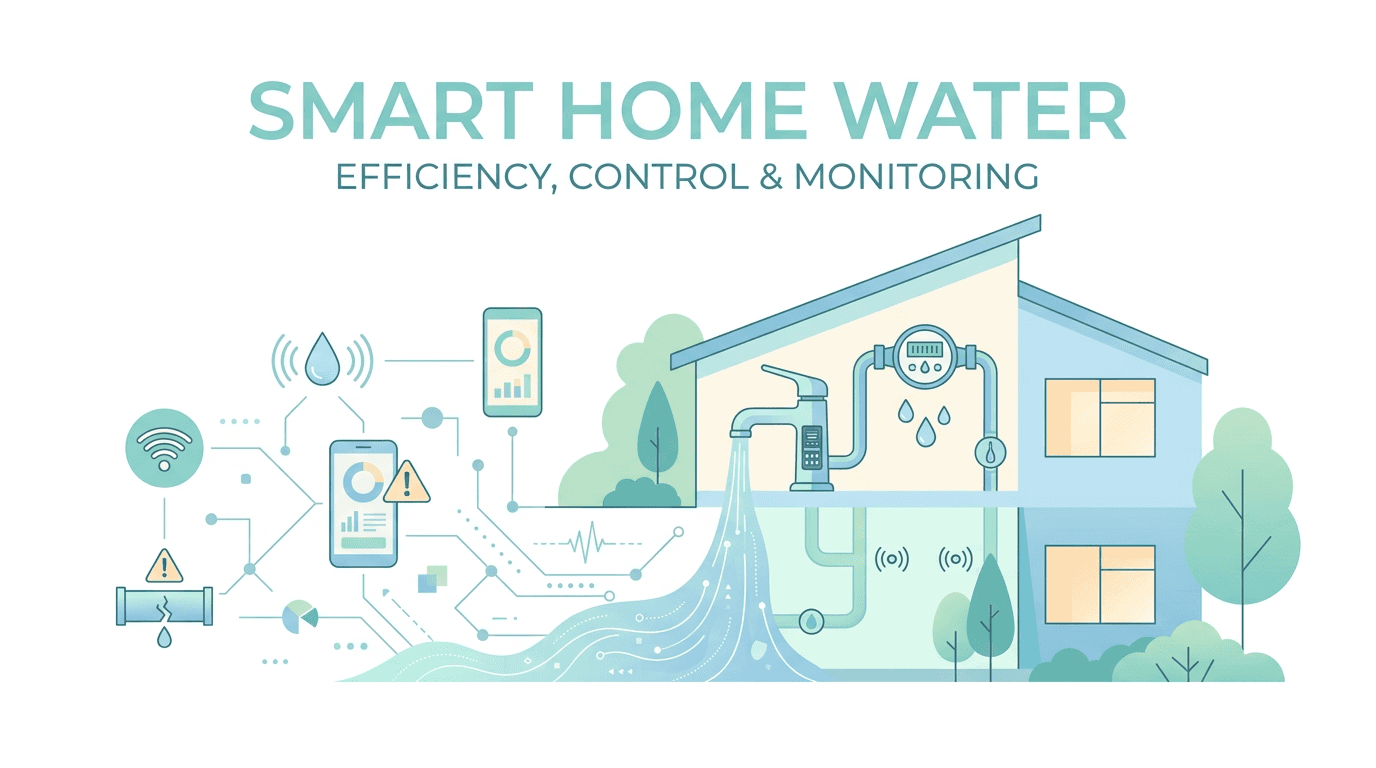
The Briefing
Quick takeaways for the curious
The home is transitioning from passive plumbing to hydro-intelligence—a data-driven nervous system that monitors, analyzes, and optimizes water use in real time.
Modern smart-water systems detect leaks and abnormal pressure patterns early, enabling automated shutoffs that prevent expensive damage before it starts.
These solutions bring industrial-grade control to residential plumbing, with granular insights that adjust performance, filtration, and flow based on local utility data and household demand.
The adoption of smart water is a risk-management and conservation play, essential given EPA estimates of wasted leaks and water-damage insurance costs.
Leading brands like Moen and Phyn exemplify how 240 Hz pressure-sensing listening and motorized valves turn water management into proactive guardianship of the home.
Title: The Hydro-Intelligence Revolution: Why Smart Water Management is the New Frontier of Home Sustainability
We are currently navigating a profound technological recalibration, a cultural pivot where the humble copper pipe—once the silent, invisible circulatory system of our homes—is being upgraded into a sophisticated, data-driven nervous system. For over a century, our relationship with domestic water was purely transactional and largely blind: we turned a handle, water emerged, and we paid a bill weeks later based on aggregate consumption. But the tide has turned. We are moving away from the era of "passive plumbing" and into an era of "hydro-intelligence." The rise of smart water technology represents more than just a convenience for the gadget-obsessed; it is a strategic reclamation of our most precious natural resource. It is no longer about simply managing flow; it is about a system that detects a microscopic pinhole leak in the basement before it becomes a $20,000 insurance claim, and a filtration setup that adjusts its intensity based on the specific molecular profile of your local utility’s output. This is the new "Golden Age" of resource management—a time when our homes are learning to monitor, preserve, and optimize water with a level of granularity that mirrors the most advanced industrial ecosystems.
The Invisible Crisis: Transitioning from Reactive to Proactive Defense
To understand why smart water has become the obsession of the modern homeowner, we must first address the "Silent Epidemic" of domestic water damage. According to the Environmental Protection Agency (EPA), the average American household wastes nearly 10,000 gallons of water annually through easy-to-fix leaks. On a larger scale, water damage is the second most common cause of home insurance claims, with the industry paying out billions of dollars every year for incidents that were entirely preventable. Traditional plumbing is a "dumb" system; it has no way of knowing the difference between a high-pressure shower and a burst pipe in the drywall.
The shift toward adaptive leak detection—led by brands like Moen and Phyn—is fundamentally changing the risk profile of the modern home. These devices utilize high-definition pressure wave analysis to "listen" to the vibrations of your pipes. By sampling pressure 240 times per second, these systems can distinguish the unique "signature" of a running faucet versus the erratic pressure drop of a failing seal. This isn't just a sensor; it’s a digital sentry. When a catastrophic failure is detected, the system doesn't just send a push notification to your smartphone; it autonomously engages a motorized ball valve to shut off the main water line, effectively "cauterizing" the wound before the first gallon of water hits your hardwood floors.
"The transition from passive infrastructure to active, intelligent monitoring is the single greatest leap in residential risk management since the invention of the circuit breaker. We are finally giving the home a sense of touch regarding its most volatile utility." — Julian Thorne, Lead Architect at Hydro-Tech Innovations.
The Precision of Purity: Real-Time Molecular Monitoring
Beyond the structural integrity of our homes, the hydro-intelligence revolution is tackling the biological and chemical quality of what we consume. For decades, water filtration was a "set it and forget it" affair—a charcoal filter sat under the sink, losing effectiveness every day until an arbitrary six-month timer light flickered on. This "blind filtration" model is being replaced by real-time sensing technology that monitors Total Dissolved Solids (TDS), chlorine levels, and even heavy metal concentrations in situ.
Modern smart filtration systems are now integrated into the broader home ecosystem. They can communicate with your smartphone to provide a daily "Water Quality Score," allowing users to see exactly what is being removed from their tap. More importantly, these systems are becoming adaptive. For instance, if a local water main break occurs and the city increases chlorine dosing to compensate, a smart reverse osmosis system can detect the chemical spike and adjust its flow rate or alert the user to change pre-filters early. This is the "Bio-Digital Convergence" of the kitchen—where the water we drink is treated with the same scientific rigor as a lab-grade solution.

The Conservation Algorithm: Nudging Behavior Through Data
The true genius of the smart home water movement lies in its ability to solve the "Abundance Paradox." Because water is relatively inexpensive in the developed world, we tend to treat it as an infinite resource. However, as climate volatility increases and droughts become more frequent, the need for surgical conservation has moved from a moral suggestion to a logistical necessity.
Smart water monitors provide what behavioral economists call a "nudge"—a gentle push toward better habits through the visualization of data. When you can see that a 12-minute shower used 30 gallons of water and cost $0.45 in heating energy, the abstraction of "saving the planet" becomes a concrete, measurable metric. These devices categorize usage with startling accuracy; they can tell you exactly how much water went to the dishwasher versus the irrigation system versus the upstairs toilet.
Key Concepts in Smart Conservation:
- Usage Fingerprinting: The ability of AI to identify specific appliances based on their unique flow patterns and duration.
- Acoustic Sensing: Using ultrasonic waves to measure water velocity without ever touching the liquid, ensuring long-term hardware reliability.
- Predictive Irrigation: Smart controllers that bypass scheduled watering if the local weather forecast predicts rain within the next 24 hours, saving thousands of gallons per season.
The Sensory Spa: Luxury Meets Liquid Intelligence
While safety and conservation are the pillars of the smart water movement, the "Human Experience" is where the technology becomes truly seductive. The bathroom is being reimagined as a sanctuary of precision. We are seeing the rise of the "Digital Plumber"—fixtures that allow for personalized "hydro-profiles." Imagine a shower that knows your preferred temperature is exactly 103 degrees Fahrenheit and automatically pauses the flow once the water reaches that temperature, waiting for you to step in before resuming.
This isn't just about luxury; it’s about accessibility and safety. For households with children or the elderly, smart faucets with LED temperature indicators and "scald protection" algorithms provide a layer of safety that manual valves simply cannot match. Furthermore, voice-activated kitchen faucets—capable of dispensing exactly "two cups of water at 110 degrees"—are transforming the culinary experience from a series of manual measurements into a seamless, hands-free workflow.

The Buyer’s Guide: Essential Hardware for the Hydro-Intelligent Home
Transitioning to a smart water ecosystem requires a strategic mix of "whole-home" protection and "point-of-use" convenience. Here are the top-tier solutions currently defining the market:
- : The gold standard for whole-home protection. This device is installed on your main water line and uses proprietary AI to detect leaks as small as one drop per minute. Its ability to automatically shut off the water during a burst makes it an essential investment for any high-value property.
- : Utilizing ultra-precise pressure sensing, Phyn offers some of the most detailed usage insights on the market. It doesn't require additional sensors around the house; its "fingerprinting" tech can identify a leaky flapper in a guest bathroom from the main line.
- : For those with extensive landscaping, the Rachio 3 is a game-changer. It integrates with local weather stations to ensure you never water the lawn during a rainstorm, potentially reducing outdoor water use by up to 50%.
- : A masterpiece of kitchen utility. This faucet responds to voice commands through Alexa or Google Assistant, allowing you to fill pots or bottles to specific measurements without touching the handle—a godsend for the messy home chef.
- : This under-sink powerhouse provides professional-grade filtration with a smart twist. It tracks your filter life based on actual gallon usage rather than time, ensuring you always have the highest purity without premature filter replacements.
- : Transform your morning routine into a data-driven spa experience. Control your shower via an app or voice, setting precise temperatures and durations to balance luxury with environmental responsibility.
The ROI of Intelligence: Why the Investment Makes Sense
Critics often point to the upfront cost of smart water hardware—often ranging from $400 to $1,000 for professional-grade units—as a barrier to entry. However, the Return on Investment (ROI) is multi-faceted. First, there is the Insurance Incentive. Many major insurance providers now offer significant discounts on premiums (sometimes up to 10-15%) for homes equipped with an automatic water shut-off valve. In some cases, the device pays for itself in premium savings alone within three years.
Second, there is the Asset Preservation value. A slow leak behind a vanity can lead to mold remediation costs that dwarf the price of a smart sensor. By identifying "micro-leaks" before they compromise the structural integrity of the home, these systems act as a form of preventative medicine for your real estate. Finally, the Utility Savings are non-trivial. For a family of four, the combination of smart irrigation and usage-monitoring can shave $200 to $500 off annual water and sewer bills.

The Future: From Smart Homes to Resilient Cities
As we look toward the horizon, the "Smart Home Water" movement is beginning to interface with the "Smart City" infrastructure. We are entering an era of bidirectional communication. Imagine a future where, during a period of extreme drought or a municipal water shortage, your home's smart system receives a signal from the city to temporarily prioritize essential usage (drinking, hygiene) over non-essential usage (lawn irrigation, pool filling). This level of collective intelligence could prevent systemic water failures and ensure equitable distribution during crises.
Furthermore, we are seeing the emergence of "Greywater Intelligence"—systems that can autonomously treat and redirect water from your shower or laundry to flush your toilets or water your garden. This circular water economy, managed by AI, represents the ultimate evolution of the home as a self-sustaining organism.
A New Philosophy of Flow
The hydro-intelligence revolution is not merely about adding Wi-Fi to a faucet or putting a sensor on a pipe. It is a fundamental shift in our domestic philosophy. It is a transition from being passive consumers to being active stewards of a vital resource. By integrating AI and high-precision sensing into our plumbing, we are removing the "human error" from conservation and the "blind luck" from home maintenance.
Ultimately, a smart water home is a more resilient home. It is a home that respects the complexity of the environment while providing an unparalleled level of safety and luxury to its inhabitants. As we face a century defined by resource scarcity, the decision to upgrade our water systems is no longer just a "tech trend"—it is a strategic imperative for the modern, conscious living space. The "Golden Age" of water is here, and it is clearer, smarter, and more sustainable than ever before.
Common Questions
🤔
Frequently Asked Questions
What is smart water management and why is it becoming essential for homes?▼
Smart water management uses connected sensors, valves, and software to monitor flow, pressure, and quality in real time. It turns household plumbing into an adaptive system that can reveal hidden leaks, track consumption, and optimize filtration and usage based on actual conditions. By moving from reactive fixes to proactive monitoring, homes can reduce waste and prevent costly damage, while providing data that informs maintenance decisions and utility planning.
How do smart water leak detectors work and what makes them different from traditional sensors?▼
Leak detectors in smart water systems analyze pressure signatures and flow patterns to differentiate between normal use and leaks. They sample pressure continuously (the article references 240 times per second) and can identify the distinct 'signature' of a running faucet versus a failing seal. When a potential issue is detected, many systems can automatically shut off the main supply with a motorized valve to stop a developing leak. This level of automatic protection goes beyond traditional sensors that merely notify you after damage has begun.
Can smart water systems help reduce insurance costs and water bills?▼
Smart water systems are designed to reduce wasted water—EPA estimates show how much is lost to leaks—and they also lower the risk of expensive claims from water damage. By early detection and rapid isolation of a leak, they minimize both water bills and the cost of repairs or insurance payouts. Over time, the savings from conservation and risk reduction can justify the investment in the technology. However, actual savings depend on usage, system design, and proper installation.
What should homeowners consider when choosing and installing a smart water system?▼
When choosing a smart water system, consider compatibility with your existing plumbing, the depth of leak-detection capabilities, and how it integrates with filtration or utility profiles. Look at brands with proven track records (e.g., Moen, Phyn) and check whether the system offers automatic shutoff, real-time alerts, and a robust data app. Installation complexity, maintenance requirements, data privacy, and compatibility with your insurance or home-automation ecosystem are also important. Finally, plan for a phased rollout and assess potential ROI based on leak risk, water rates, and maintenance costs.