Blog3/1/2026
At-Home Red Light Therapy: Boost Mitochondria & Skin
9 mins Read
The Briefing
Quick takeaways for the curious
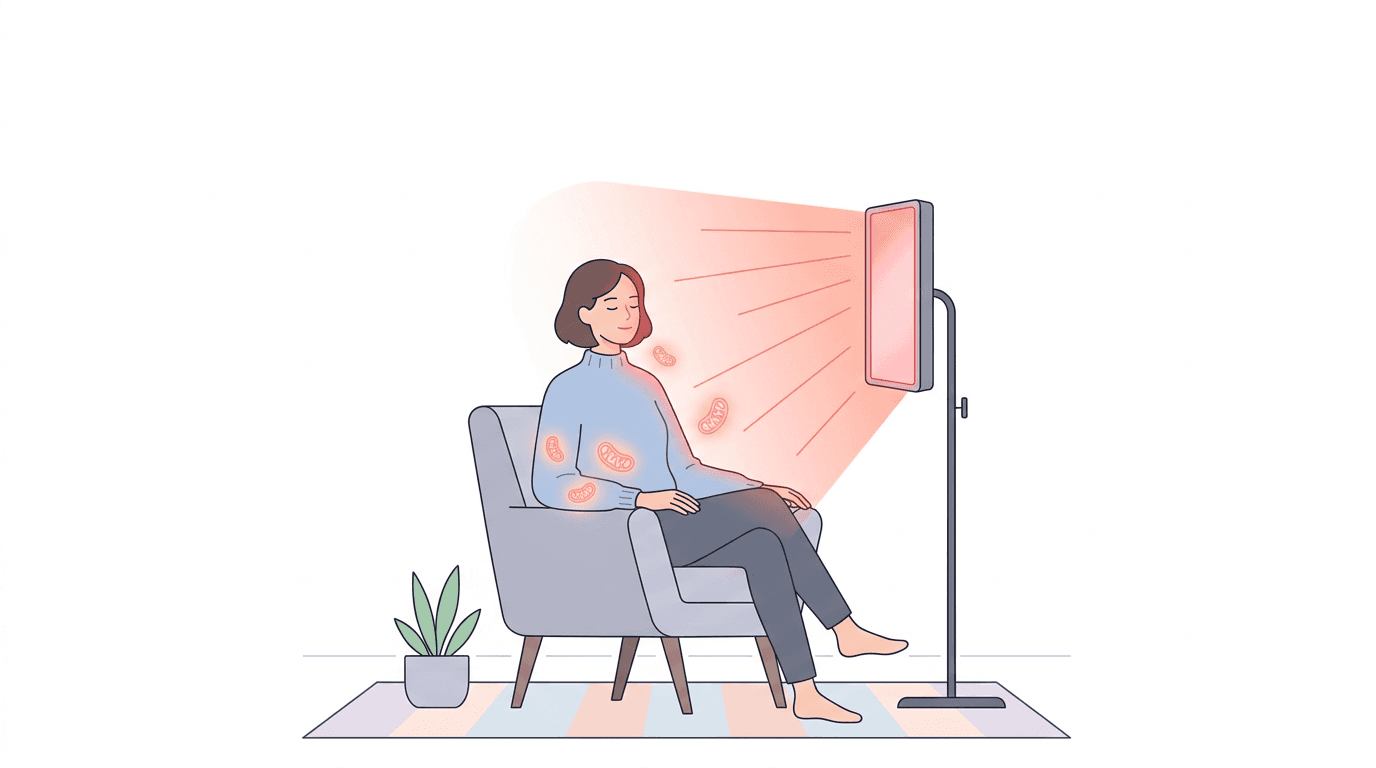
At-home red light therapy leverages photobiomodulation using red wavelengths around 660 nm and near-infrared wavelengths around 850 nm to boost mitochondrial energy production by displacing nitric oxide from cytochrome c oxidase, thereby increasing ATP.
Clinical and laboratory evidence, ranging from NASA-era research to thousands of modern peer-reviewed studies, supports benefits for skin rejuvenation, collagen production, muscle recovery, and cognitive function through regular use.
Choosing wavelengths within the therapeutic window matters because tissue penetration varies with wavelength and device irradiance; this influences how deeply the light can affect cells and tissues.
The shift from clinics to home use makes photobiology more accessible, enabling routine dosing as part of wellness practices with user-friendly devices and guided protocols.
Effective use hinges on understanding session duration, frequency, irradiance, and safety practices (including eye protection and following manufacturer guidelines) to maximize results while minimizing risk.
The biological sun is setting on our indoor-centric lives. For the vast majority of modern humans, the transition from the bedroom to the office to the gym happens under the sterile, flickering hum of overhead fluorescent bulbs or the sleep-disrupting blue glare of LED screens. We have become a species living in a permanent "biological winter," starved of the specific, nourishing wavelengths of light that our ancestors bathed in for millennia. This deficit isn't just a matter of mood; it’s a matter of cellular energy. However, a quiet revolution in biohacking is moving the clinical power of the sun—specifically the healing red and near-infrared frequencies—out of the high-end longevity clinics and directly into our living rooms. We are entering the era of At-Home Red Light Therapy, a sophisticated application of photobiology that promises to recharge our mitochondria, rejuvenate our skin, and repair our muscles with the simple flick of a switch.
The Mitochondrial Engine: How Light Becomes Energy
To understand why sitting in front of a glowing red panel isn't just "expensive mood lighting," we have to zoom in past the dermis and into the powerhouse of the cell: the mitochondria. The process is scientifically known as Photobiomodulation (PBM). When specific wavelengths of red light (typically 660nm) and near-infrared light (typically 850nm) hit your skin, they penetrate deep into the tissue. Here, they interact with a light-sensitive enzyme called cytochrome c oxidase.
In a stressed or aging cell, nitric oxide often binds to this enzyme, effectively gumming up the works and halting the production of Adenosine Triphosphate (ATP)—the universal energy currency of life. Red light acts as a biological "reset button." It displaces the nitric oxide, allowing oxygen to rush back in and the mitochondria to resume ATP production at peak efficiency.
"We are essentially light-eaters. Just as plants use chlorophyll to convert sunlight into tissue, human cells use chromophores within our mitochondria to convert red and near-infrared light into cellular energy. It is a fundamental nutrient that the modern environment has stripped away." — Dr. Michael Hamblin, Associate Professor at Harvard Medical School and a leading expert in photomedicine.
This isn't fringe science. The roots of modern red light therapy can be traced back to NASA in the 1990s, where researchers used LEDs to promote plant growth in space and subsequently discovered that the light significantly accelerated the healing of wounds in astronauts. Today, thousands of peer-reviewed studies validate its efficacy for everything from collagen production to cognitive function.
The Spectrum of Healing: Red vs. Near-Infrared
When shopping for an at-home device, the terminology can get dense. The most critical distinction to understand is the "Therapeutic Window"—the range of light wavelengths that can penetrate human tissue without being immediately absorbed by water or hemoglobin.
- Red Light (630nm – 670nm): This visible spectrum is primarily absorbed by the skin’s surface. It is the gold standard for dermatological concerns. It stimulates fibroblasts to produce collagen, reduces fine lines, and calms inflammatory conditions like acne and rosacea.
- Near-Infrared Light (810nm – 850nm): This spectrum is invisible to the human eye but penetrates much deeper—up to several centimeters into the body. This is where the magic happens for deep tissue repair, joint pain relief, muscle recovery, and even brain health.
The most effective at-home setups utilize a combination of both. By delivering a "cocktail" of these wavelengths, you are addressing the body at multiple depths simultaneously: surfacing the glow of the skin while fueling the recovery of the muscle fibers beneath.

From Complexion to Core: The Multi-System Benefits
The versatility of red light therapy is perhaps its most compelling feature. It is one of the few interventions that feels equally at home in a high-end beauty routine as it does in a professional athlete’s recovery suite.
1. Dermatological Transformation
Red light therapy is a non-invasive alternative to chemical peels and laser resurfacing. By boosting collagen and elastin production, it helps the skin maintain its structural integrity. A study published in Photomedicine and Laser Surgery found that participants using red light therapy experienced significantly improved skin complexion, skin tone, and collagen density.
2. Muscle Recovery and Performance
Athletes have long used NIR (Near-Infrared) to bounce back from grueling training sessions. The increased ATP production allows for faster cellular repair, while the light’s ability to reduce oxidative stress limits the "burn" of delayed onset muscle soreness (DOMS). Using a panel before a workout may even prime the muscles for better performance by increasing blood flow.
3. Inflammation and Joint Health
For those dealing with chronic issues like arthritis or tendonitis, red light therapy offers a drug-free path to pain management. By reducing systemic inflammation and increasing circulation to areas with poor blood supply (like cartilage), it can significantly improve mobility and comfort levels.
4. Circadian Rhythm and Sleep
In an age of blue light toxicity, red light acts as a corrective. Exposure to red light in the evening does not suppress melatonin production the way blue light from phones does. In fact, many users find that a 10-minute session before bed helps signal the body to wind down, leading to deeper, more restorative sleep cycles.
Navigating the Device Jungle: What to Look For
The market for at-home red light therapy has exploded, ranging from $30 "beauty wands" to $5,000 full-body chambers. To get clinical results at home, you need to look past the marketing and focus on three key metrics: Irradiance, EMF Output, and Flicker.
- Irradiance: This is the power density of the light, measured in milliwatts per square centimeter (mW/cm²). Higher irradiance means you can achieve a therapeutic dose in less time. Look for devices that offer at least 100mW/cm² at a distance of 6 inches.
- EMF Output: High-quality devices are engineered to emit zero or very low Electromagnetic Fields (EMF) at the recommended treatment distance. Since you are using this for health, you don't want to bathe yourself in "dirty electricity" while trying to heal.
- Flicker Rate: Cheap LEDs flicker at a frequency that can cause headaches or eye strain. Premium devices use high-quality drivers to ensure a constant, steady stream of light.

The HootFinds Buyer’s Guide: Top At-Home Contenders
Choosing the right device depends on your goals. Are you looking for targeted facial rejuvenation, or do you want to treat your entire back after a long day at the desk? Here are our top-vetted recommendations.
The Gold Standard Panel:
Joovv pioneered the modular at-home panel. The Solo 3.0 is a medical-grade device that offers a perfect balance of size and power. It features their patented "Recovery+ mode," which pulses the light to enhance the body's natural recovery processes. It’s the choice for those who want a professional-grade setup that can grow with them.
The Targeted Skin Specialist:
If your primary goal is anti-aging and skin clarity, this flexible silicone mask is peerless. Unlike rigid masks, the Omnilux sits directly against the skin, ensuring maximum light absorption. It is FDA-cleared and backed by clinical studies specifically targeting fine lines and wrinkles.
The Biohacker’s Entry Point:
You don’t need to spend thousands to see results. The Hooga HG300 is a compact, high-powered panel that delivers impressive irradiance for its price point. It’s perfect for treating the face, neck, or specific joints like the knee or elbow.
The Full-Body Luxury Experience:
For those who want total systemic benefits, the MitoPRO 1500 offers four different wavelengths (630nm, 660nm, 830nm, 850nm). This "quad-spectrum" approach ensures you are hitting every possible therapeutic peak. Its massive size allows for half-body coverage in a single session.
The Wearable Recovery Tool:
HigherDose is known for bringing spa-level tech to the home. Their mask is exceptionally lightweight and designed for people who don't want to sit still. It uses a functional design that allows you to move around the house while getting your 10-minute dose of 660nm and 850nm light.
The Precision Wand:
While smaller and less powerful than a panel, this wand combines red light with microcurrent, facial massage, and therapeutic warmth. It’s an excellent travel-friendly option for maintaining skin health on the go.
The Protocol: How to Use Red Light Effectively
The most common mistake people make with red light therapy is "more is better." Photobiomodulation follows the Arndt-Schulz Law, which describes a biphasic dose response. In simple terms: a little bit is stimulating, but too much can actually be inhibitory.
To get the best results, follow these guidelines:
- Distance Matters: For skin benefits, stay 12-18 inches away. For deep tissue and muscle recovery, move closer (6 inches) to increase the intensity.
- Consistency is King: You won't see a transformation after one session. Aim for 10-20 minutes, 3 to 5 times per week. Results typically manifest after 4-8 weeks of consistent use.
- Skin Prep: Always use red light on clean, dry skin. Lotions and sunscreens can reflect the light, preventing it from reaching the mitochondria.
- Eye Protection: While red light is generally safe, the brightness of high-powered panels can be uncomfortable. Most reputable brands include blackout goggles—use them, especially when treating the face.

The Future of Light as Medicine
As we continue to decouple our lives from the natural world, we must find ways to integrate the essential elements of nature back into our high-tech environments. At-home red light therapy represents more than just a beauty trend; it is a shift toward "proactive biology." By providing our cells with the raw energy they need to repair themselves, we are moving away from the "fix it when it breaks" model of healthcare and toward a model of continuous optimization.
Whether you are an athlete looking for an edge, a professional trying to erase the signs of stress from your face, or simply someone looking to improve your systemic health, red light therapy offers a rare opportunity: a science-backed, non-invasive, and deeply relaxing way to upgrade your human hardware. The "biological sun" is now available at the push of a button. It’s time to step out of the dark.
Common Questions
🤔
Frequently Asked Questions
What is at-home red light therapy and how does it work?▼
At-home red light therapy is a form of photobiomodulation that uses red light around 660 nm and near-infrared light around 850 nm to stimulate cells. When these wavelengths reach tissue, they interact with the mitochondrial enzyme cytochrome c oxidase, helping to displace inhibitory molecules and restore ATP production. This uptick in cellular energy can support results like improved skin vitality, faster muscle recovery, and potential cognitive benefits with consistent use.
What wavelengths are typically used in red light therapy and why are they chosen?▼
Typical wavelengths used are around 660 nm for red light and around 850 nm for near-infrared light because these bands penetrate skin to different depths and effectively interact with mitochondrial processes. This combination targets both surface and deeper tissues, maximizing potential effects while remaining within the body's optical window.
What practical health benefits can I expect from regular at-home red light therapy?▼
Regular at-home red light therapy is associated with improvements in collagen production and skin elasticity, plus faster muscle recovery after workouts and reduced inflammation. Some studies also report cognitive benefits, though results vary depending on dose, device quality, and consistency.
How should I choose and safely use an at-home red light therapy device?▼
Choose a device that provides wavelengths in the red and near-infrared range with sufficient irradiance for your goals, and follow the product's recommended session times. Begin with shorter sessions to assess tolerance, gradually increasing, and always protect your eyes and avoid direct high-intensity exposure.