
Blog3/2/2026
Desktop Water Filtration Guide: Purify Hydration at Your Desk
10 mins Read

The Briefing
Quick takeaways for the curious
Desktop filtration brings high-quality drinking water directly to your workspace, turning hydration into a purposeful, extension of your desk-side efficiency.
Relying on municipal water safety alone can overlook trace contaminants; desktop RO and ion-exchange systems act as a crucial final defense against PFAS and other pollutants.
Multi-stage filtration—typically including carbon, RO, and ion exchange—targets taste, chlorine, heavy metals, VOCs, and residual pharmaceuticals to improve water quality.
When selecting a desktop unit, prioritize filtration stages, flow rate, filter replacement costs, and independent certifications (e.g., NSF/ANSI) to ensure real-world performance.
Sustained benefits come from a combination of reliable maintenance and consistent hydration habits, such as scheduled filter changes and keeping a glass within easy reach on your desk.
The Fluid Architect: Mastering the Science and Style of Desktop Water Filtration
In the high-performance theater of the modern home office, we obsess over the ergonomics of our chairs, the tactile click of our mechanical keyboards, and the blue-light filtration of our monitors. We treat our "Cognitive Cockpit" as a temple of productivity, yet we often overlook the most fundamental fuel running through our biological hardware: water. For many of us, hydration is a reactive chore—a hurried stumble to the kitchen sink between Zoom calls, resulting in a glass of tepid tap water that tastes faintly of chlorine and municipal plumbing. But to the discerning urbanite, water is not just a utility; it is a physiological lubricant and a molecular necessity. The transition from a simple glass of tap water to a sophisticated, desktop-integrated filtration system is more than a lifestyle upgrade; it is an act of biological optimization. It is the realization that the quality of the fluid you consume directly dictates the quality of the thoughts you produce. By bringing high-level filtration from the hidden depths of the under-sink pipes to the literal surface of your desk, you aren't just quenching thirst—you are curating your internal environment with the same precision you apply to your external one.
The Molecular Reality: What’s Lurking in Your Glass?
To understand the necessity of a dedicated desktop filtration system, we must first confront the uncomfortable chemistry of the modern municipal water supply. While developed nations boast some of the safest tap water in the world, "safe" is a relative term defined by regulatory minimums rather than optimal wellness. As water travels through miles of aging infrastructure, it picks up a hitchhiker’s gallery of contaminants. We are talking about more than just the "pool-like" scent of chlorine used for disinfection. We are dealing with PFAS (per- and polyfluoroalkyl substances), often called "forever chemicals," which have been linked by the Environmental Protection Agency (EPA) to a staggering array of metabolic and hormonal disruptions.
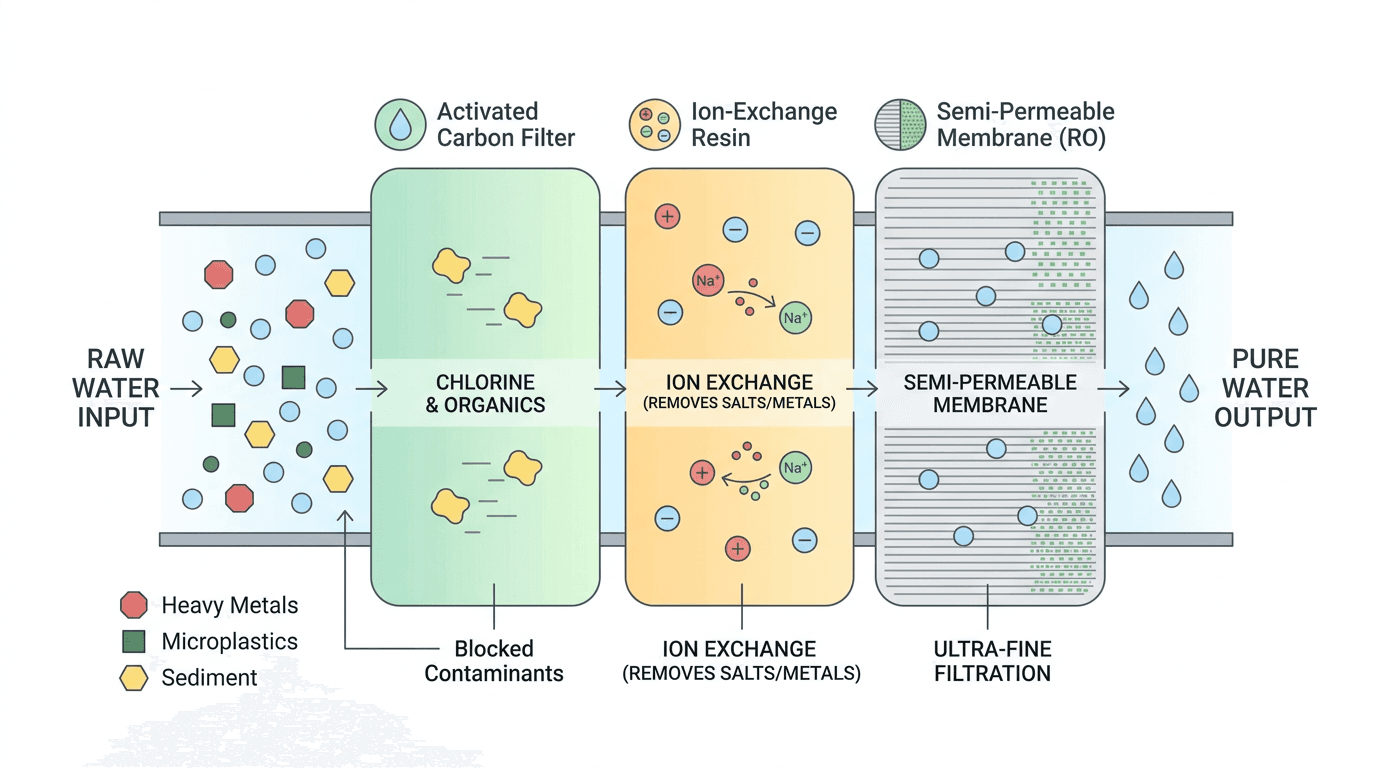
Then there is the issue of microplastics. A landmark study published in the journal Environmental Science & Technology estimated that the average person consumes tens of thousands of plastic particles every year through drinking water alone. These microscopic shards are too small to see but large enough to trigger inflammatory responses in the gut. When you pour a glass of unfiltered tap water, you are participating in a chemical lottery. A desktop filtration system acts as your personal laboratory, a final line of defense that utilizes technologies like Reverse Osmosis (RO) and Ion Exchange to strip away the heavy metals (like lead and copper), volatile organic compounds (VOCs), and pharmaceutical runoff that standard city filters might miss.
"The presence of contaminants in drinking water, even at levels below regulatory limits, can have cumulative effects on human health over decades. Precision filtration at the point of use is no longer a luxury; it is a necessary safeguard against the industrial legacy of our water systems." — Dr. Julian Thorne, Environmental Toxicologist
The Engineering of Purity: Comparing Filtration Modalities
Not all desktop filters are created equal. The market ranges from simple gravity-fed carafes to complex, multi-stage Reverse Osmosis units that look like they belong on the International Space Station. To choose the right one, you need to understand the three primary pillars of desktop filtration technology:
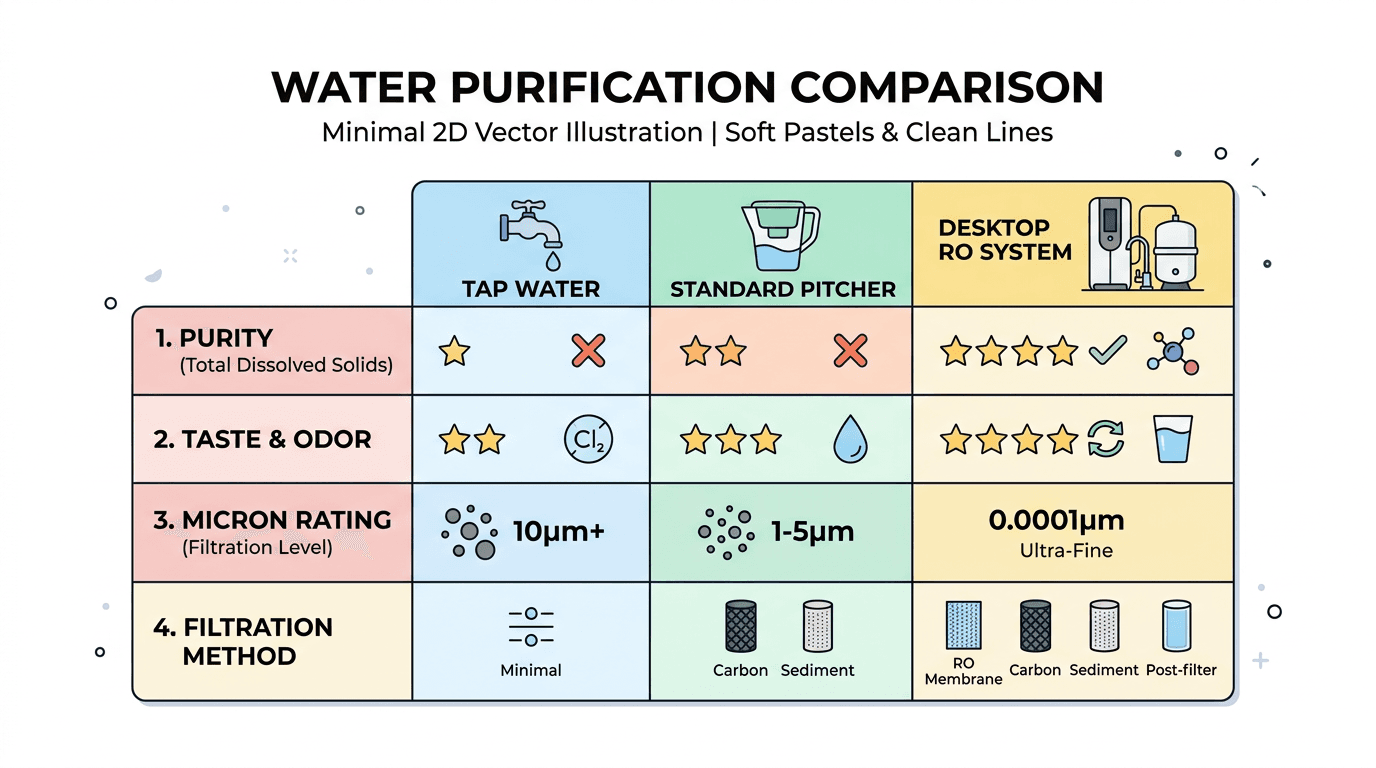
- Reverse Osmosis (RO): This is the gold standard. RO systems use a high-pressure pump to force water through a semi-permeable membrane with pores as small as 0.0001 microns. This process removes up to 99.9% of all dissolved solids. In the past, RO was a bulky, under-sink affair, but new "tankless" desktop models have miniaturized this tech into sleek, countertop-friendly footprints.
- Activated Carbon and Ion Exchange: These are the workhorses of the filtration world. Carbon is exceptionally good at "adsorbing" (trapping on its surface) organic chemicals and chlorine, which significantly improves taste and odor. Ion exchange resins go a step further by swapping "hard" minerals like calcium and magnesium for "soft" ions, preventing scale buildup and providing a smoother mouthfeel.
- UV-C Sterilization: Often found in high-end desktop dispensers, UV-C light targets the DNA of bacteria and viruses, rendering them unable to reproduce. This is an "active" layer of protection that ensures that even if water sits in the internal reservoir for a day or two, it remains biologically pristine.
The choice between these technologies often comes down to the Total Dissolved Solids (TDS) levels in your area. If you live in a region with "hard" water or high mineral content, a desktop RO system is transformative. If your water is already relatively soft but tastes of chemicals, a high-quality carbon-based system like a glass gravity pitcher may suffice.
The Cognitive Edge: How Molecular Purity Fuels Deep Work
The link between hydration and cognitive performance is well-documented in neurological research. Even a 1-2% drop in hydration levels can lead to a significant decline in concentration, short-term memory, and executive function. However, there is a secondary psychological layer to the desktop water filter: the ritual of the pour.
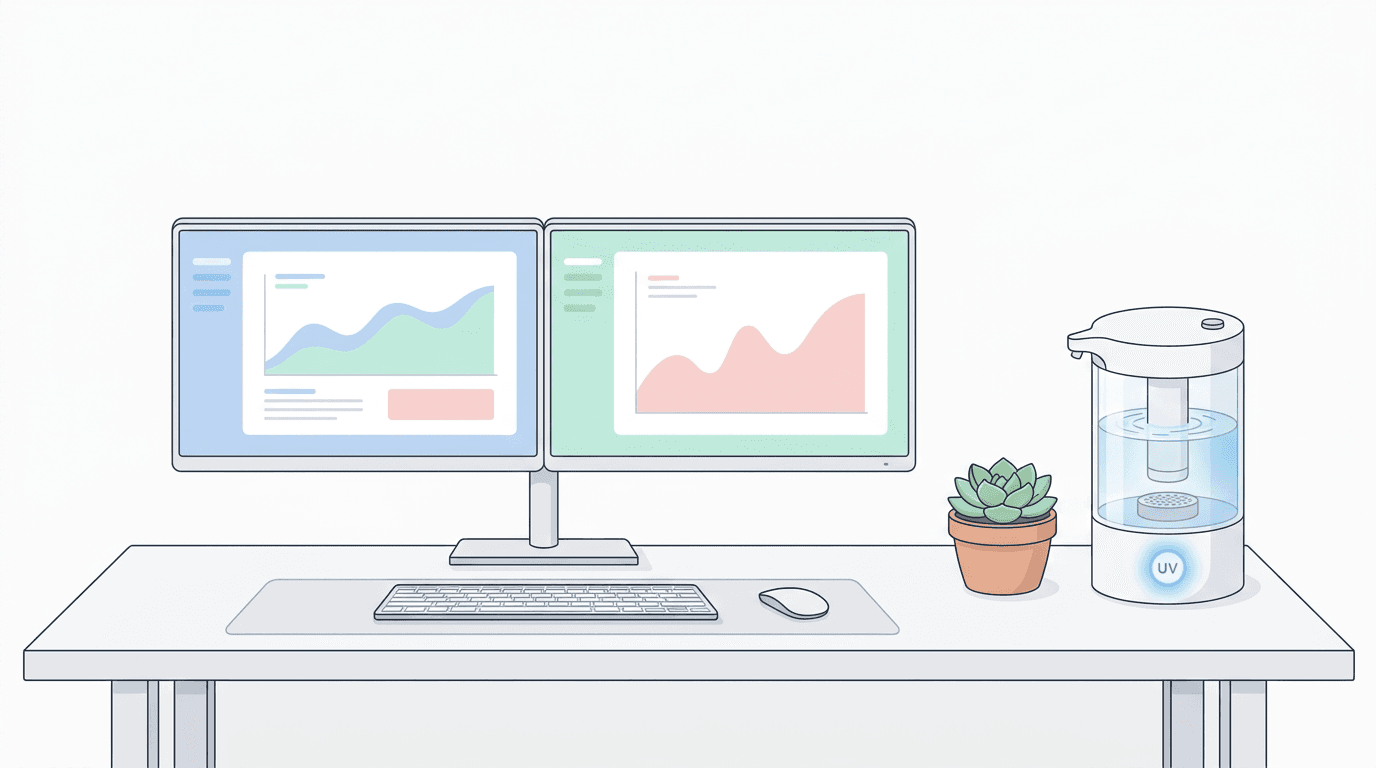
In the world of "Deep Work," as coined by Cal Newport, the environment must be designed to minimize friction. When you have a high-capacity, elegantly designed water station within arm's reach, you eliminate the "distraction loop" of leaving your desk, navigating to the kitchen, and potentially getting sidetracked by a conversation or a snack. It creates a closed-loop productivity environment.
Furthermore, there is the "biophilia" effect. Many modern desktop filters, particularly those using glass or bamboo elements, serve as a visual anchor. They remind us of our biological connection to the natural world in an otherwise digital space. Drinking water that has been purified of its industrial "noise" (the chlorine, the metallic tang) provides a cleaner sensory experience. It is the difference between eating a processed meal and a whole-food dish; your body recognizes the purity, and your brain responds with a subtle but perceptible increase in clarity and "flow" state duration.
Sustainability and the End of the Single-Use Era
We cannot discuss water filtration without addressing the environmental elephant in the room: the plastic bottle. For years, the "premium" water experience was synonymous with bottled brands shipped from Fiji or the French Alps. This is a logistical and ecological nightmare. Not only does the bottling process consume three times more water than the bottle itself holds, but the leaching of phthalates from the plastic into the water is a constant concern, especially if those bottles have been exposed to heat during transport.
A desktop filter is a radical act of sustainability. By investing in a single, high-quality device, you are effectively "onshoring" your water production. You are eliminating the carbon footprint of transportation and the waste of thousands of single-use containers.
- Cost Efficiency: While the upfront cost of a premium desktop filter can range from $150 to $500, the cost per gallon is pennies.
- Filter Longevity: Modern composite filters often last between 6 to 12 months, meaning maintenance is a bi-annual task rather than a weekly chore.
- Waste Reduction: One RO filter cartridge can replace up to 2,000 standard 16.9oz plastic bottles.
When you view your desktop filter through this lens, it ceases to be a kitchen appliance and becomes a piece of "green tech" that aligns your personal health with the health of the planet.
The HootFinds Buyer’s Guide: Top-Tier Desktop Hydration Stations
Selecting the right unit requires balancing aesthetics, filtration depth, and footprint. Here are our top recommendations for the modern professional:
- The Gold Standard: . This is the heavy hitter. It uses a 4-stage ultra-reverse osmosis process that is certified to remove 83 contaminants, including lead, chromium-6, and PFOA. Its sleek, modern design looks right at home next to an iMac, and the removable carafe makes it easy to fill your coffee maker with purified water too.
- The Tech-Forward Pick: . If you love data, this is for you. It features a smart display that shows your real-time TDS (Total Dissolved Solids) levels, so you can actually see the filtration happening. It also includes an instant-hot feature, perfect for the tea-drinker who wants precision temperature control.
- The Space-Saver: . Specifically designed for smaller desks or dorm rooms, this unit offers the power of Reverse Osmosis in a much smaller chassis. It’s remarkably quiet, ensuring that the hum of filtration won't interfere with your deep-work sessions or calls.
- The Design Darling: . For those who prefer a more "organic" look, this system uses gravity to move water through layers of volcanic rocks and ceramic spheres. It doesn't just filter; it "re-mineralizes" the water, adding back essential minerals like calcium and magnesium for a crisp, mountain-spring taste.
- The Minimalist Choice: . If you have high-quality municipal water and just want to strip out the chlorine and microplastics, this glass pitcher is a design masterpiece. It uses a long-lasting membrane microfilter and an activated carbon + ion exchange filter, and it looks stunning on a minimalist oak desk.
- The UV-C Specialist: . This unit combines the power of RO with a final UV-C purification stage in the internal tank. This is ideal for those who may go a few days without refilling the tank, as the UV light prevents any microbial regrowth.
Conclusion: Investing in the Fluidity of Thought
As we navigate an era defined by cognitive demand and environmental uncertainty, the tools we choose to surround ourselves with must serve a dual purpose: they must function flawlessly and contribute to our long-term vitality. The desktop water filtration system is a quiet revolution in personal wellness. It represents a shift away from the "convenience at any cost" culture of bottled water toward a "purity by design" philosophy.
By integrating a high-performance filtration unit into your workspace, you are doing more than just improving the taste of your afternoon glass of water. You are reducing your toxic load, sharpening your mental focus, and taking ownership of the most critical resource in your life. In the architecture of a well-lived life, it is often the invisible details—like the molecular purity of your hydration—that provide the strongest foundation for success. Choose a system that reflects your commitment to quality, and let every sip be a reminder that your health, much like your work, is a product of the environment you create.
Common Questions
🤔
Frequently Asked Questions
What is desktop water filtration and why should I consider it?▼
Desktop water filtration refers to compact filtration units placed on or near your desk that purify drinking water at the point of use. By moving filtration from under-sink or bulk storage to your workspace, you gain immediate access to cleaner water without extra steps between meetings. These systems typically use stages like activated carbon, reverse osmosis, and ion exchange to remove chlorine, heavy metals, VOCs, PFAS, and other contaminants. This can improve taste and hydration quality, supporting focus and overall well-being.
How do PFAS and microplastics affect drinking water, and can a desktop filter remove them?▼
PFAS are persistent chemicals linked to metabolic and hormonal issues, and microplastics can trigger inflammatory responses in the gut. While municipal water is regulated for safety, trace contaminants can still be present below limits. A desktop system with reverse osmosis and ion-exchange stages can reduce PFAS, metals, VOCs, and many microplastics, depending on design. However, effectiveness varies by system and filter combination, so check certifications and replacement schedules.
What should I look for when choosing a desktop water filtration system?▼
Look for multi-stage filtration that includes a carbon stage for taste and chlorine removal, plus a robust RO or ion-exchange stage for dissolved contaminants. Check flow rate to ensure it keeps up with your hydration pace and desk setup, and verify filter replacement frequency and costs. Certifications from NSF/ANSI or equivalent indicate real-world performance, not just marketing claims. Also confirm compatibility with your desk space and your water supply connection.
Are desktop filtration systems worth it for a home office, and what maintenance do they require?▼
Many users find desktop filtration worth it for immediate access to cleaner-tasting water without leaving the desk, supporting consistent hydration during long work sessions. Total cost includes upfront units plus ongoing filter replacements; plan for routine maintenance to sustain performance. Most systems require periodic filter changes and occasional sanitization to prevent microbial growth, with monitoring via replacement schedules. Choose a model with clear indicator lights and straightforward filter cartridges to minimize upkeep.