Blog3/3/2026
Biophilic Home Office: Boost Productivity with Nature at Work
9 mins Read
The Briefing
Quick takeaways for the curious
Biophilic design is a biological imperative, not a trend, because our brains evolved for environments with natural cues, and integrating plants, light, and natural materials helps reduce cortisol and improve focus and cognitive performance.
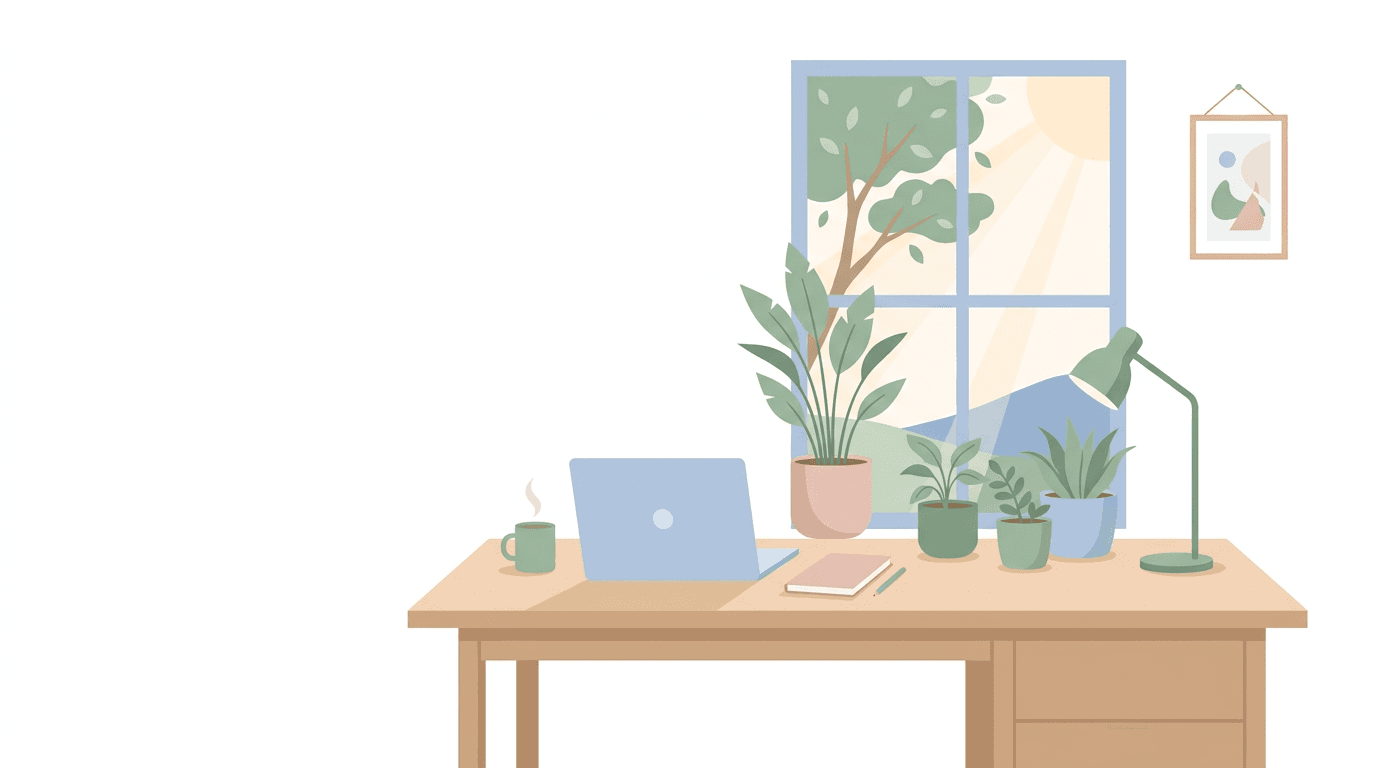
A biophilic home office moves away from sterile 'productivity pods' toward spaces that incorporate natural light, greenery, water-like sounds, and natural textures to trigger micro-rests and soft fascination, supporting performance via Attention Restoration Theory.
Research indicates lean spaces without greenery can hinder productivity, while spaces enriched with natural light and plants can boost productivity by up to 15%.
Practical implementation should start with daylight optimization, then add a few easy-care plants and natural materials, and finally incorporate air-quality improvements to create a functional biophilic environment.
Beyond productivity, biophilic design supports long-term well-being and creativity by enabling sustained attention, improved mood, and better problem-solving for demanding cognitive tasks.
The Living Laboratory: Engineering the Biophilic Home Office for Peak Performance
In the relentless pursuit of modern productivity, we have inadvertently designed ourselves into a corner—literally. For decades, the gold standard of the professional workspace was defined by sterility: the sharp edges of glass desks, the hum of fluorescent ballasts, and the monochromatic sprawl of "office gray." We treated our work environments as vacuum-sealed containers for human output, operating under the delusion that the less there was to distract us, the more we would achieve. Yet, as we transitioned to the home office, we brought these antiseptic habits with us, creating "productivity pods" that feel more like sensory deprivation chambers than creative hubs. We are biological entities, evolved over millennia to thrive in the dappled sunlight of forests and the rhythmic sounds of moving water, yet we spend 90% of our lives indoors, staring at glowing rectangles in rooms devoid of life. To adopt a Biophilic Home Office is to stage a biological intervention. It is the sophisticated realization that we aren't just "working from home"—we are organic organisms attempting to perform high-level cognitive tasks in a space that often ignores our evolutionary needs. By reintegrating nature into our workspace, we aren't just decorating; we are hacking our own neurochemistry to reduce cortisol, sharpen focus, and reclaim our vitality.
The Ancestral Echo: Why Our Brains Crave the Wild
Biophilia is not a design trend; it is a biological imperative. Coined by psychoanalyst Erich Fromm and later popularized by biologist E.O. Wilson, the term describes the "innate tendency to focus on life and lifelike processes." Our brains are still hardwired for the Savannah, not the cubicle. When we sit in a room with no view of the outdoors, no natural materials, and stagnant air, our nervous systems remain in a state of low-level "environmental stress." We feel subtly trapped, which triggers the release of cortisol and diminishes our capacity for creative problem-solving.
Research from the Journal of Experimental Psychology suggests that "lean" office spaces—those devoid of any greenery or natural elements—are actually toxic to productivity. Conversely, workspaces enriched with plants and natural light can increase productivity by up to 15%. This is rooted in Attention Restoration Theory (ART), which posits that urban environments drain our cognitive resources by demanding "directed attention" (focusing on emails, spreadsheets, and Slack pings). Nature, however, provides "soft fascination"—patterns like the movement of leaves or the shift of shadows—which allows our directed attention to rest and recharge.
"Nature holds the key to our aesthetic, intellectual, cognitive and even spiritual satisfaction." — E.O. Wilson
When you introduce biophilic elements, you are essentially providing your brain with the "micro-rests" it needs to sustain high-level performance throughout an eight-hour day. It is the difference between a battery that drains steadily until it hits zero and one that is constantly being topped off by its environment.

The Luminous Architecture: Mastering Circadian Synchrony
The most potent biophilic tool at your disposal is also the most ephemeral: light. In the traditional office, we are subjected to "flat" lighting—static, overhead LEDs that remain at the same intensity and color temperature from 9 AM to 5 PM. This is a direct assault on our circadian rhythm, the internal biological clock that regulates everything from sleep cycles to metabolic function.
A truly biophilic home office prioritizes "dynamic light." This means maximizing natural daylight, which changes in angle and spectrum throughout the day, signaling to your brain exactly where you are in the 24-hour cycle. When we lack this signal, we experience "social jetlag," characterized by brain fog in the morning and insomnia at night.
To engineer a biophilic lighting scheme, position your desk perpendicular to a window. This provides ample "sky view" without the glare of direct sunlight on your monitor. For those in windowless basements or dark apartments, the solution lies in Human-Centric Lighting (HCL). These are smart systems designed to mimic the sun’s progression, shifting from a crisp, blue-enriched 5000K in the morning to stimulate alertness, to a warm, amber 2700K in the afternoon to encourage melatonin production.
is perhaps the pinnacle of this technology. It tracks local daylight and adjusts its color temperature and brightness accordingly, ensuring your internal clock stays synchronized with the world outside your walls. By respecting the sun's rhythm, you don't just work better; you live better.
The Fractal Frontier: Decoding the Geometry of Focus
There is a reason why looking at a spreadsheet is exhausting, while looking at a fern is relaxing. It comes down to fractals. Fractals are self-similar patterns that repeat at different scales—think of the branching of a tree, the veins in a leaf, or the jagged edge of a coastline. Human beings have evolved to process these specific geometries with incredible efficiency.
Neuroscience research, specifically by Dr. Richard Taylor at the University of Oregon, has shown that looking at "mid-range" fractals (those found commonly in nature) can reduce stress levels by as much as 60%. This is because our visual system is "tuned" to these patterns; processing them requires very little mental effort, which triggers a relaxation response in the parahippocampal region of the brain.
In a biophilic home office, you can integrate fractals through more than just plants. You can find them in:
- Natural Wood Grains: The swirling patterns in a solid walnut or bamboo desk.
- Textiles: Rugs or curtains with organic, non-repeating geometric patterns.
- Art: Photography or paintings that capture the complexity of natural landscapes.
By choosing a desk like the , you aren't just buying a piece of furniture; you are introducing a massive fractal surface into your primary field of vision. The organic variation in the bamboo grain provides a visual "anchor" that keeps your brain grounded even during high-stress Zoom calls.

The Living Air: More Than Just Greenery
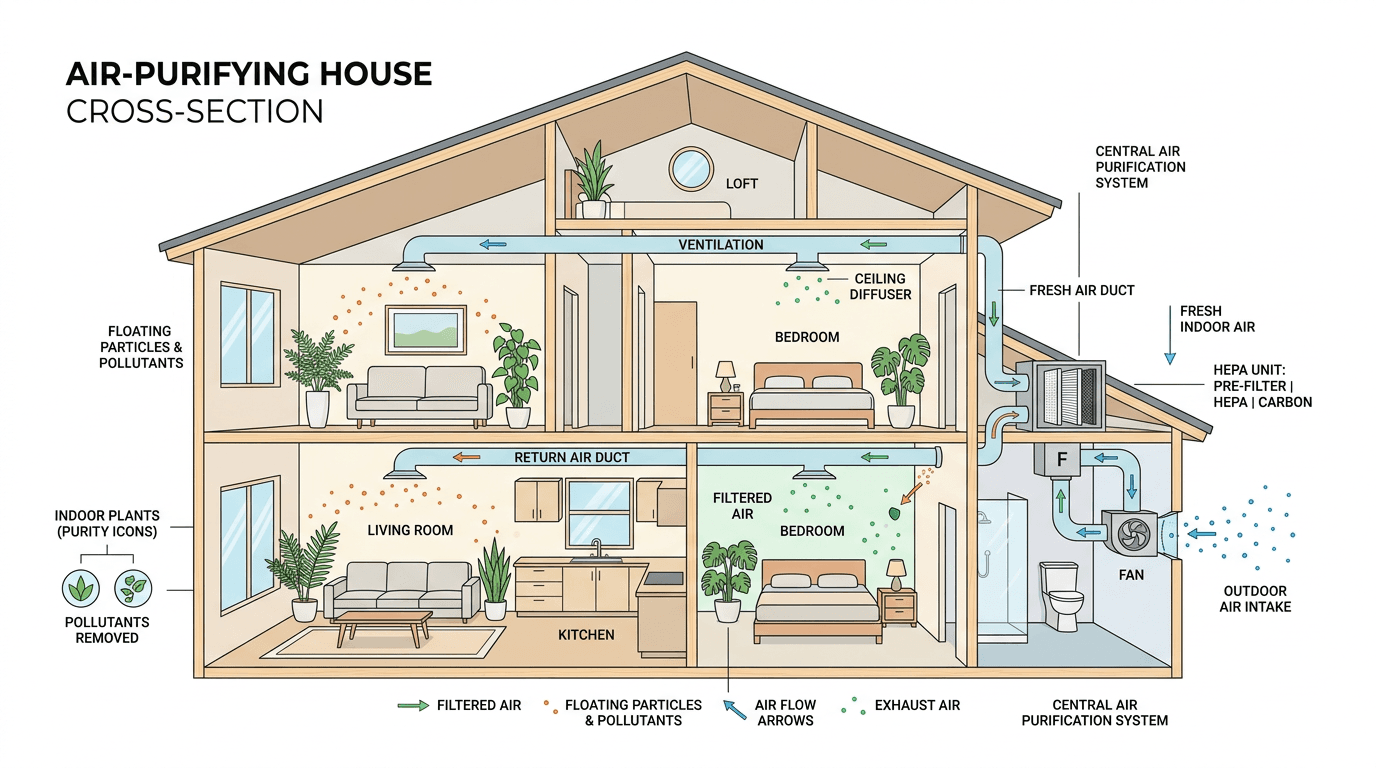
While the aesthetic appeal of a "Jungle-core" office is undeniable, the true power of plants in a biophilic workspace is physiological. We often think of plants as static decorations, but they are active biological filters. Through a process called phytoremediation, plants absorb Volatile Organic Compounds (VOCs) like formaldehyde and benzene—gases commonly emitted by office furniture, carpets, and printers.
The famous NASA Clean Air Study identified several "superstar" plants that are particularly effective at scrubbing indoor air. However, the biophilic benefit goes beyond chemistry. The presence of living things in our workspace satisfies our need for "Connection with Natural Systems." Watching a new leaf unfurl on a Monstera or seeing a Pothos vine slowly creep across a bookshelf provides a sense of temporal depth—a reminder that life exists outside of deadlines and deliverables.
For the "black thumb" worker, technology has bridged the gap. The or the use hydroponics and automated lighting to ensure your green companions thrive with zero effort on your part. These systems turn your office into a literal "Living Laboratory," where the air is oxygen-enriched and the visual environment is constantly evolving.
The Biophilic Toolkit: Curating Your Organic Workspace
Building a biophilic office is an exercise in curation. It’s about moving away from plastic and synthetic polymers and toward materials that feel "honest" to the touch. Here is a curated selection of tools to help you transition from a sterile cubicle to a thriving ecosystem:
- The Foundation: — Bamboo is one of the most sustainable materials on earth, and its natural grain provides the fractal complexity our brains crave. The ability to transition between sitting and standing also mimics the natural movement of an active organism.
- The Atmosphere: — Biophilia isn't just visual; it's olfactory. Using essential oils like Hinoki (Japanese Cypress) or Scots Pine can lower heart rates and simulate the experience of "forest bathing" (Shinrin-yoku) while you type.
- The Vision: — This is the ultimate circadian rhythm tool. It eliminates the "flicker" of cheap LEDs and ensures your body knows exactly what time it is, protecting your sleep and your focus.
- The Flora: — A sleek, brass-and-glass enclosure that uses a full-spectrum grow light to keep succulents or herbs alive in even the dimmest corners of your office.
- The Ergonomics: — While the Aeron is a masterpiece of engineering, the "Mineral" colorway and the pellicle suspension material are designed to mimic natural textures and allow for maximum airflow (thermal variability), a key tenet of biophilic design.
- The Ecosystem: — For the ultimate commitment, this vertical garden turns a blank wall into a lush, oxygen-producing tapestry of life.

Conclusion: The Workspace as an Ecosystem
We must stop viewing our home offices as mere "utility rooms" and start seeing them as ecosystems. The transition to a biophilic workspace is not about aesthetics or following a Pinterest trend; it is about environmental dignity. It is the recognition that we perform our best work when we are treated like the biological marvels we are, rather than the machines we are often asked to be.
By introducing natural light, fractal patterns, and living greenery, you are doing more than just "decorating." You are lowering your blood pressure, increasing your cognitive endurance, and fostering a sense of peace in an increasingly chaotic digital world. The next time you sit down to work, ask yourself: Does this space feed my spirit, or does it merely house my body? If the answer is the latter, it’s time to let the wild back in. The most productive version of yourself isn't found in a faster processor or a better app—it's found in the dappled sunlight and the quiet rustle of a leaf.
Common Questions
🤔
Frequently Asked Questions
What is a biophilic home office and how can it boost productivity?▼
A biophilic home office is a workspace that intentionally includes natural elements such as daylight, plants, natural materials, and soothing sounds. By aligning the environment with our evolutionary needs, it can lower stress hormones like cortisol and support focus and creativity. This approach uses Attention Restoration Theory to allow directed attention to rest, helping you sustain high-level performance over longer periods.
How do natural light and indoor plants impact focus and creativity in a home office?▼
Natural light helps regulate circadian rhythms and reduces eye strain, contributing to improved alertness and mood. Indoor plants improve air quality and provide soft visual fascination, creating a more inviting environment that supports sustained attention. Studies indicate that greenery and light exposure can boost productivity and cognitive performance by up to 15% in enriched spaces.
What practical, budget-friendly steps can I take to make my home office biophilic?▼
Maximize daylight by placing your desk near a window and using light curtains to reduce glare. Add a few low-maintenance plants like snake plants or pothos to improve air quality with minimal care. Use natural materials for surfaces (wood, stone) and introduce gentle water sounds or a subtle nature-inspired scent to evoke calm. Keep noise and clutter low so the space remains a restorative cue rather than a distraction.
Why does biophilic design matter for mental well-being and long-term performance?▼
Biophilic design taps our biological need for nature, reducing environmental stress that comes from sterile, artificial spaces. By providing soft fascination and opportunities for micro-rests, it supports mood stability and sharper cognitive function over time. The result is improved focus, creativity, and sustainable performance on complex tasks.