
Blog3/2/2026
Air Purifying House: Build a Healthy, Breathable Home
9 mins Read
The Briefing
Quick takeaways for the curious
An air-purifying house treats indoor air as a fundamental substrate for health, requiring intentional design choices that combine aesthetics with engineered ventilation and filtration.
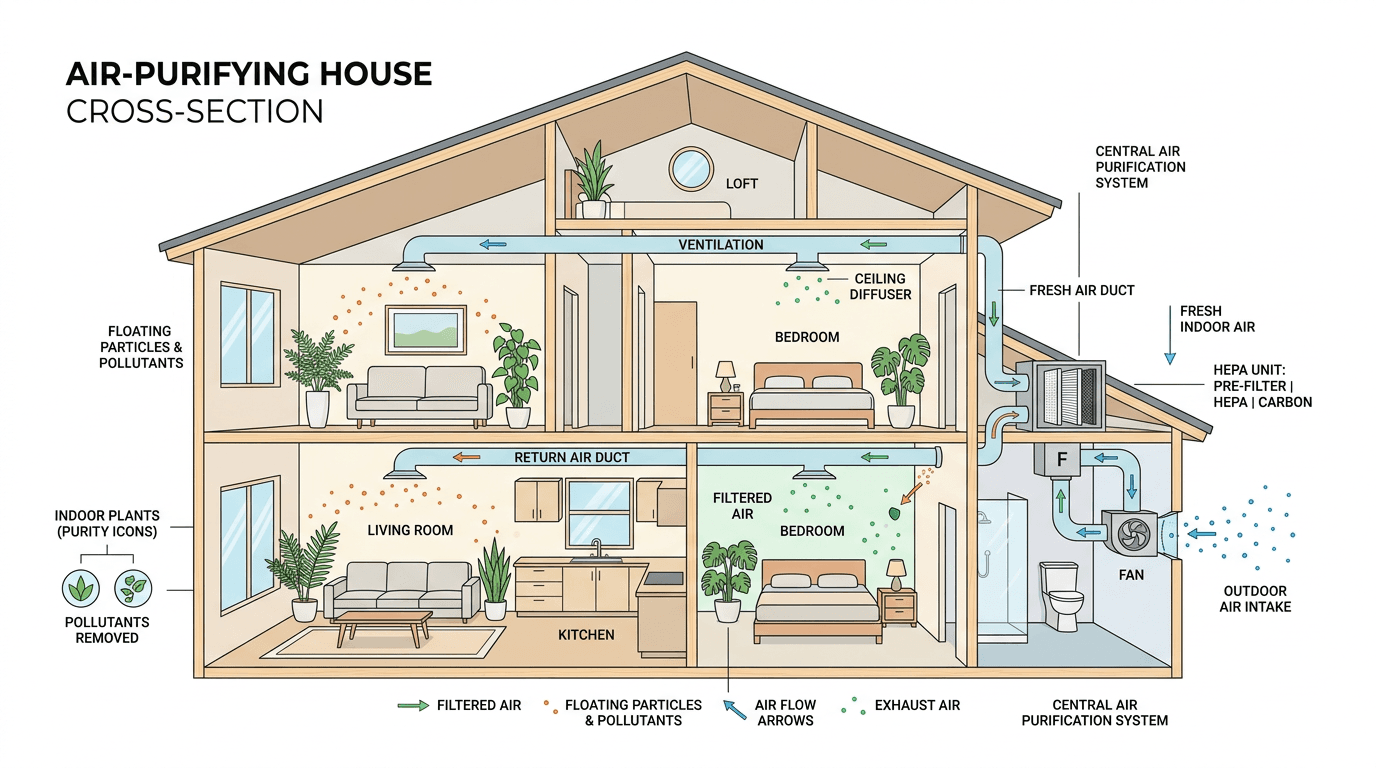
Because modern homes are tightly sealed, indoor pollutant concentrations can exceed outdoor levels, making strategic air exchange essential for clean air.
VOC exposure from new furniture, carpets, and cleaners can impair cognitive function, so source control and high-efficiency filtration are critical components of purification.
Purification is best achieved through a layered approach: low-emission materials, robust filtration (HEPA/activated carbon), and controlled ventilation rather than relying on plants alone.
Measurable benefits come from monitoring indoor air quality and implementing targeted improvements, allowing homeowners to optimize health and daily performance.
The Atmospheric Sanctuary: Engineering the Ultimate Air Purifying House
In the grand architecture of our lives, we meticulously curate our environments to satisfy the senses. We choose the perfect velvet for the sofa, the exact Kelvin temperature for our recessed lighting, and the precise acoustic dampening for our home theaters. We treat our homes as galleries of our taste and fortresses of our comfort. Yet, there is a silent, invisible element that occupies every cubic inch of our sanctuary, one that we interact with 22,000 times a day, yet almost never consider: the air. We are, quite literally, bottom-feeders in an ocean of gas. While we might recoil at the thought of drinking cloudy tap water, we rarely blink at the "molecular debris" swirling in our living rooms—a cocktail of volatile organic compounds (VOCs), microscopic skin cells, pet dander, and the particulate remnants of last night’s seared salmon. To transition to an "Air Purifying House" is to move beyond mere decoration; it is to embrace the concept of the home as a biological lung. It is the realization that the air we breathe is the most fundamental substrate of our health, and that in the modern, airtight home, purity doesn't happen by accident—it must be engineered.
The Molecular Ghost: Understanding the Invisible Indoor Ecosystem
To build an air-purifying house, we must first confront the uncomfortable reality of the "Indoor Generation." According to the Environmental Protection Agency (EPA), the average American spends approximately 90% of their time indoors, where the concentrations of some pollutants are often 2 to 5 times higher than typical outdoor concentrations. We have spent the last fifty years making our homes more energy-efficient, sealing them tight with high-performance insulation and double-paned glass. While this is a victory for our utility bills, it has inadvertently created a "stagnant box" effect. Without the natural exchange of air, our homes become pressurized containers for off-gassing furniture, mold spores, and PM2.5—fine particulate matter that is small enough to enter the bloodstream via the lungs.
The primary culprit in the modern home is the VOC. These are gases emitted from common household items: the "new car smell" of a fresh rug, the lingering scent of dry-cleaned clothes, or the formaldehyde found in pressed-wood cabinets. When these gases accumulate, they don't just cause a faint headache; they diminish cognitive function. A landmark study by the Harvard T.H. Chan School of Public Health found that cognitive scores for participants who worked in "Green+" environments (those with low VOC levels and high ventilation) were 101% higher than those in conventional building environments. Designing an air-purifying house is not just about physical health; it is a strategic move to optimize your brain.
The Botanical Battery: Phytoremediation as Living Infrastructure
The first line of defense in a self-purifying home is often the most ancient: the plant. In 1989, NASA conducted its famous "Clean Air Study" to find ways to detoxify the air in space stations. They discovered that certain common indoor plants act as biological sponges, absorbing toxins through their leaves and neutralizing them in their root zones through a process called phytoremediation. However, the modern air-purifying house treats plants not as mere ornaments, but as functional infrastructure.
To achieve a measurable impact, one must move beyond the lonely succulent on the windowsill. The "Botanical Battery" approach involves strategic placement and density. High-surface-area plants like the Snake Plant (Sansevieria) are nocturnal oxygen producers, making them essential for bedrooms. The Peace Lily (Spathiphyllum) is a powerhouse for absorbing benzene and trichloroethylene, while the Spider Plant (Chlorophytum comosum) is exceptionally efficient at battling carbon monoxide and xylene. By integrating "living walls" or dedicated plant zones into the home's floor plan, you create a self-sustaining humidification and filtration system that works 24/7 without a power cord.
"The air we breathe is a shared resource, but within the walls of our homes, it is a curated experience. By ignoring the quality of our indoor atmosphere, we are essentially living in a state of biological neglect." — Dr. Elena Rossi, Environmental Health Consultant.
The Mechanical Lung: High-Performance Filtration Technology
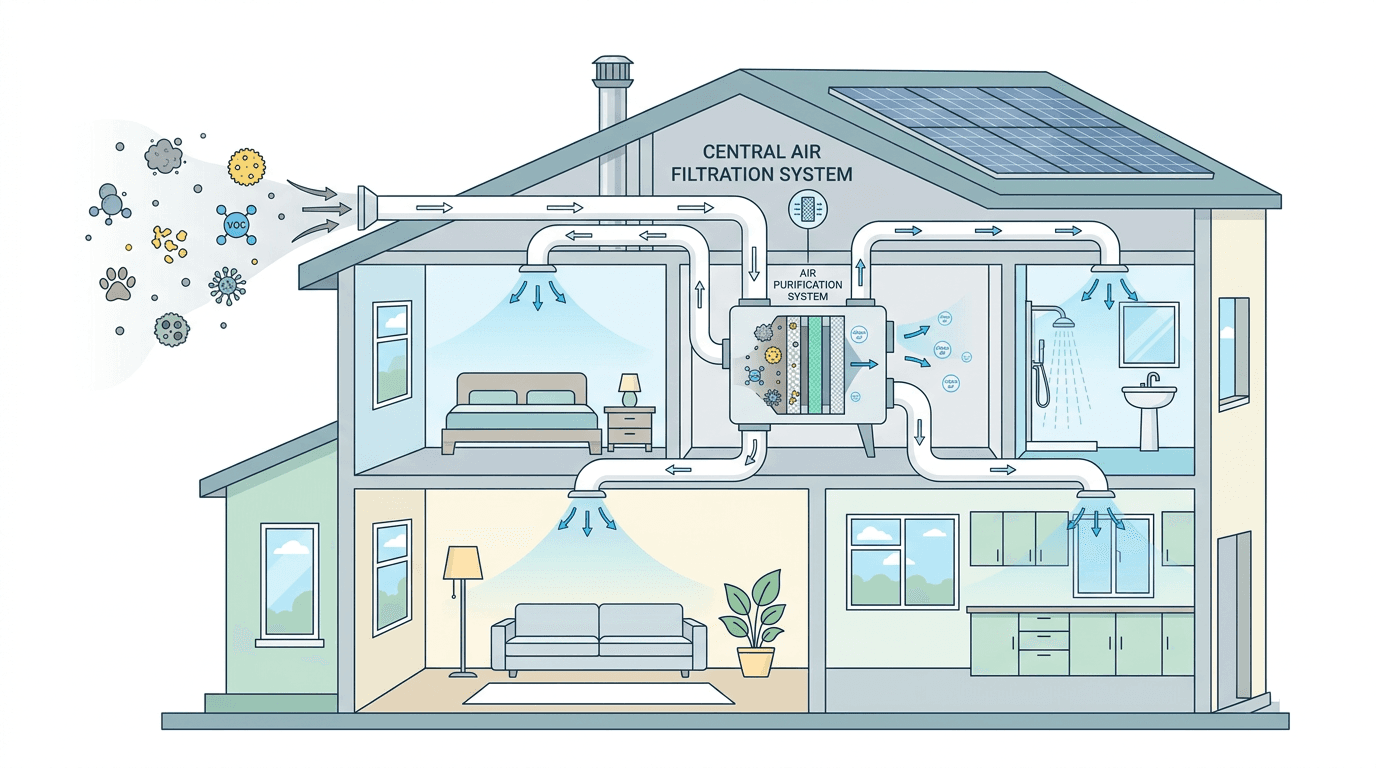
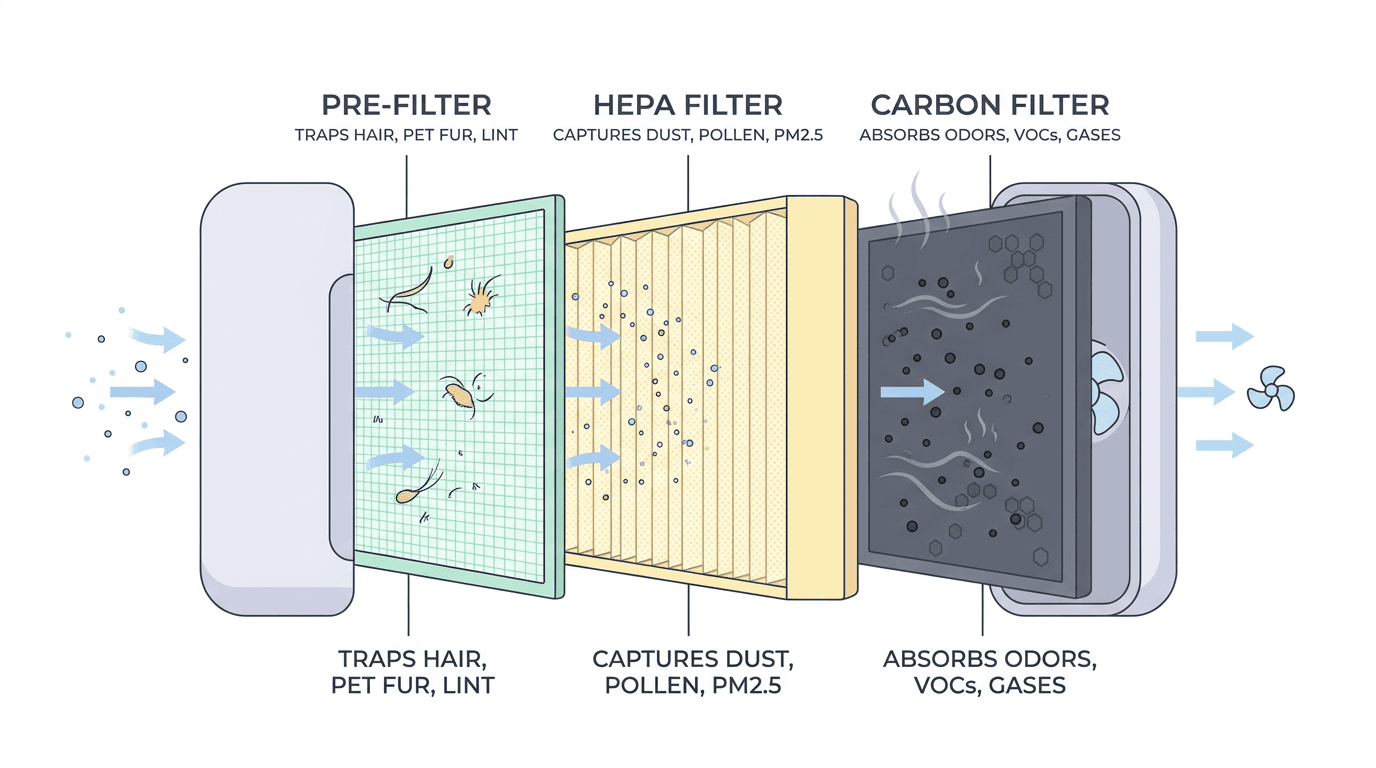
While plants are excellent for long-term VOC management, they cannot compete with the sheer throughput of modern mechanical filtration when it comes to particulate matter like smoke, pollen, or viruses. The heart of the air-purifying house is its active filtration system. This is where the "Mechanical Lung" comes into play. In the past, air purifiers were clunky, noisy boxes tucked into corners. Today, they are sophisticated pieces of industrial design that utilize multi-stage filtration.
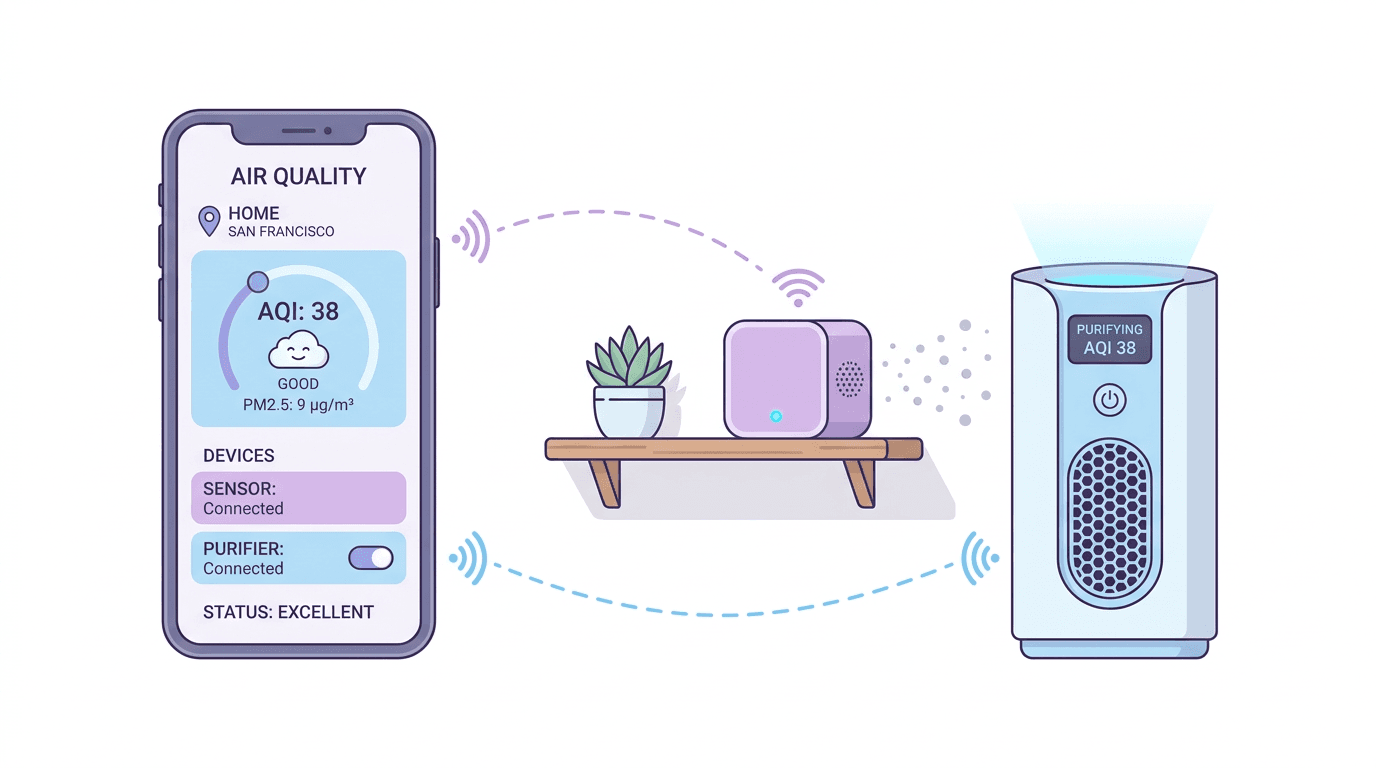
The gold standard remains the HEPA (High-Efficiency Particulate Air) filter, which is rated to capture 99.97% of particles as small as 0.3 microns. However, the cutting edge of home purification now includes PECO (Photoelectrochemical Oxidation) technology, which doesn't just trap pollutants—it destroys them at a molecular level using UV light and a specially coated filter. Furthermore, the integration of smart sensors allows these "lungs" to breathe in tandem with the home's activity. If you start searing a steak in the kitchen, sensors in the living room detect the spike in PM2.5 and automatically ramp up the fan speed before you even smell the smoke.
The Architectural Seal: Building for Breathability and Flow
An air-purifying house is not just about what you add to the room; it’s about how the room itself is built. True atmospheric optimization requires a "top-down" approach to materials and ventilation. This involves a shift toward Source Control. If you build with low-VOC paints, formaldehyde-free plywood, and natural stone instead of synthetic laminates, you are reducing the "pollution load" the house has to process.
Beyond materials, the concept of ERVs (Energy Recovery Ventilators) is revolutionary for the modern home. An ERV is a system that constantly brings in fresh outdoor air while exhausting stale indoor air, but it does so without losing the thermal energy (heat or cool) you’ve already paid for. It acts as the home’s "nostrils," ensuring a constant stream of oxygenated air that has been pre-filtered before it ever touches your lungs. When combined with smart window actuators that open during "peak air quality" hours (determined by local outdoor air quality indexes), the house becomes a sentient entity that knows exactly when to hold its breath and when to inhale.
The Curated Clean: A Buyer’s Guide to Atmospheric Optimization
To transform your current living space into an air-purifying sanctuary, you need a mix of monitoring, active filtration, and botanical support. Here are the elite tools currently defining the market:
- The Command Center: Before you can clean your air, you must understand it. The Awair Element tracks temperature, humidity, CO2, VOCs, and PM2.5 in real-time. Its elegant wood-grain design belies a powerful sensor array that provides a "Health Score," giving you actionable data on when to open a window or turn on your purifier.
- The Heavy Hitter: Designed for large spaces, this is the "Tesla" of air purifiers. It uses HEPASilent Ultra™ technology to kill 99% of germs caught on the filter and provides 24/7 protection against viruses and bacteria, even when the unit is on standby.
- The Molecular Destroyer: While HEPA filters trap particles, the Molekule Air Pro uses PECO technology to break down VOCs, bacteria, and mold at the molecular level. It is particularly effective for those with severe allergies or chemical sensitivities who need more than just dust filtration.
- The Multi-Tasker: This is the ultimate all-in-one atmospheric concierge. It purifies, humidifies, and cools, but its secret weapon is a solid-state formaldehyde sensor and a catalytic filter that continuously destroys formaldehyde, turning it into water and CO2.
- The Compact Specialist: For bedrooms or home offices, the Core 400S offers high-end features—like H13 True HEPA filtration and smart app integration—at a footprint that fits on a side table. It’s remarkably quiet, making it the perfect "sleep companion" for those sensitive to noise.
- The Living Wall: To implement the "Botanical Battery" effectively, these modular wall planters allow you to create a vertical jungle. They are made from recycled plastic and designed for optimal root aeration, which is the key to maximizing a plant's air-purifying capabilities.
The Cognitive Dividend: Why Purity Matters
We often view air purification as a defensive measure—something we do to avoid getting sick. But the true potential of the air-purifying house is offensive. It is about Cognitive Enhancement. There is a growing body of research suggesting that "brain fog" is often just a symptom of high CO2 levels and poor air quality. When we live in an environment where the air is stripped of pollutants and enriched with the right humidity and oxygen levels, our sleep quality improves, our focus sharpens, and our recovery times shorten.
Consider the "Stack Effect" in a home—the way warm air rises and pulls pollutants from the basement or floor level up through the living spaces. By understanding these fluid dynamics and countering them with strategic filtration, we aren't just cleaning a room; we are optimizing a life-support system. The air-purifying house is a testament to the idea that our external environment is an extension of our internal biology.
As we move toward a future where we have more control over our personal biomes than ever before, the question is no longer whether you can afford to purify your air, but whether you can afford not to. In the high-performance theater of modern life, the most important upgrade you can make isn't to your hardware or your software—it's to the very atmosphere in which you exist. By curating your indoor air with the same intensity you apply to your career or your fitness, you are investing in the most fundamental prerequisite for a life well-lived: the ability to breathe deeply, clearly, and without compromise.
Common Questions
🤔
Frequently Asked Questions
What is an air-purifying house and why should I consider it?▼
An air-purifying house is designed to minimize indoor pollutants and maximize clean air through low-emission materials, robust ventilation, and advanced filtration. This approach treats the home as a biological lung, recognizing that air quality directly affects health and cognitive performance. In airtight modern homes, purification is intentional rather than accidental.
How do VOCs in the home affect health and cognition?▼
VOCs are gases released by everyday products like carpets, cleaners, and pressed-wood cabinets; when they accumulate, they can cause headaches, fatigue, and cognitive decline. A Harvard study found cognitive scores were significantly higher in low-VOC, well-ventilated spaces compared with conventional buildings. Reducing VOC exposure through better ventilation and materials can enhance daily functioning.
What practical steps can I take to create an air-purifying house?▼
Prioritize source control by choosing low-emission materials and furniture and avoiding products with strong off-gassing. Install mechanical ventilation with high-efficiency filtration (HEPA) and activated carbon to remove particles and VOCs, and maintain healthy humidity levels. Regularly replace filters, seal leaks, and choose cleaners and paints with low VOC content.
How can I monitor indoor air quality and know if I’m succeeding?▼
Use affordable indoor air quality monitors to track PM2.5, VOCs, and CO2 levels, which together indicate pollutant load and ventilation adequacy. CO2 serves as a practical proxy for ventilation, with lower, stable levels suggesting better air exchange. Set targets (e.g., CO2 under 800–1000 ppm) and adjust filtration or ventilation to reach them. Regular monitoring helps quantify improvements and guide ongoing improvements.