Blog2/28/2026
Dopamine Decor: Joyful, Colorful Home Design Trends
9 mins Read
The Briefing
Quick takeaways for the curious
Dopamine Decor reframes home design as a source of joy and emotional resilience by prioritizing color, texture, and personally meaningful objects over purely resale-driven aesthetics.
It leverages neurobiological and environmental psychology insights, suggesting that vibrant hues and varied textures can trigger dopamine and serotonin pathways to elevate mood and motivation.
Chromotherapy underpins the approach, with deliberate color choices (such as yellow for warmth and blues for calm) guiding mood regulation through visual stimuli.
Personal meaning and nostalgia are central, creating a feedback loop of positive reinforcement whenever you enter a space, reinforcing identity and well-being.
Implementation emphasizes mindful curation and balance to avoid sensory overload, aiming for spaces that support creativity and emotional resilience without chaos.
The "Sad Beige" era is officially facing its eviction notice. For the better part of a decade, we have been living in a curated landscape of oatmeal-colored linens, greige walls, and minimalist furniture that looks more like a high-end waiting room than a home. It was the "resale value" aesthetic—a way of decorating that prioritized the next buyer’s tastes over the current inhabitant's happiness. But as we emerged from years of spending more time within our own four walls than ever before, a quiet rebellion began to brew. We realized that our homes shouldn't just be assets; they should be antidepressants. Enter Dopamine Decor, the interior design movement that prioritizes joy, sensory stimulation, and unapologetic self-expression over the rigid rules of traditional "good taste."
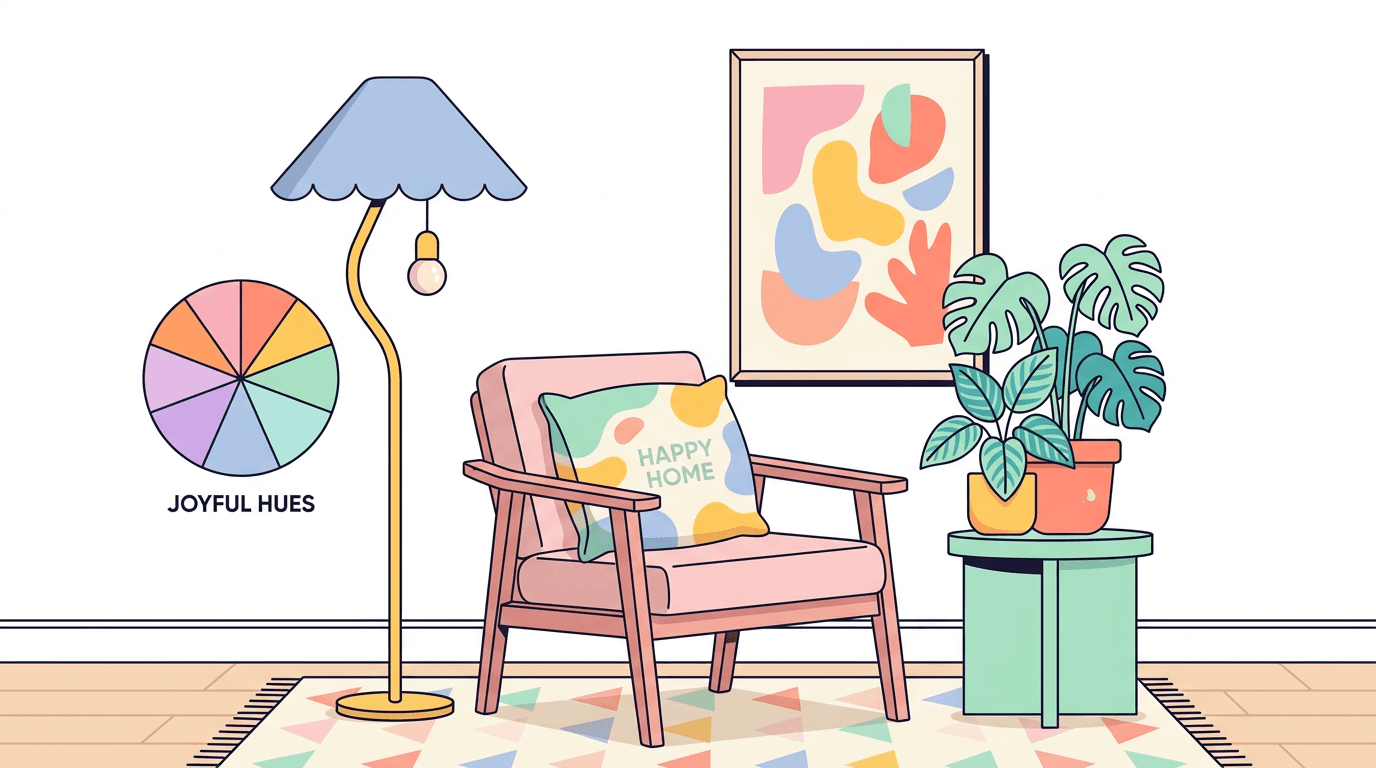
This isn’t just about painting a wall bright pink or buying a quirky lamp. Dopamine Decor is a psychological shift. It is the practice of intentionally using color, texture, and nostalgia to trigger the release of dopamine—the "feel-good" neurotransmitter—in the brain. It is the visual equivalent of a favorite song or a perfect cup of coffee. By surrounding ourselves with objects that hold personal meaning and vibrant energy, we are effectively hacking our own biology to create a sanctuary that fosters creativity and emotional resilience.
The Neurobiology of Joy: Why Your Brain Craves Color
To understand why Dopamine Decor works, we have to look at the intersection of neuroscience and environmental psychology. Humans are biologically hardwired to respond to certain visual stimuli. In a study published in the journal Science, researchers found that exposure to nature and vibrant colors can significantly reduce cortisol levels and improve cognitive function. While minimalism seeks to reduce "visual noise," Dopamine Decor argues that for many people, a lack of stimulation can actually lead to under-stimulation and lethargy.
The concept of Chromotherapy, or color therapy, suggests that different wavelengths of light (colors) can influence our mood. For example, yellow is often associated with the release of serotonin because of its evolutionary connection to sunlight and warmth. Saturated blues can lower blood pressure, while vibrant greens can spark feelings of safety and growth. When you walk into a room filled with these hues, your brain isn't just seeing a "pretty room"—it’s processing a series of signals that tell your nervous system it’s time to feel energized or comforted.
"Our surroundings are not just backdrops to our lives; they are active participants in our mental health. When we choose objects that elicit a 'spark of joy,' we are reinforcing our sense of self and creating a feedback loop of positive reinforcement every time we enter a room." — Dr. Elena Aris, Environmental Psychologist.

The "One Weird Thing" Rule: Breaking the Chains of Symmetry
One of the most intimidating aspects of traditional interior design is the obsession with symmetry and "matching." We are taught that if we have a mid-century modern sofa, we must have a mid-century modern coffee table. Dopamine Decor throws these rules out the window in favor of the "One Weird Thing" Rule. This design philosophy suggests that every room should have at least one element that feels slightly "off" or unexpected—a giant ceramic leopard, a neon sign in the dining room, or a vintage disco ball in the bathroom.
These "weird" elements act as visual anchors. They break the monotony of a space and serve as conversation starters, but more importantly, they provide a sense of play. Psychologists often talk about the importance of "adult play"—the ability to engage in activities or environments that lack a specific goal other than enjoyment. By incorporating whimsical or kitschy elements, you are giving yourself permission to not take life so seriously. This reduction in environmental "seriousness" can lead to lower stress levels and a more flexible mindset.
Key Elements of the Dopamine Aesthetic:
- Tactile Textures: Think faux fur, chunky knits, velvet, and smooth ceramics. The more varied the textures, the more "sensory hits" your brain receives.
- Maximalist Curation: This isn't clutter; it's a curated collection of things you love. It’s about displaying your grandmother's vintage teacups next to your favorite graphic novels.
- Scale Distortion: Using oversized art or tiny, intricate figurines to create a sense of wonder and curiosity.
- Saturated Palettes: Moving away from pastels and toward "jewel tones" and "neons" that demand attention.
The Power of "Personalized Nostalgia"
A significant pillar of Dopamine Decor is the use of nostalgia. The Reminiscence Bump is a psychological phenomenon where adults tend to have an increased recollection of events and feelings from their adolescence and early adulthood. By integrating "retro" elements—whether it’s a 70s-style shag rug or a 90s-inspired checkered pattern—we tap into these deeply seated positive memories.
When you see an object that reminds you of a simpler, happier time, your brain experiences a miniature "nostalgia hit." This is why we see a resurgence in things like vinyl record players, lava lamps, and even specific color palettes like "avocado green" or "millennial pink." These aren't just trends; they are emotional anchors. In an increasingly digital and uncertain world, surrounding ourselves with physical manifestations of our past provides a sense of continuity and security.
The HootFinds Buyer’s Guide: Building Your Joyful Sanctuary
Ready to inject some dopamine into your living space? You don’t need to renovate your entire home overnight. Start with "high-impact" pieces that change the energy of a room instantly. Here are our top picks for starting your Dopamine Decor journey:
- The Lighting Anchor: — Lighting is the fastest way to change a mood. This lamp doesn't just sit there; it paints your walls with millions of colors, allowing you to transition from a "sunset glow" to a "neon party" with a single tap.
- The Tactile Statement: — Dopamine Decor is all about high-contrast patterns and luxury textures. This reversible knit throw adds an instant "designer" feel while providing the tactile comfort your brain craves.
- The Functional Whimsy: — Who says appliances have to be boring? A Smeg in a bold color like Pastel Blue or Red transforms a kitchen from a utility space into a design destination.
- The Scent Experience: — Dopamine isn't just visual. The "Neopeche" scent combines peach flesh, amber, and musk to create a sensory environment that feels both nostalgic and modern.
- The Comfort King: — Total comfort is the ultimate dopamine trigger. A modular sofa in a rich, saturated velvet (like Sapphire or Emerald) provides the physical "hug" that a home should offer.
- The Greenery Boost: — Biophilia (our innate love for nature) is a key component of feeling good. A large, thriving plant adds literal life and a vibrant pop of green that balances out synthetic colors.
The Science of "Cluttercore" vs. Mindful Maximalism
It is easy to mistake Dopamine Decor for "cluttercore," but there is a vital distinction. Cluttercore is often chaotic and overwhelming, which can actually increase cortisol (the stress hormone) in some individuals. Dopamine Decor, however, is about Mindful Maximalism. It is the difference between a pile of mail on the counter and a gallery wall of postcards from your travels.
To keep your space from becoming a source of stress, focus on "visual breathing room." This means that even in a room full of color and pattern, there should be a few places for the eye to rest—perhaps a solid-colored rug or a clean white ceiling. The goal is to create a space that feels "full," not "crowded."
According to a 2022 survey by Architectural Digest, nearly 65% of Gen Z and Millennial homeowners reported that they feel "more creative" in rooms with bold colors compared to neutral ones. This "Creative Stimulus" is why Dopamine Decor is trending so heavily in home offices. When your environment is vibrant, your brain is more likely to enter a "flow state."

Conclusion: Your Home as a Manifesto
Dopamine Decor is more than just a TikTok trend; it is a reclamation of the domestic space. For too long, we have been told to "neutralize" our personalities for the sake of a hypothetical future buyer. We have lived in homes that felt like hotels—clean, efficient, and entirely devoid of soul.
By embracing this movement, you are making a statement that your happiness in the present moment is more valuable than the "resale value" of the future. Whether it’s a bright yellow front door, a collection of vintage Muppet figurines, or a velvet sofa that makes you feel like royalty, these choices are an act of self-care.
As you begin to curate your own "Dopamine Home," remember that there is no right or wrong way to do it. If it makes you smile when you walk through the door after a long day, it’s working. Your home should be a reflection of your wildest, most joyful self—a place where the "Sad Beige" world outside can’t reach you. So, go ahead: buy the weird lamp, paint the ceiling pink, and turn your living room into the sanctuary you deserve. After all, life is too short to live in a house that doesn't love you back.
Common Questions
🤔
Frequently Asked Questions
What is Dopamine Decor and how does it differ from the 'sad beige' minimalist trend?▼
Dopamine Decor treats the home as a source of mood enhancement, prioritizing bold color, tactile textures, and objects with personal meaning over neutral, resale-focused design. It aims to spark joy and emotional resilience rather than conform to a neutral, 'good taste' standard. In contrast, the sad beige era leaned toward minimalism that many felt stifled happiness in favor of resale value. The result is a more expressive, sensory-rich environment that actively influences your mood.
Is Dopamine Decor backed by science, or is it just bright colors thrown into a room?▼
There is a scientific basis for some of the ideas, rooted in environmental psychology and neurobiology. Studies show that exposure to nature and vibrant colors can reduce cortisol and support cognitive function, and color theory (chromotherapy) links hues to mood signals. However, design is also personal and context-dependent, so practical application should blend evidence with taste and lived experience. The core idea is intentional color, texture, and meaning to support well-being.
How can I start incorporating Dopamine Decor in a small space without feeling overwhelmed?▼
Begin with a small, meaningful intervention instead of a full overhaul: pick one wall, corner, or piece of furniture to spotlight with a saturated color or bold texture. Introduce a couple of tactile elements (like a plush throw or textured rug) and a few personal items that spark joy, then expand gradually. Use lighting to modulate intensity and balance with calmer neutrals to prevent visual overload. Regularly reassess what truly brings happiness and adjust as needed.
What should I consider to avoid overstimulation while embracing Dopamine Decor?▼
Balance is key: mix high-energy colors and textures with calmer neutrals, and avoid crowding surfaces with too many competing objects. Prioritize objects with meaning to reduce clutter, and design lighting that can be dimmed or warm-toned to soften mood shifts. Ensure the space remains functional and comfortable for daily life, so joy doesn’t come at the expense of practicality.