Blog2/28/2026
Vertical Farming at Home: Build a Living Pantry Today
9 mins Read
The Briefing
Quick takeaways for the curious
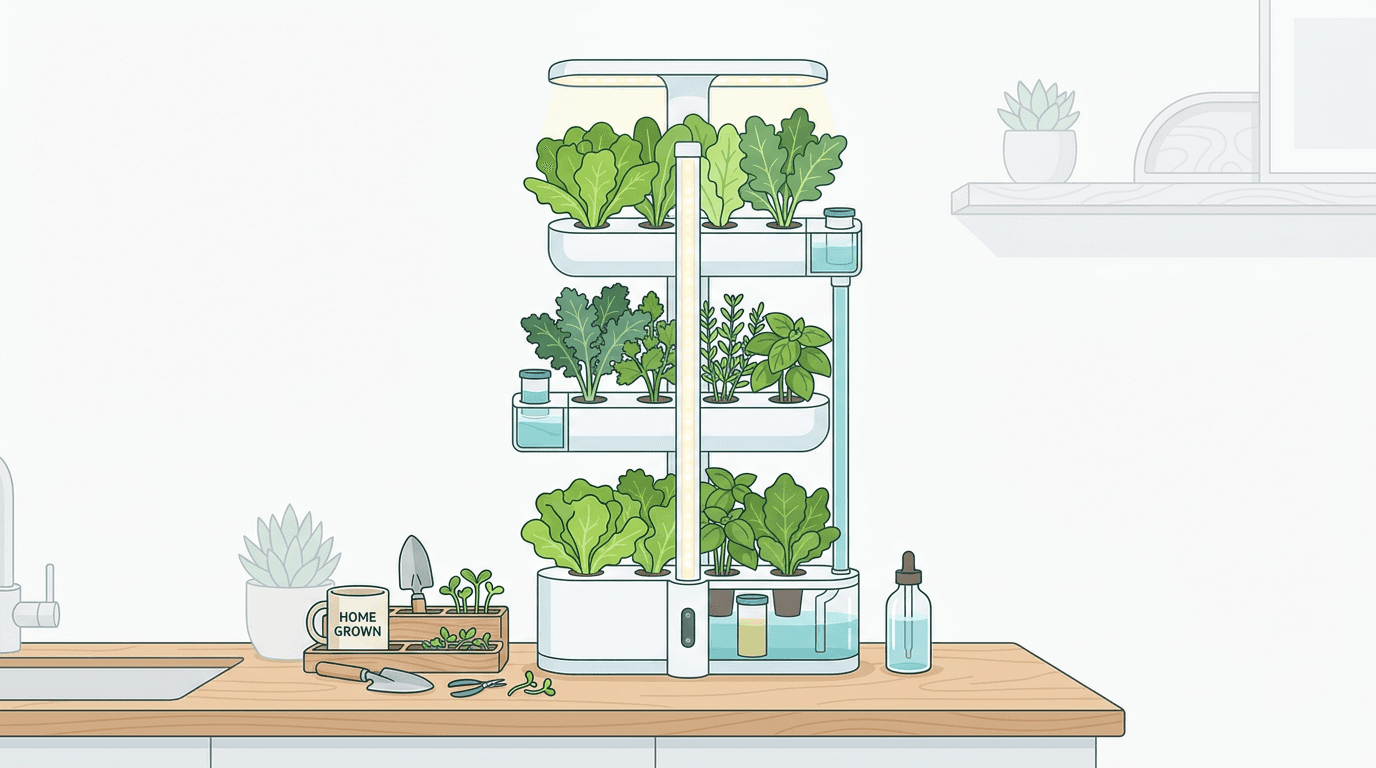
Vertical farming home setups maximize yield per square foot by stacking plants in towers or tiered shelves, allowing high-density production in limited urban spaces.
In a home setting, controlled environment agriculture gives you authority over light, temperature, humidity, and mineral nutrients, enabling consistent harvests and cleaner, pesticide-reduced produce.
Home vertical farming dramatically reduces water use, with up to 95% less water required due to a closed-loop recirculation system that minimizes evaporation and runoff.
Growing food indoors close to your kitchen shortens food miles, preserves freshness, and supports a personal 'living pantry' mindset that enhances food security and reduces reliance on long supply chains.
Choosing between hydroponics and aeroponics shapes maintenance and performance: hydroponics is common and beginner-friendly for home setups, while aeroponics can offer higher efficiency but adds complexity.
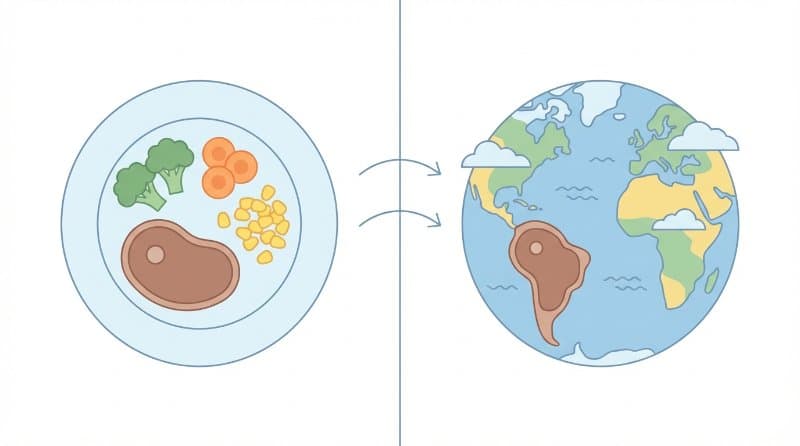
The Freshness Paradox is a quiet frustration shared by almost every modern urbanite. You spend six dollars on a plastic clamshell of "organic" arugula, only for it to turn into a translucent, slimy mess in your crisper drawer forty-eight hours later. This isn’t just a waste of money; it’s a failure of the supply chain. By the time that lettuce reaches your plate, it has likely traveled an average of 1,500 miles, losing up to 45% of its nutritional value along the way. But what if the "farm" wasn't a thousand miles away? What if it was three feet from your toaster? We are currently witnessing a domestic revolution where the "Living Pantry" is replacing the pantry shelf. Vertical farming home setups are no longer just for lab-coat-wearing scientists or niche hobbyists; they have become the ultimate lifestyle hack for the health-conscious, tech-savvy individual who wants to reclaim their food security without needing a backyard.
The Physics of the Living Wall: Why Up is the New Out
Traditional gardening is a horizontal game of chance. You are at the mercy of the tilt of the earth, the unpredictability of rainfall, and the local pest population. Vertical farming flips this script—literally. By stacking plants in towers or tiered shelves, we maximize "yield per square foot," a metric that is becoming increasingly vital as our living spaces shrink. The core of this technology relies on controlled environment agriculture (CEA). In a home setting, this means you are the god of your own micro-ecosystem. You control the sunrise, the sunset, and the exact mineral composition of the "rain."
According to the United Nations, nearly 68% of the world's population will live in urban areas by 2050. This shift necessitates a move away from resource-heavy industrial farming toward hyper-local production. Research shows that vertical farming systems use up to 95% less water than traditional soil-based farming because the water is recirculated within a closed-loop system rather than evaporating or leaching into the groundwater. Furthermore, because these plants are grown in a sterile, indoor environment, the need for chemical pesticides is virtually eliminated. You aren't just growing food; you are growing "clean" food in the truest sense of the word.
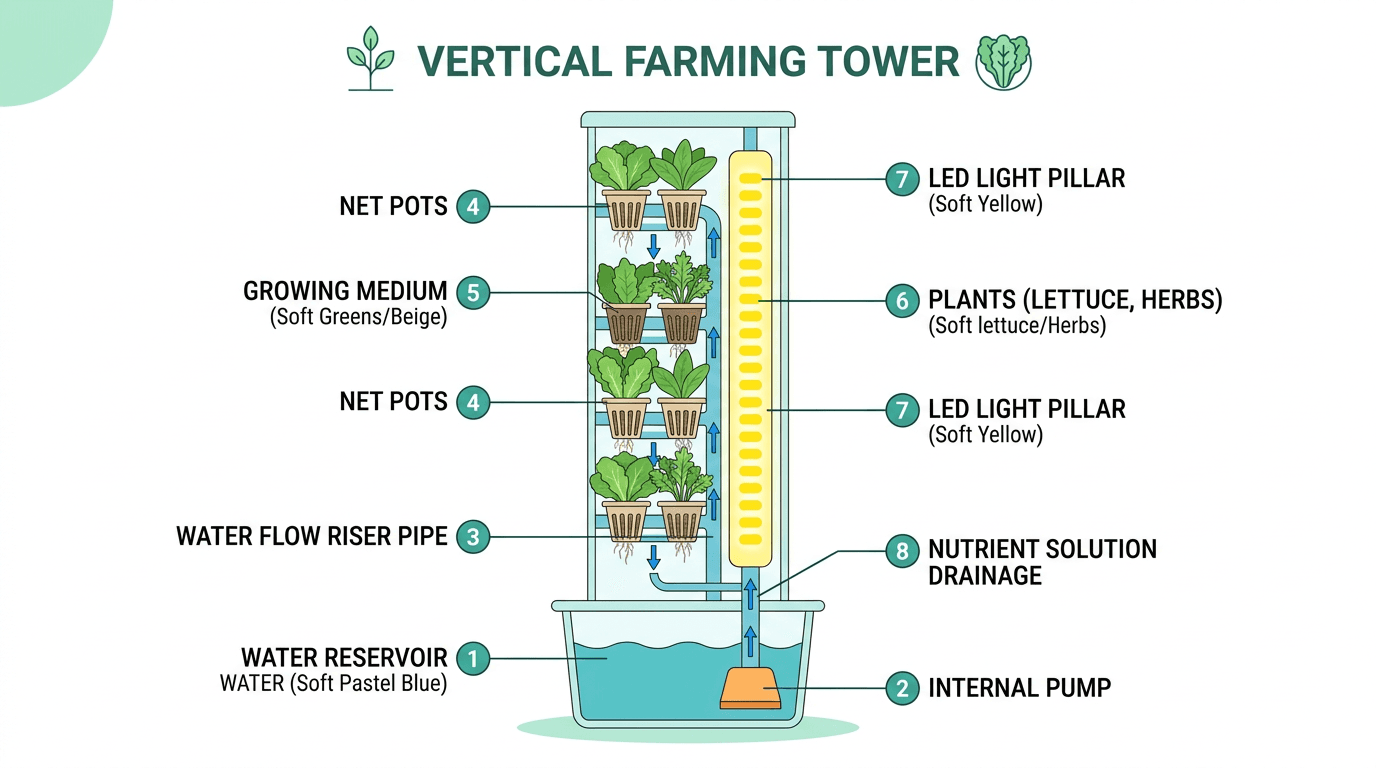
Hydroponics vs. Aeroponics: Choosing Your Botanical Engine
When you decide to start a vertical farm, you must choose the "engine" that will power your growth. Most home setups fall into two categories: Hydroponics and Aeroponics. Understanding the nuance between them is the difference between a thriving harvest and a root-rotted disaster.
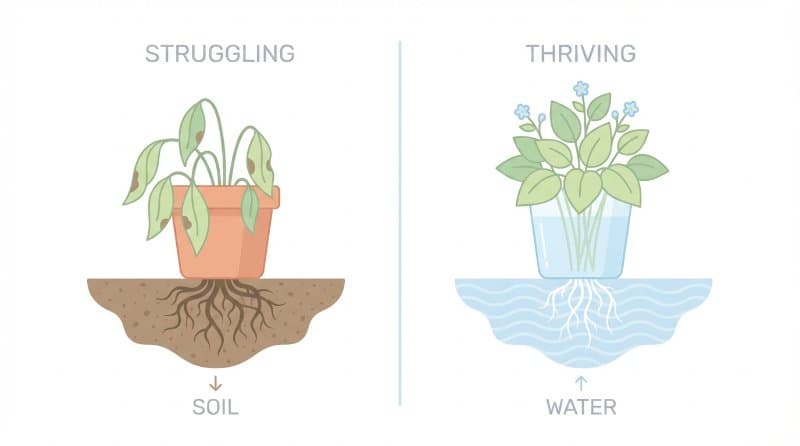
Hydroponics is the most common entry point. In this system, plant roots are submerged in or intermittently flooded with a nutrient-rich water solution. The plants are usually supported by an inert medium like coco coir or expanded clay pebbles. It’s reliable, relatively quiet, and forgiving for beginners.
Aeroponics, on the other hand, is the Formula 1 of indoor farming. Instead of sitting in water, the roots hang suspended in the air and are misted with a high-pressure nutrient solution every few minutes. This allows for maximum oxygenation of the root zone, which can lead to growth rates up to 30% faster than soil. However, aeroponic systems require more precise monitoring; if the pump fails for even a few hours, the roots can dry out and the crop can be lost.
"The magic of vertical farming isn't just in the tech; it's in the elimination of the 'middleman' between the plant and your plate. When you harvest a leaf of kale and eat it thirty seconds later, you are consuming a level of phytonutrients and enzymes that simply don't exist in store-bought produce." — Dr. Aris Lowery, Plant Physiologist
The "Biophilia" Effect: Why Indoor Farming is Good for Your Brain
While the nutritional benefits are clear, the psychological impact of a vertical farm in your living room is often underestimated. This is rooted in the concept of Biophilia—the innate human tendency to seek connections with nature. In a world of digital screens and concrete, having a glowing, vibrating wall of green serves as a powerful sensory anchor.
Studies in environmental psychology have shown that the presence of indoor plants can reduce cortisol levels, improve focus, and even boost creative output. A vertical farm takes this a step further than a simple pothos on a shelf. It provides a "rhythmic ritual." Pruning your herbs, checking the pH levels of your reservoir, and witnessing the daily incremental growth of a cherry tomato plant provides a sense of agency and groundedness. It is a form of "functional decor" that feeds both the body and the soul.
The HootFinds Buyer’s Guide: Top-Tier Vertical Systems
Navigating the market for home farming can be overwhelming. Some systems are designed to be "set it and forget it" appliances, while others are modular setups for the serious DIY enthusiast. Here are our top recommendations for every type of home farmer.
- The "All-in-One" Luxury Choice: This is widely considered the "iPhone" of vertical farming. Using AI-powered sensors and a built-in camera, the Gardyn system monitors your plants and tells you exactly when to add water or nutrients via a smartphone app. It’s stunningly beautiful and can grow up to 30 large plants in only two square feet of space.
- The Best for Small Apartments: If you have limited floor space, this countertop system is perfect. It uses "Smart Soil" technology inspired by NASA, which automatically releases nutrients and maintains the perfect oxygen level for the roots. It’s ideal for herbs and leafy greens.
- The Outdoor/Indoor Hybrid: Made from ocean-bound plastic, this self-watering, self-fertilizing hydroponic tower is as sustainable as it is functional. It’s modular, meaning you can start with 12 plants and grow up to 36 as your confidence increases.
- The Serious DIY Component: For those building their own custom shelving unit, the light is your most important investment. This full-spectrum LED mimics natural sunlight without the massive electricity bill, ensuring your plants don't get "leggy" or weak.
- The Entry-Level Classic: A sleek, stainless steel countertop garden that is incredibly easy to maintain. It features a digital display that reminds you when to add the included liquid nutrients, making it foolproof for those who claim to have a "black thumb."
- The Ultimate Nutrient Solution: Regardless of the system you choose, the "food" matters. This three-part nutrient system is the industry standard, allowing you to customize the nitrogen, phosphorus, and potassium levels based on whether you are growing greens or flowering fruits.
Mastering the Micro-Climate: Light, pH, and Nutrients
To move from a novice to a master indoor farmer, you need to understand the three pillars of the indoor micro-climate.
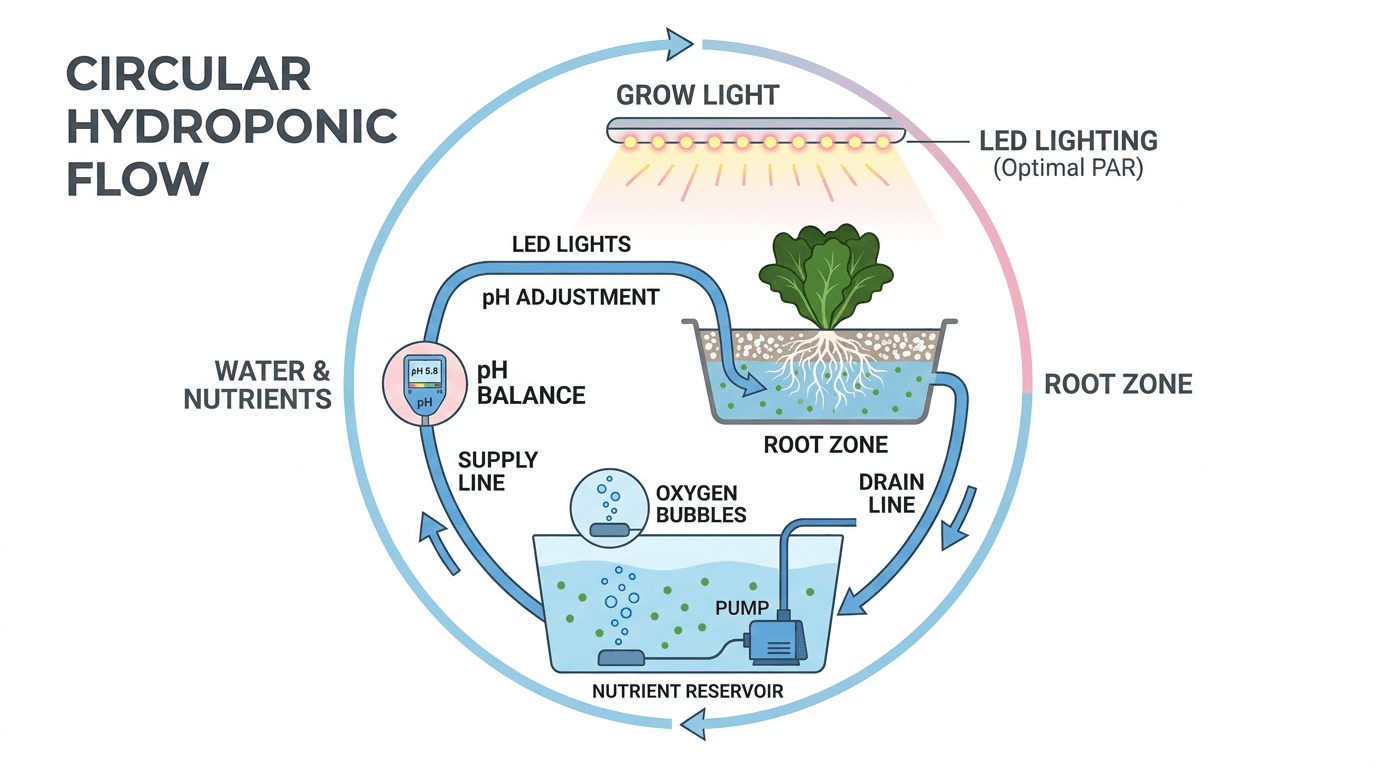
1. The Light Spectrum: Plants don't see light the way we do. While we see "white" light, plants primarily utilize the blue and red wavelengths for photosynthesis. Blue light (400-500nm) is essential for vegetative growth—keeping your lettuce leafy and compact. Red light (600-700nm) signals the plant to flower and fruit. Modern LEDs like the provide a "full spectrum" that covers all these bases, ensuring your indoor farm doesn't just survive, but thrives.
2. The pH Balance: In soil, the earth acts as a buffer. In a vertical farm, the water is the sole carrier of life. If your water is too acidic or too alkaline, the plant’s roots will experience "nutrient lockout," where they are physically unable to absorb the minerals in the water. For most leafy greens, you want to maintain a pH between 5.5 and 6.5. Investing in a simple digital pH meter is the single best way to ensure your plants don't turn yellow overnight.
3. Dissolved Oxygen: This is the "hidden" ingredient. Plant roots need to breathe. In a hydroponic tower, this is achieved by the water cascading down the levels, picking up oxygen as it falls. In deep-water culture systems, you may need an air stone (similar to those in fish tanks) to keep the water oxygenated. High oxygen levels prevent root rot and accelerate growth exponentially.
Beyond the Salad: What Can You Actually Grow?
The biggest misconception about home vertical farming is that you are limited to lettuce. While leafy greens are the easiest "win," the potential is far broader.
- Microgreens: These are seedlings of vegetables like radish, broccoli, and arugula, harvested just as the first true leaves appear. They contain up to 40 times more nutrients than their mature counterparts and can be grown in as little as 7 to 10 days.
- Dwarf Varieties: Modern seed breeding has given us "patio" or "dwarf" versions of larger plants. You can now grow or even dwarf peppers and strawberries in a vertical tower.
- Culinary Herbs: Imagine never buying a wilted bouquet of cilantro again. Basil, mint, chives, and oregano thrive in hydroponic environments, often producing much larger and more fragrant leaves than their outdoor relatives because their environment is so optimized.
The Future is Vertical
We are entering an era where the home is becoming a site of production rather than just consumption. The rise of vertical farming home setups represents a shift in our relationship with technology—moving away from tech that distracts us and toward tech that sustains us. It is a marriage of ancient biological needs and futuristic engineering.
Setting up a vertical farm isn't just about saving a few dollars on your grocery bill; it’s about the quiet thrill of the harvest. It’s about the vibrant, peppery snap of a nasturtium leaf grown in your hallway and the knowledge that your food was never touched by a chemical or a shipping container. As we rethink what it means to live sustainably in the 21st century, the green glow of a vertical tower might just become the most essential light in the house.
Are you ready to turn your living room into a living larder? The future of food isn't in the fields—it's on your wall.
Common Questions
🤔
Frequently Asked Questions
What is vertical farming at home and how does it work?▼
Vertical farming at home uses stacked or tiered growing systems powered by controlled environment agriculture (CEA). Plants are grown in a sterile, indoor environment with LED lighting, controlled temperatures, and circulating nutrient solutions, allowing precise control over growth conditions. This setup enables higher yields per square foot and reduces dependence on outdoor weather, pests, and seasonal constraints.
How much water can I save with a home vertical farming system?▼
Home vertical farming systems can use up to 95% less water than traditional soil-based farming because water is circulated in a closed loop. This recirculation minimizes evaporation and leaching, making water use far more efficient and sustainable for indoor setups.
Hydroponics vs. aeroponics: which is better for a home setup?▼
Hydroponics and aeroponics are the two main engine choices for home vertical farms. Hydroponics is generally easier to set up, maintain, and troubleshoot, making it a popular starting point for beginners. Aeroponics can offer higher nutrient delivery efficiency and faster growth but tends to be more complex, with careful maintenance requirements and a steeper learning curve.
How does vertical farming impact freshness and nutrition compared to traditional farming?▼
Vertical farming reduces food miles by bringing production closer to home, which helps preserve freshness and nutritional value that would otherwise degrade during long transport. The sterile, indoor environment also minimizes pesticide use, contributing to cleaner, potentially more nutrient-dense produce when harvested and consumed sooner.