Blog2/15/2026
Ice Baths vs. Slow Breathing: 6 New Scientific Truths About The Wim Hof Method
6 minutes Read
The Briefing
Quick takeaways for the curious
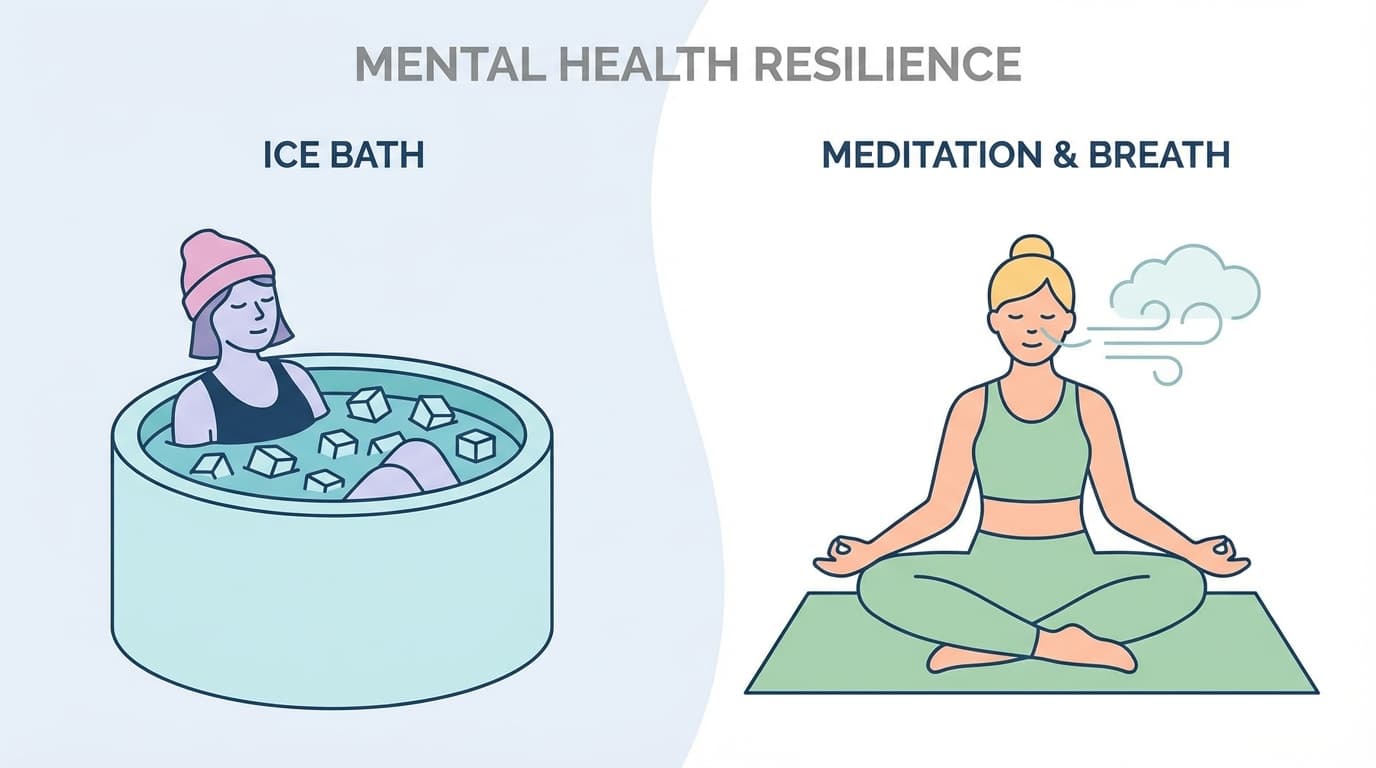
Slow breathing (8 breaths/min) is as effective as the Wim Hof Method for reducing general depression and anxiety.
The Wim Hof Method is superior for reducing 'rumination' (repetitive negative thinking) due to cross-stressor adaptation.
Face immersion triggers the calming Mammalian Diving Reflex, while full-body immersion triggers energizing Hormetic Stress.
Both practices improve cortisol recovery, helping the body bounce back from stress faster.
The Wim Hof Method works biologically, not just via placebo, as proven by its success despite participants' skepticism.
Beyond the Shiver: 6 Surprising Truths About the Wim Hof Method and Mental Health
In the wake of the COVID-19 pandemic, a period during which an estimated 300 million adults worldwide experienced elevated depressive symptoms, the wellness world turned its eyes toward an unlikely refuge: the ice bath. Once the domain of elite athletes and "Iceman" Wim Hof, cold plunging and high-intensity breathwork have surged into the mainstream. Yet, beneath the viral videos of shivering celebrities lies a rigorous question for clinical science: Can "hormetic stress"—the biological concept where brief, controlled doses of acute stress trigger beneficial adaptations—actually heal a struggling mind?
A landmark 2024 clinical trial conducted by researchers at the University of California, San Francisco (Blades et al.) has finally provided clarity. By studying midlife women (ages 30–60) with high stress and depressive symptoms, the trial dissected the Wim Hof Method (WHM) through a lens of psychological and physiological data. The results challenge our assumptions about "pushing through the pain" while highlighting a profound new way to look at resilience.
1. The "Active Control" Surprise: Slow Breathing is a Powerhouse
The most counter-intuitive finding of the UCSF study was the success of the control group. In clinical trials, a "control" is usually a placebo, but in this case, it was a potent intervention: slow-paced breathing at exactly eight breaths per minute paired with warm showers. This is significantly slower than the average adult rate of 12–18 breaths per minute, making it a therapeutic practice that enhances vagally-mediated heart rate variability .
To the researchers’ surprise, this low-arousal practice was nearly as effective as the intense WHM protocol. Across both groups, participants saw an approximate 24% reduction in depressive symptoms and a 27% reduction in anxiety. For those seeking mental health relief, this suggests that the high-intensity path of hormetic stress isn't the only route; gentle, parasympathetic-focused practices supported by a comfortable environment are equally valid tools for shifting the HPA axis toward health.
2. The WHM Superpower: Silencing the "Mental Loop"
While both groups improved overall, the Wim Hof Method—which combines hyperventilation-style breathing with cold exposure—outperformed the control in one specific area: daily stress rumination. Rumination is the tendency to "loop" on stressful events, a hallmark of depression that is linked to disrupted synaptic plasticity in the brain.
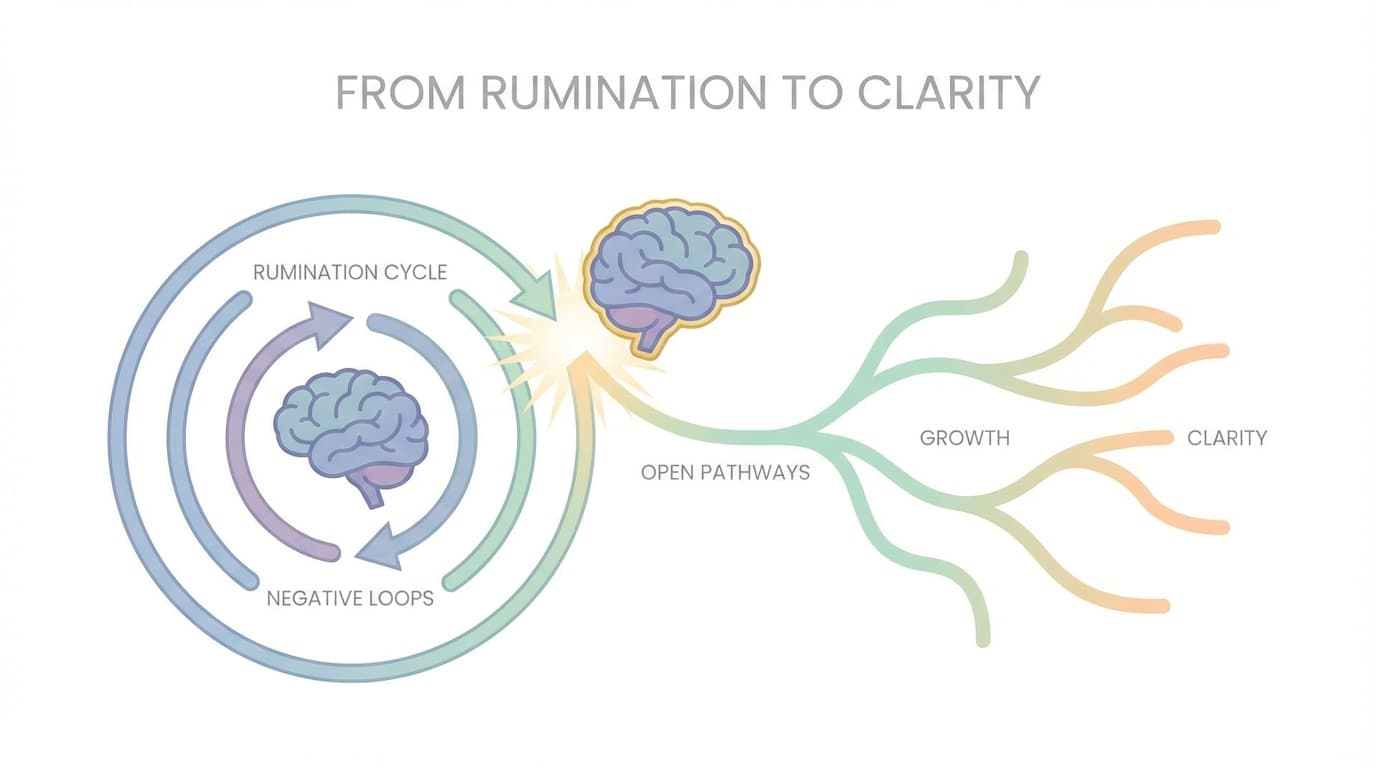
The study suggests that WHM facilitates "cross-stressor adaptation." By forcing the body to navigate an acute physical stressor—such as ice water in a dedicated tub or controlled hypoxia—the brain may be trained to break its psychological loops. This intense physiological arousal may promote the very synaptic plasticity required to shift the mind out of frozen, negative patterns.
"Participants in the WHM condition had significant reductions in rumination after daily stressful events compared to those in the active control group."
3. Expectation vs. Reality: The Credibility Gap
In wellness, we often assume the "Placebo Effect" or "Expectancy Optimism" drives results—essentially, if you believe it will work, it does. However, the UCSF data revealed a "credibility gap." Participants actually found the slow-breathing control group more credible and expected better mental health results from it than from the WHM.
This is a victory for biological science. The Wim Hof Method achieved its results despite the participants' initial skepticism and the perceived difficulty of the protocol. When an intervention succeeds even when the practitioner is doubtful, it points to a robust, underlying biological mechanism rather than a mere psychological desire for the method to work.
4. Normalizing Chemistry: The Cortisol Connection
Depression is frequently characterized by a "blunted" cortisol profile—a state where basal cortisol is high, but the body’s reactivity to new stressors is "flat" and sluggish. To see if three weeks of practice could change this, researchers utilized the Trier Social Stress Test (TSST), a laboratory stressor consisting of:
- A baseline saliva sample.
- A sample 20 minutes post-stressor (following a public speaking task).
- A final sample 40 minutes post-stressor to measure recovery.
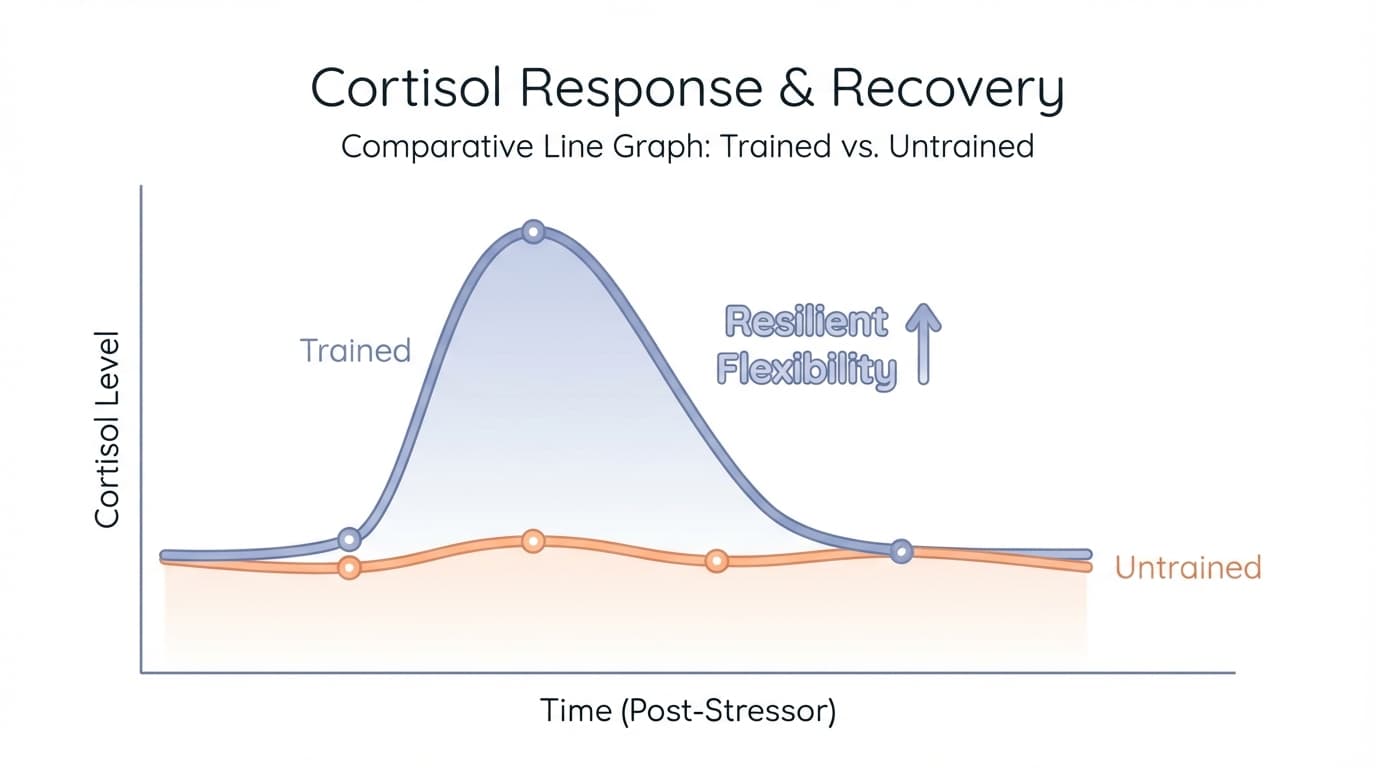
The results showed a clear shift toward a normalized cortisol response. While both groups maintained elevated baseline levels, they showed significantly lower cortisol at the 40-minute mark compared to their pre-intervention tests. This suggests that whether you choose the "Big Chill" or slow breathing, you are training your system to recover from stress faster, moving the HPA axis from a depressed, non-responsive state to one of resilient flexibility. Tracking these metrics personally can be done with advanced wearables .
5. The "Cold Shock" is a Four-Act Play
For those considering the Wim Hof Method, safety and respect for the physiology of cold are paramount. The UCSF study noted that 100% of the trial’s dropouts were from the WHM group, with participants citing the sheer intensity of the protocol. Understanding the "Four-Stage Model" of cold immersion explains why:
- Initial Cold Shock (First 2–3 minutes): This is the stage of highest risk. It is marked by rapid skin cooling, tachycardia (high heart rate), and an involuntary gasp reflex. This sudden gasp is the primary cause of drowning in open water and likely drove the high dropout rate among unacclimatized participants.
- Short-term (After 3 minutes): As the initial shock fades, the body enters neuromuscular cooling. The cooling begins to affect muscles and nerves near the surface, potentially impacting physical coordination.
- Long-term (After 30 minutes): This stage involves true hypothermia and the risk of metabolic shutdown as core body temperature falls.
- Circum-rescue Collapse: Occurring just before or after rescue, this stage is characterized by potential cardiac arrhythmia and unconsciousness as the body's hemodynamics shift.
6. Targeted Therapy: Face vs. Body
The "Science Journalist" takeaway for the daily practitioner is that your target determines your technique. There is a fundamental biological distinction between facial immersion and full-body plunging.
- Full-Body Immersion triggers Sympathetic Nervous System (SNS) activation. This is true "Hormetic Stress," stimulating the "fight-or-flight" response, increasing norepinephrine for an energy and focus boost, and building long-term resilience through intensity.
- Facial Immersion triggers the "Mammalian Diving Reflex." This is mediated specifically by the trigeminal nerve in the face and the vagus nerve. Instead of a "fight-or-flight" energy surge, this sends an immediate signal to the brain to induce calm, decrease heart rate, and activate the parasympathetic "rest-and-digest" system. You can achieve this easily using a simple bowl or a specialized tool .
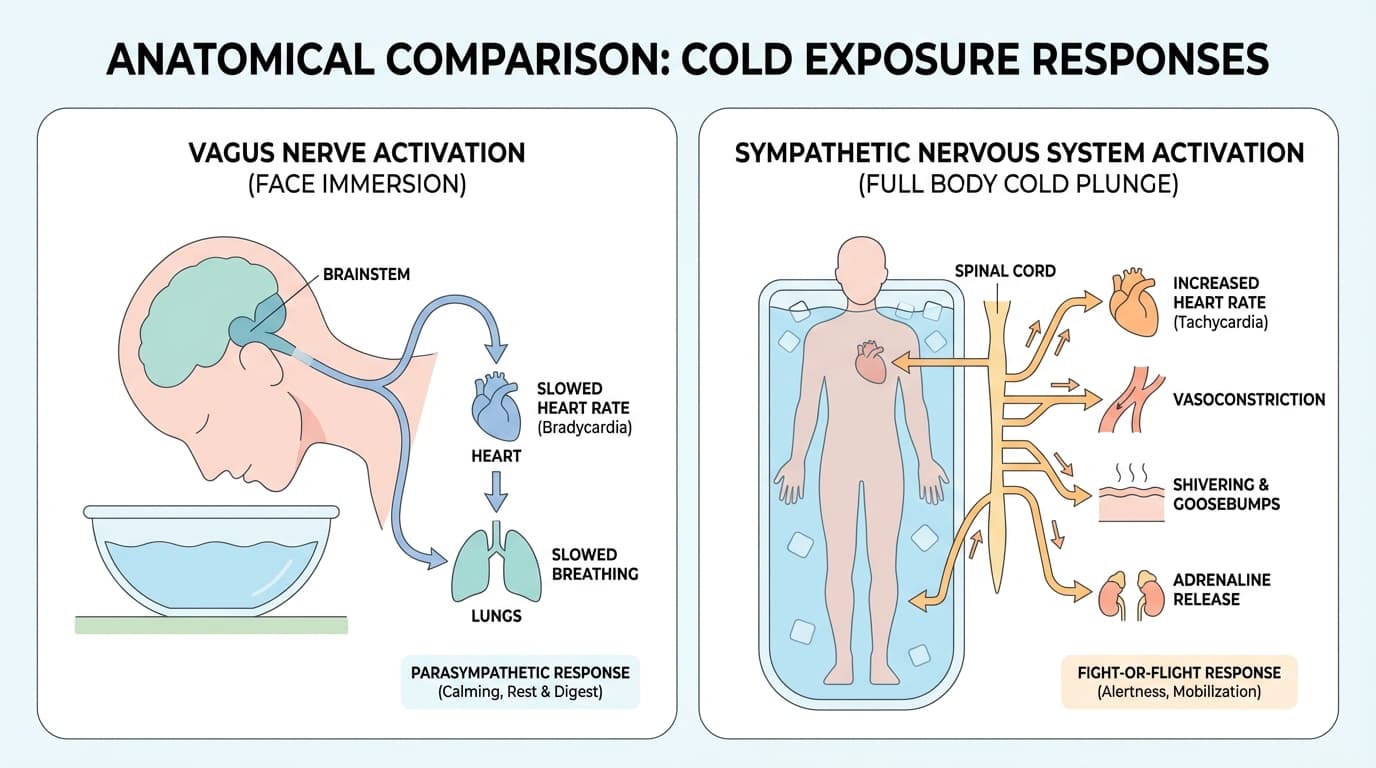
Practical Rule: If you need an immediate "reset" for emotional regulation, choose the face. If you are doing "resilience training" for long-term mental health, choose the body.
Conclusion: A New Horizon for Stress Resilience
The benefits of these practices are not a fleeting "high." In the UCSF study, improvements were sustained long after the 21-day intervention ended. At a three-month follow-up, a remarkable 46% of the sample reported mild or no depressive symptoms.
Whether you opt for the high-intensity hormetic stress of the Wim Hof Method or the therapeutic calm of slow-paced breathing, the evidence is clear: our physiology is plastic and responsive. As you look at your own wellness routine, ask yourself: Does your toolkit rely more on pushing your limits or finding your center? The most resilient mind is likely one that has mastered both.
Common Questions
🤔
Frequently Asked Questions
Is the Wim Hof Method better than meditation for anxiety?▼
According to the UCSF study, both the Wim Hof Method and slow-paced breathing (similar to meditation) are equally effective for reducing general anxiety. However, the Wim Hof Method was found to be more effective at stopping stress rumination or 'mental looping.'
What is the difference between dipping your face in ice water versus an ice bath?▼
Dipping your face triggers the 'Mammalian Diving Reflex' via the trigeminal nerve, which instantly calms the heart and activates the parasympathetic nervous system. An ice bath triggers the Sympathetic Nervous System (fight-or-flight), providing an energy boost and training stress resilience.
How long does it take to see mental health benefits from cold exposure?▼
The study showed significant reductions in depressive symptoms after just 21 days of practice. Remarkably, 46% of participants reported mild or no symptoms at a three-month follow-up, suggesting the benefits are sustained.