Blog2/18/2026
Smart Rings vs. Smartwatches: Why 2026 Marked the Death of the Charging Cable
5 minutes Read
The Briefing
Quick takeaways for the curious
Passive charging technology, utilizing RF energy harvesting from XR headsets, has eliminated the need for charging cables in new smart rings like the EverRing.
Smart rings offer superior health tracking accuracy compared to smartwatches by accessing the rich capillary beds in the finger rather than the noisy wrist anatomy.
The market is divided between subscription-based models like the Oura Ring 4 and subscription-free alternatives like the RingConn Gen 2.
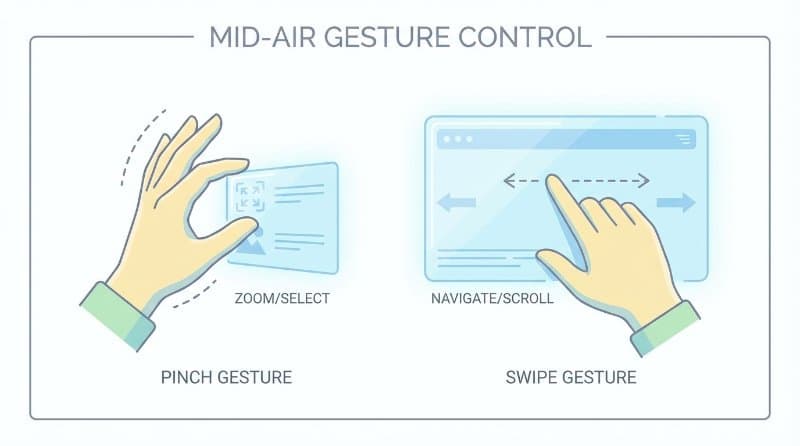
Smart rings have evolved into active controllers, enabling air gestures for XR environments and providing haptic feedback for notifications.
New capabilities in 2026 include blood pressure trend monitoring, positioning smart rings as serious tools for chronic disease management.
The Death of the Charging Cable: Why 2026 Belonged to the Passive Smart Ring
For the better part of a decade, we wore our health on our wrists, tolerating bulky silhouettes and glowing screens in exchange for a digital tether to our well-being. But as we close out 2026, the "Great Migration" is complete. The pulse of the wearable industry has moved from the carpal bone to the proximal phalanx. The question that defined the early 2020s—whether a device the size of a wedding band could truly outperform a smartwatch—has been answered with a resounding yes. We aren’t just tracking data anymore; we are wrapping a sophisticated, screen-free interface around our fingers that prioritizes high-fidelity human metrics over digital noise.
Ambient Power: Harvesting Energy from Thin Air
The most persistent friction in the wearable experience has always been the charging cable—that tiny, proprietary tether that eventually relegates most trackers to a junk drawer. This year, the "EverRing" isn't just a research curiosity; it is the blueprint for a battery-free future. Developed at Carnegie Mellon University, the EverRing operates without an internal lithium-ion cell, instead harvesting RF energy from the XR headsets and smart glasses that have become our primary digital portals.
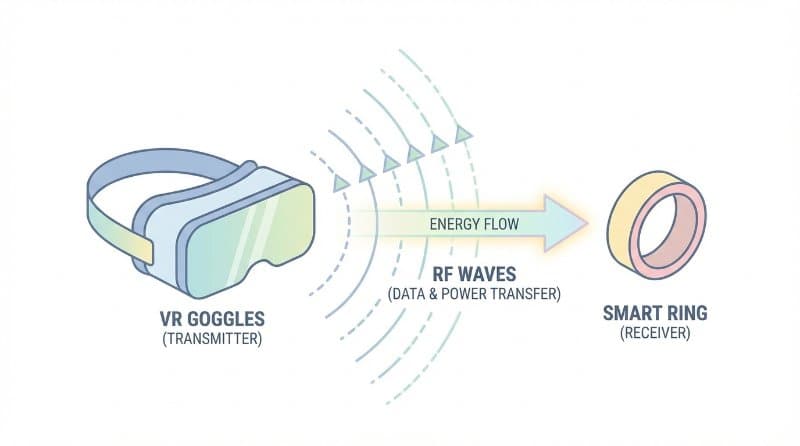
This is a paradigm shift in how we think about "active" devices. The ring is effectively alive only when we are interacting with our digital world. When your hand enters the interactive volume in front of your XR headset —roughly 25 to 50 centimeters from your face—the ring harvests between 1.7 mW and 3.5 mW of power. It’s a beautifully efficient symbiosis: your headset’s battery, which is far less space-constrained, provides the "breath of life" to the ring.
As the researchers behind the project noted, "We developed EverRing to never need a recharge. Instead, we use an RF transmitter to wirelessly power the ring." This philosophy extends to the payment sector, where passive NFC rings from brands like RunBazaar have become the standard. These rings are powered instantly by the electromagnetic field of a payment terminal, functioning even if your phone is dead. In 2026, battery anxiety is a relic of the past.
Capillaries Over Carpal Bones: The Accuracy Paradox
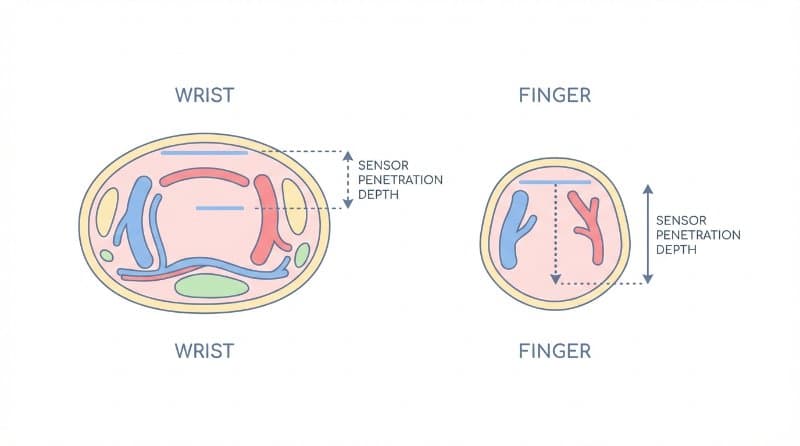
It remains counter-intuitive to many that a smaller device provides superior data, but the anatomy is undeniable. While smartwatches must fight through the "noise" of bone, muscle, and tendons at the wrist, smart rings sit directly against the rich capillary beds of the finger.
The Oura Ring 4 remains the vanguard of this precision, now featuring a fully titanium interior that replaces the epoxy of previous generations for improved sensor contact and hypoallergenic comfort. Along with the RingConn Gen 2, these devices leverage their proximity to the blood flow to track sleep staging and heart rate variability with near-medical-grade agreement.
At BodySpec, we view this data as the "movie" of a person's metabolic life—a continuous narrative of stress and recovery. This complements the "snapshot" provided by a DEXA scan, which captures structural changes in bone and tissue. The synergy is profound: users now use their rings to test real-time interventions, such as magnesium supplementation or caffeine cut-offs, and then verify the structural results in their next scan.
The $69-a-Year Paywall
Despite the technical triumphs, the market in 2026 is defined by a sharp economic divide. The "Gold Standard" remains the Oura Ring 4, starting at $349, but it comes with a controversial caveat: a $5.99 monthly subscription. Without it, you’re locked out of the deep historical trends and the validated sleep apnea detection that make the hardware worth owning.
Contrast this with the "Best Value" champion, the RingConn Gen 2 . At 299 with zero monthly fees, it has become the populist choice, offering a staggering 10–12 day battery life in a lightweight frame. Samsung’s Galaxy Ring (399.99) also eschews the subscription model, though its best features—like the AI-driven Energy Score—remain gated within the Galaxy ecosystem. For many, the choice is now a philosophical one: do you pay for Oura’s validated research pedigree, or do you reclaim your data from the subscription cycle?
Beyond Tracking: The New Social Currency of Gestures
In 2026, the smart ring has transcended its role as a passive observer to become a sophisticated controller. We’ve seen a shift from tapping screens to "air gestures." The Aivela Ring Pro, designed by former Apple talent, offers 14 programmable gestures. Drawing a heart in the air to "like" a social post or sliding a finger to scroll through a feed has become the new social shorthand of the XR-enabled world.
The haptic frontier has also matured. The RingConn Gen 3 has replaced the jarring bedside alarm with "gentle wake-up" vibrations. This localized haptic feedback—subtle pulses that only the wearer feels—provides a more human-centric way to start the day. Even the Even Realities R1 has found its niche as the primary tactile interface for smart glasses , proving that the future of computing isn't on our faces, but in the palms of our hands.
The Hypertension Breakthrough
The most significant competitive strike against the Apple Watch this year is the arrival of blood pressure trend monitoring on the finger. The RingConn Gen 3 has successfully integrated "blood pressure insights," a major leap for such a small form factor.
It is a necessary nuance to state that these are trends, not a diagnostic replacement for a cuff. However, by monitoring long-term cardiovascular shifts, the Gen 3 provides a level of hypertension tracking that was previously impossible without bulky wrist-worn sensors. Combined with its industry-leading 13-day battery life, the Gen 3 represents a clear threat to the smartwatch’s dominance in chronic disease management.
Patent Wars and the Stifling of Innovation
Growth, however, has brought grit. The legal landscape of 2026 is a minefield. The industry took a collective breath when the Ultrahuman Ring Air was pulled from U.S. shelves following Oura's aggressive patent litigation. This trend of "litigation-as-a-strategy" is unfortunately becoming a core part of the narrative.
Major players are increasingly using broad patent filings to stifle challengers, forcing innovative upstarts like RingConn and Ultrahuman to "work around" existing tech. While Ultrahuman is already engineering a comeback with altered hardware, this legal friction often results in the disappearance of high-utility features overnight, leaving consumers caught in the crossfire of corporate territorialism.
The Optimization-to-Transformation Pipeline
As we look toward 2027, the smart ring has evolved from a niche gadget to an essential tool for human optimization. We have moved past the era of "tracking for tracking's sake." By bridging the gap between daily metabolic data and long-term structural verification via DEXA, we can finally see the immediate physical consequences of our lifestyle choices.
The technology is no longer the hurdle; the choice is. Are you ready to trade the glowing, high-maintenance screen of a smartwatch for a discreet, battery-free, and gesture-controlled future? In 2026, the answer is increasingly found right on the tip of your finger.
Common Questions
🤔
Frequently Asked Questions
How do passive smart rings like the EverRing charge without a battery?▼
The EverRing harvests Radio Frequency (RF) energy from nearby active devices, specifically XR headsets and smart glasses. When the user's hand enters the interactive volume (25-50cm) of the headset, the ring absorbs enough power (1.7 mW to 3.5 mW) to function wirelessly.
Why are smart rings considered more accurate than smartwatches for health tracking?▼
Smart rings sit directly against the finger's rich capillary beds, allowing for clearer signal detection. In contrast, smartwatches on the wrist must measure through bone, muscle, and tendons, which creates 'noise' that can affect the accuracy of heart rate and sleep data.
What is the main difference between the Oura Ring 4 and the RingConn Gen 2?▼
The primary difference is the economic model. The Oura Ring 4 requires a monthly subscription ($5.99) to access full data and historical trends, whereas the RingConn Gen 2 offers a subscription-free experience with a longer battery life (10-12 days) at a lower price point.