Blog3/1/2026
Solar-Powered Camping: Quiet Energy for Modern Backcountry
9 mins Read
The Briefing
Quick takeaways for the curious
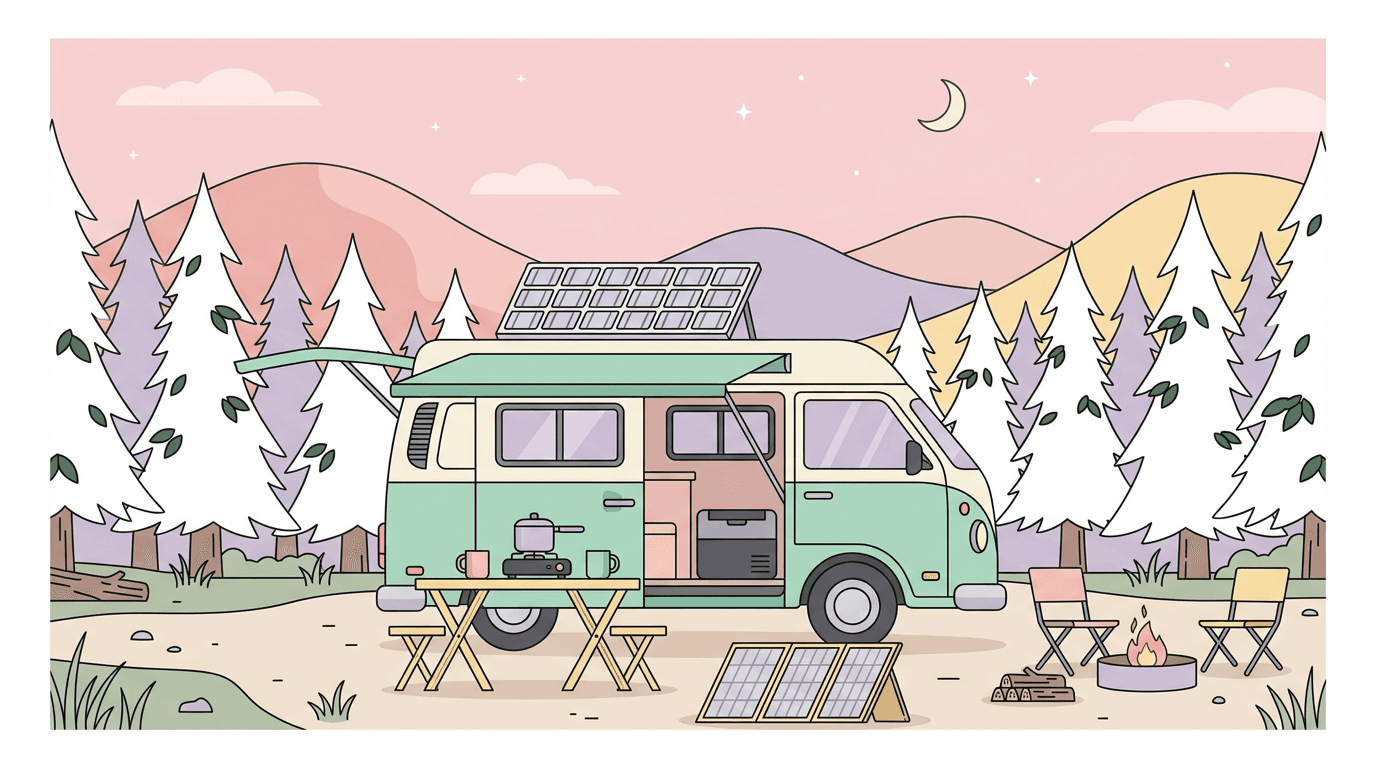
Solar-powered camping replaces gas generators with silent, renewable energy, enabling longer stays and quieter campsites as costs drop and battery density improves.
A reliable energy budget matters more than panel size; plan around watts, volts, usable battery capacity, and realistic sun hours to meet daily needs.
The solar revolution is driving overlanding and van life, integrating panels into vehicles to provide independence from shore power for high-draw appliances like induction cooktops and 12V fridges.
Battery chemistry, charging efficiency, and system sizing determine reliability, so design with a buffer for cloudy days and variable weather.
Beyond gear, success comes from understanding system design and energy management to harvest energy efficiently and sustainably in the wild.
The "unplugged" getaway is a beautiful lie we tell ourselves every Friday afternoon. We pack the SUV with the promise of digital detoxification, imagining a weekend of Thoreau-esque solitude where the only "notifications" come from the rustle of white pines and the crackle of a campfire. But as the sun dips below the horizon and the smartphone battery hits the dreaded 4% mark—the very device containing our offline maps, emergency contacts, and the high-resolution camera intended to capture the Milky Way—the romanticism of the primitive lifestyle begins to fray. The reality of modern adventure is that we are tethered to our tech, not by choice, but by the functional requirements of 21st-century safety and comfort. However, a silent revolution is currently sweeping through the backcountry. We are moving away from the era of heavy, vibrating gas generators and toward a sophisticated, silent, and infinitely renewable solution: Solar-Powered Camping.
The Silent Revolution: From Gas Guzzlers to Photon Harvesters
For decades, "powering" a campsite meant a compromise. You either hauled a thirty-pound lead-acid battery that died after three phone charges, or you brought a gas-powered generator that shattered the wilderness silence with a 70-decibel drone and a persistent smell of diesel. Today, the landscape has fundamentally shifted due to the plummeting cost of photovoltaic (PV) cells and the massive leap in battery density. According to the National Renewable Energy Laboratory (NREL), the efficiency of commercial solar cells has increased by nearly 25% over the last decade, while the cost per watt has cratered.
This isn't just about topping off a Kindle anymore. We are seeing a shift toward "overlanding" and "van life" culture where solar arrays are integrated into the very fabric of the vehicle. This tech allows for high-draw appliances like induction cooktops, 12V portable refrigerators, and even Starlink satellite internet in the middle of the Mojave Desert. The transition to solar is more than a green initiative; it is a declaration of independence. It allows the modern nomad to extend their stay in the wild indefinitely, limited only by their water supply rather than their proximity to a shore-power pedestal.
"The transition to portable solar isn't just a trend; it's a fundamental change in how we perceive the 'wild.' We are no longer visitors bringing a finite amount of energy into the woods; we are learning to harvest the energy that is already there." — Dr. Elena Vance, Renewable Energy Consultant.
Understanding the Math: Watts, Volts, and Your Morning Espresso
To master solar camping, one must move past the marketing jargon and understand the "Energy Budget." Most beginners make the mistake of buying a panel based on its physical size rather than its output. When you see a panel rated for 100 Watts, that is its peak performance under "Standard Test Conditions" (STC)—essentially high noon at the equator on a cloudless day. In the real world, factors like atmospheric haze, panel temperature, and the angle of the sun mean you’ll likely harvest about 70-80% of that rating.
To calculate your needs, you must look at Watt-Hours (Wh). If you want to run a 60-watt portable fridge for 24 hours, and the compressor runs about 20% of the time, you’ll need roughly 288Wh per day. To replenish that, a 100W solar panel (effectively producing 70W) would need about four hours of direct sunlight. This mathematical dance is what separates the "dead-battery" campers from the "infinite-power" pros.
Key terminology to master:
- Monocrystalline vs. Polycrystalline: Always opt for Monocrystalline. These cells are sliced from a single crystal of silicon, making them more efficient and better at performing in low-light conditions.
- MPPT vs. PWM Controllers: The Maximum Power Point Tracking (MPPT) controller is the "brain" of your system. It is roughly 30% more efficient than the cheaper Pulse Width Modulation (PWM) controllers because it can adjust its input to harvest the maximum power possible during fluctuating light.
- LiFePO4 (Lithium Iron Phosphate): This is the gold standard for portable power stations. Unlike standard Lithium-ion, LiFePO4 batteries can last for 3,000+ charge cycles and are significantly safer and more chemically stable in high temperatures.
The Anatomy of a Modern Solar Setup
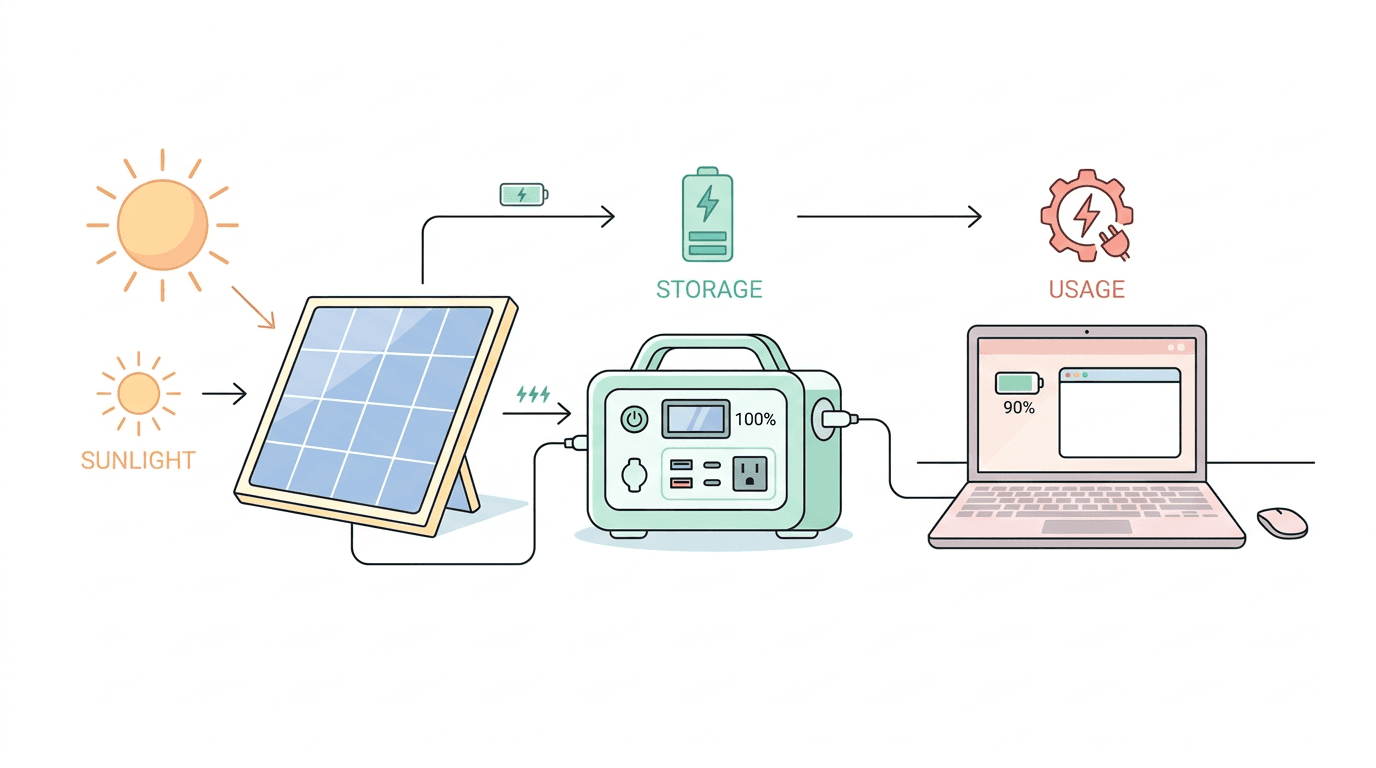
A functional solar camping setup is composed of three distinct parts: the Collector (the panels), the Controller (the brain), and the Storage (the battery). In the past, campers had to DIY these components together using a mess of wires and fuses. Today, the market is dominated by "Solar Generators"—all-in-one units that house the battery, the inverter (to turn DC power into AC wall-plug power), and the charge controller in a single rugged box.
The portability of these units has birthed a new category of "basecamp" luxury. You can now power a CPAP machine for a week of backcountry sleep, or run a heated blanket during a late-October hunt in the Adirondacks. The psychological weight of "conserving power" evaporates when you know the sun will replenish your stores by lunchtime.
The HootFinds Buyer’s Guide: Top-Tier Solar Gear
Choosing the right gear is a balance of weight, capacity, and durability. Here are our top recommendations for every type of camper, from the minimalist backpacker to the luxury overlander.
1. The All-Rounder Power Station:
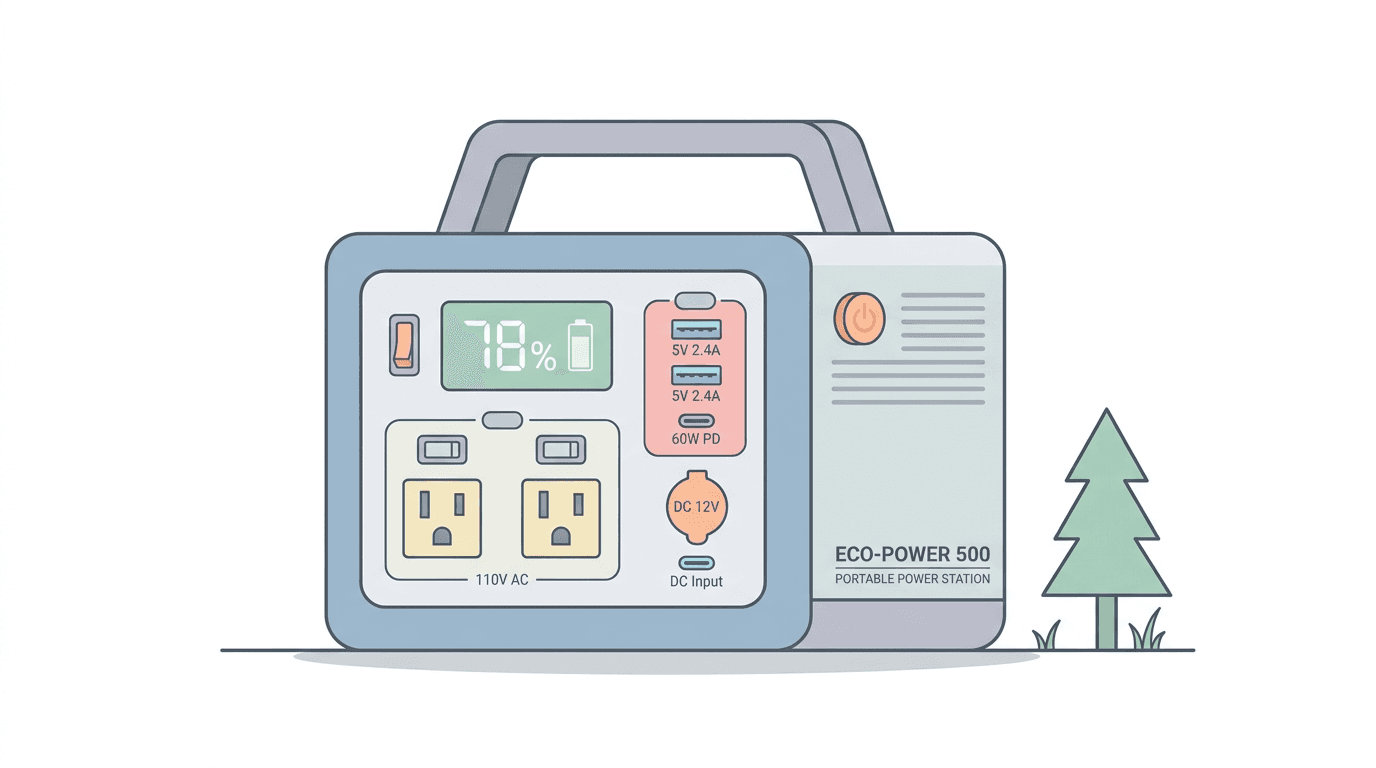
This is the gold standard for weekend warriors. With a 1264Wh capacity and a massive 2000W output, it can run everything from a coffee maker to a hair dryer. It utilizes LiFePO4 cells, ensuring it will last for over a decade of camping trips.
2. The High-Speed Recharger:
If you’re the type of camper who decides to head out on a whim, the River 2 Pro is for you. It can charge from 0-80% in just 70 minutes from a wall outlet, or roughly 4 hours with a 220W solar array. It’s lightweight enough for a short hike but powerful enough for a weekend of gadgets.
3. The Ultra-Portable Panel:
For those who need to keep it light, this folding panel is a masterpiece of engineering. It’s rugged, weather-resistant, and can be chained with other panels to increase output. It’s perfect for hanging off the back of a pack or laying across the dashboard of a truck.
4. The Backpacking Specialist:
BioLite is known for its "smart" features. This 100W panel includes an integrated sundial that helps you align the panel perfectly with the sun for maximum efficiency—a feature that can increase your harvest by up to 30%.
5. The Rigid Overlander Choice:
If you have a dedicated basecamp or a truck bed, this "suitcase" setup is incredibly durable. It features a built-in kickstand and a waterproof controller, making it the "set it and forget it" choice for long-term off-grid living.
Maximizing Your Harvest: The Art of Solar Positioning
Owning the gear is only half the battle; knowing how to use it is the other. Many campers lose up to 50% of their potential energy simply by "setting and forgetting" their panels in the morning. To get the most out of your investment, follow these pro-tips:
- The 90-Degree Rule: Your panels should always be perpendicular to the sun's rays. Even a 15-degree tilt away from the sun can result in a significant drop in current.
- The Shadow Effect: On most portable panels, even a tiny shadow from a single tree branch covering a small corner of the panel can shut down the flow of energy for the entire unit. Clear the area and "follow the sun" throughout the day.
- Keep it Cool: Paradoxically, solar panels become less efficient as they get hotter. If possible, ensure there is airflow behind the panel (don’t lay it flat on a hot car roof) to keep the cells within their optimal operating temperature.
- Clean the Glass: Dust, pollen, and salt spray from the ocean can create a film that reflects sunlight before it hits the silicon cells. A quick wipe with a microfiber cloth every morning can boost your output by 5-10%.
The Future: Solid-State and Beyond
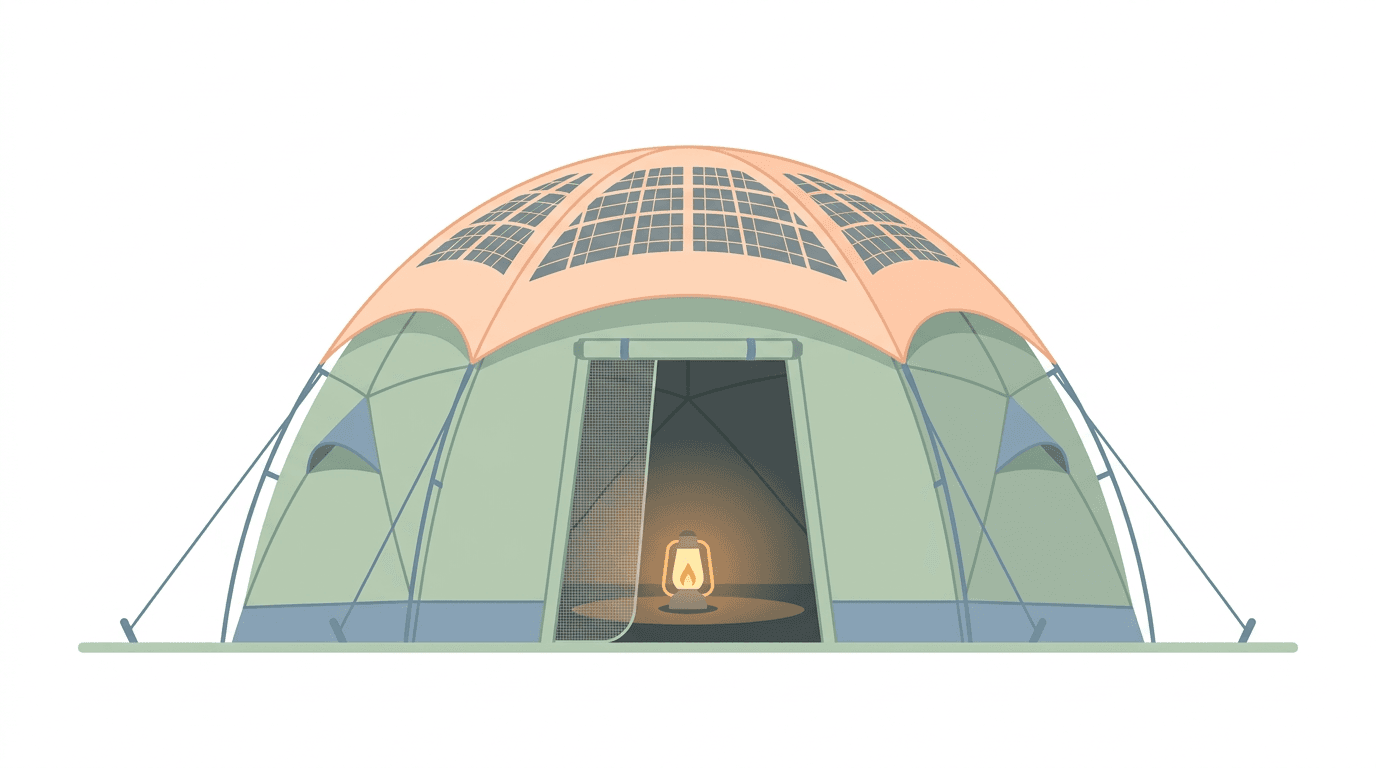
The next frontier of solar camping lies in Solid-State Batteries and Perovskite solar cells. Solid-state batteries promise to double the energy density of current lithium-based systems while being virtually fire-proof. Meanwhile, Perovskite cells are thin, flexible films that could eventually be integrated into the fabric of your tent or the fly of your rain jacket, turning every square inch of your gear into a power-generating surface.
We are approaching a point where the "power grid" is no longer a centralized utility we pay for every month, but a personal infrastructure we carry on our backs. This shift democratizes the outdoors, making it accessible to those who require power for medical reasons, and more comfortable for those who refuse to leave the comforts of the modern world behind.
Conclusion: The Ethics of the Infinite Battery
As we gain the ability to bring the "always-on" world into the deepest reaches of the wilderness, we face a new philosophical question: Just because we can bring the power, should we? Solar technology has removed the barrier of entry for many, but it also risks turning our national parks into outdoor offices.
The true beauty of solar-powered camping isn't that it allows us to stay on TikTok while in the woods; it’s that it provides the security to go further, stay longer, and explore deeper. It replaces the anxiety of a dying battery with the confidence of a self-sustaining system. When we harness the sun, we aren't just charging a phone—we are tapping into the same ancient energy that grows the forests we’ve come to see. Use the power to keep your maps updated and your coffee hot, but don't forget to occasionally turn off the screen and look at the source of all that energy yourself. The sun has been putting on a pretty good show for a few billion years; it’s finally time we learned how to use it.
Common Questions
🤔
Frequently Asked Questions
What is solar-powered camping and how does it work?▼
Solar-powered camping uses photovoltaic panels to harvest sunlight and store electricity in onboard batteries for use away from traditional power sources. Modern setups emphasize silent operation, portability, and vehicle integration so you can run essentials like phones, fridges, and cooking gear without generator noise. Key to success is sizing the system to your energy budget, not just the panel’s physical size, so you can balance sun exposure, battery capacity, and daily needs. You can extend stays by collecting daytime energy and using stored power at night, even in remote locations.
How do I calculate an energy budget for solar camping?▼
Start by listing every device you plan to run and estimating how many watt-hours they consume per day. Sum these values to determine your total daily energy demand. Then estimate your solar production based on panel wattage and expected sun hours, and select a battery with enough usable capacity to cover nights and low-sun days. Finally, size your inverter and charge controller to handle peak loads and ensure you have a comfortable margin.
Can solar power run high-draw appliances like induction cooktops or Starlink in the backcountry?▼
Yes, but you’ll need a sufficiently capable system with larger panels, bigger batteries, and efficient power management. Induction cooktops and similar loads can spike demand, so plan for short runs and use them during peak sun or when the battery is topped up. Starlink and other modems require steady power and ample surge capacity, so ensure your inverter and battery can handle the startup surges. Real-world feasibility depends on weather, location, and how you size for margins in your energy budget.
What are the advantages and trade-offs of switching from gas generators to portable solar for camping?▼
Advantages include near-silent operation, reduced maintenance, and the freedom to stay longer in the backcountry without refueling. Solar also scales with your needs and can be integrated into vehicles for overlanding, expanding your energy independence. Trade-offs include higher upfront costs, system complexity, and reliance on sun exposure and weather, which requires careful budgeting and backup plans. Overall, if you size and manage the system well, solar offers a more sustainable and comfortable off-grid experience.