Blog3/1/2026
Portable Power Station Guide: Quiet, Safe, Grid-Free Power
9 mins Read
The Briefing
Quick takeaways for the curious
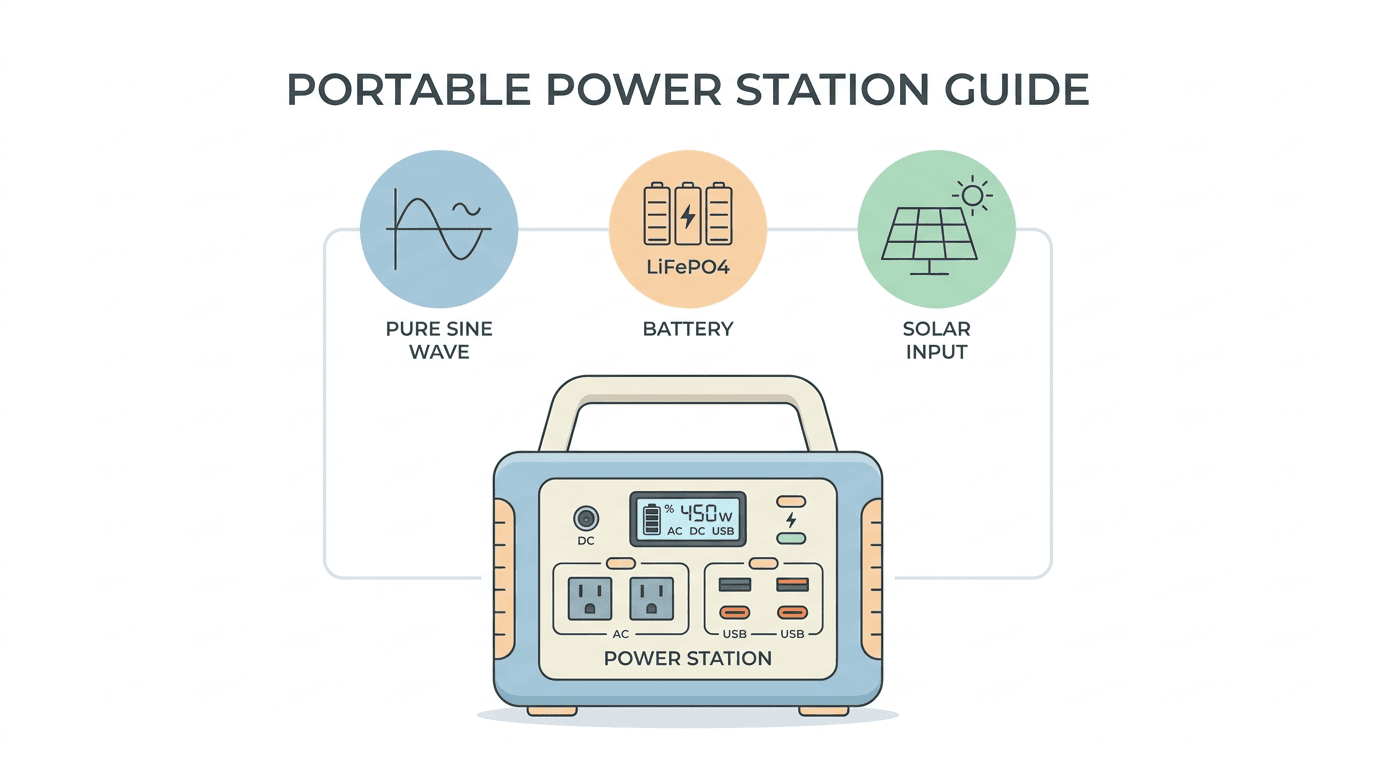
Portable Power Stations decouple our daily energy needs from the fixed grid by combining battery storage, power electronics, and a management system into a compact, emission-free energy ecosystem.
A PPS uses a Pure Sine Wave Inverter to deliver clean, stable AC power that is safe for sensitive devices like laptops and CPAP machines, unlike cheaper Modified Sine Wave alternatives.
The Battery Management System (BMS) acts as the brain, monitoring voltage, temperature, and current in real time to balance cells and protect against overcharging or overheating.
LiFePO4 and NMC are the two major chemistries you'll encounter; LiFePO4 offers longer cycle life and thermal stability while NMC provides higher energy density, with trade-offs in safety and longevity.
Beyond specs, PPS devices offer quiet operation and resilience during outages, making them practical upgrades over loud, fuel-burning generators.
The broader shift from grid dependence to a silent, emission-free energy ecosystem reflects the move from burning energy to managing electrons more efficiently.
The tether of the wall outlet is the invisible leash of the 21st century. We move through our lives in a constant, subconscious search for the next "juice" fix, our eyes darting toward baseboards in airport terminals and coffee shops, hunting for those two slots of salvation. This dependence becomes even more acute when we step off the pavement and into the wild, or when the modern miracle of the power grid fails us during a storm. For decades, the only solution to this "energy anxiety" was the gas-powered generator—a roaring, fume-belching beast that required a mechanical engineering degree to maintain and a soundproof bunker to tolerate. But a quiet, digital revolution has arrived. We are witnessing the rise of the Portable Power Station (PPS), a sophisticated marriage of high-density battery chemistry and advanced power electronics that is fundamentally decoupling our lifestyle from the stationary grid. It isn't just a "big battery"; it is a silent, emission-free energy ecosystem that fits in the trunk of your car.
The Silicon Heart: Understanding the Anatomy of Silent Power
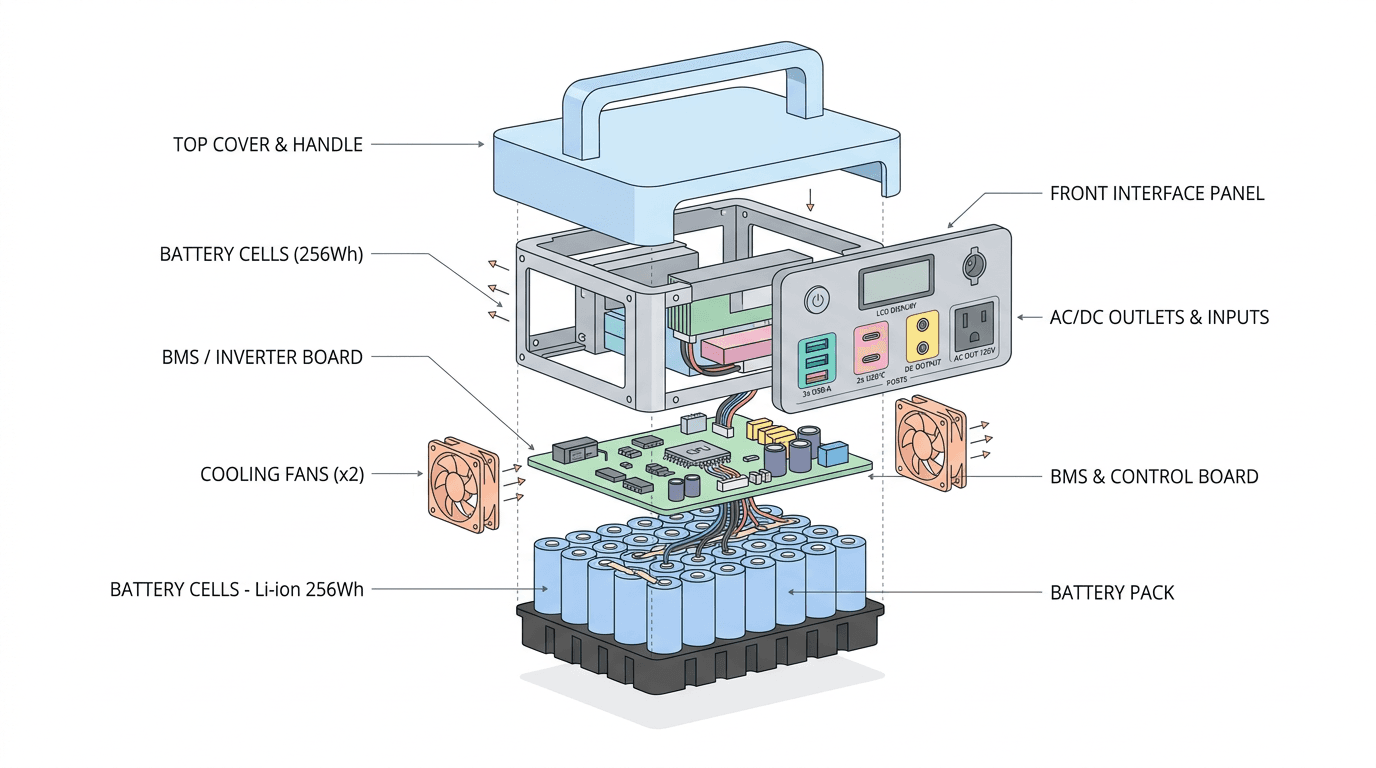
To understand why a portable power station is a quantum leap over the lead-acid batteries of yesteryear, we have to look under the hood. At its core, a PPS is a complex management system designed to take raw DC (Direct Current) energy and transform it into the stable, "clean" AC (Alternating Current) electricity that your sensitive electronics crave. Unlike a simple power bank used to charge a phone, a PPS utilizes a Pure Sine Wave Inverter. This is critical because the "Modified Sine Wave" found in cheaper, older devices can actually damage the delicate microprocessors in your laptop, CPAP machine, or high-end espresso maker.
The "brain" of the operation is the Battery Management System (BMS). This isn't just a fuse; it’s a high-speed computer that monitors voltage, temperature, and current in real-time. It ensures that the cells are balanced and protected from overcharging or overheating. As energy expert Dr. Lawrence G. Brown once noted:
"The transition from mechanical power generation to solid-state storage is the most significant shift in consumer energy since the invention of the dry cell. We are moving from a world of 'burning' to a world of 'managing' electrons."
LiFePO4 vs. NMC: The Chemical Duel for Longevity
When you begin your search for a power station, you will encounter two primary acronyms: NMC (Nickel Manganese Cobalt) and LiFePO4 (Lithium Iron Phosphate). This is where the science of your purchase truly matters.
NMC batteries are the traditional choice. They are lighter and more energy-dense, making them perfect for hikers or those who prioritize portability above all else. However, they typically offer a lifespan of 500 to 800 charge cycles before their capacity drops to 80%.
LiFePO4 batteries, on the other hand, are the new gold standard for durability. While they are slightly heavier, they are significantly safer and more stable. Most importantly, a LiFePO4 station can often handle 3,000 to 4,500 cycles before seeing any degradation. If you use your power station twice a week, a LiFePO4 unit could easily last you over a decade, whereas an NMC unit might begin to fade after three years. For the savvy consumer, the "weight tax" of LiFePO4 is a small price to pay for a decade of energy independence.
Deciphering the Specs: Watts, Watt-Hours, and the Math of Independence
The marketing materials for power stations are often a soup of numbers, but there are only two you truly need to master: Watt-hours (Wh) and Output Watts (W).
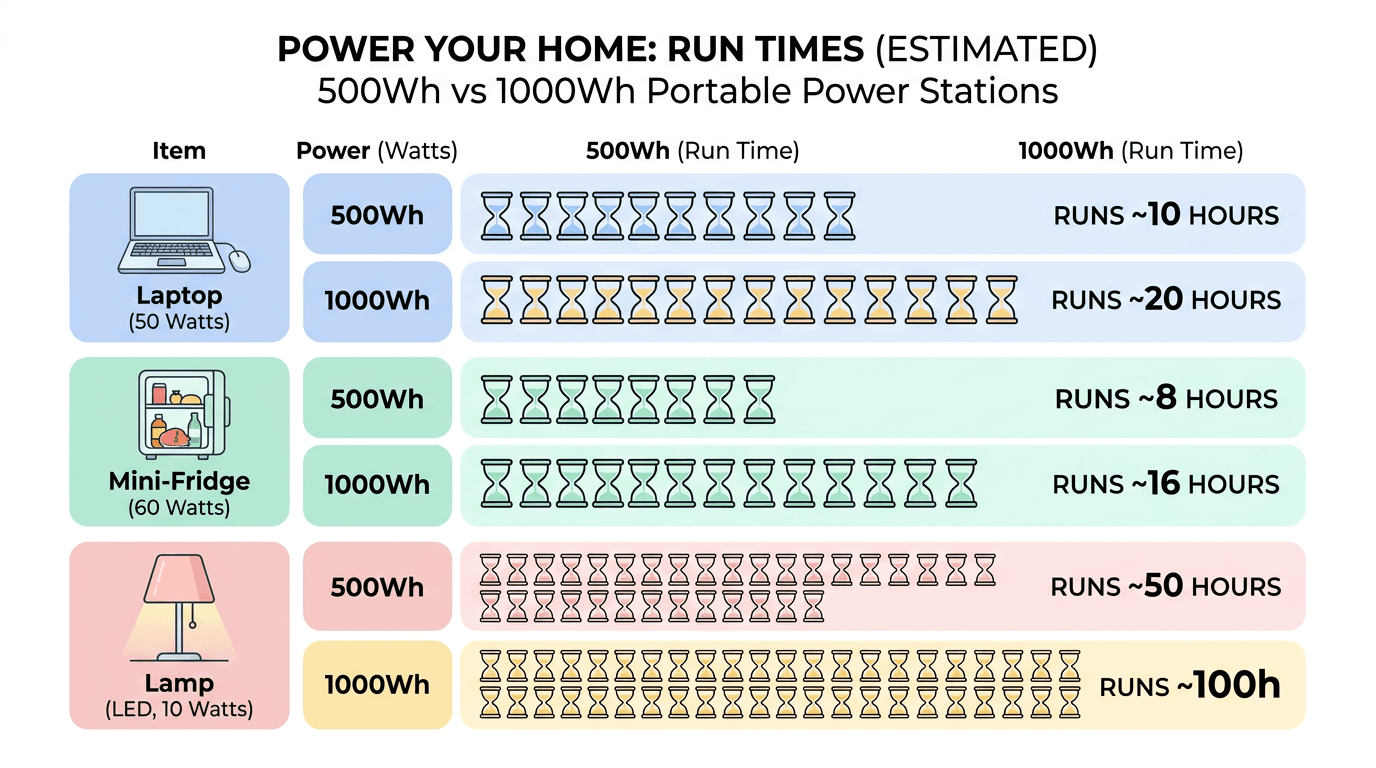
- Watt-hours (Capacity): This tells you how much "fuel" is in the tank. If you have a 1,000Wh station, it can theoretically power a 100W device for 10 hours.
- Output Watts (Power): This tells you how much "speed" the station can provide at once. A station might have a huge capacity (Wh), but if its output is only 500W, it will never be able to start a 1,200W toaster or a hair dryer.
When calculating your needs, always look for the "Surge" or "Peak" rating. Appliances with motors, like refrigerators or power tools, require a massive burst of energy just to start up—often 2-3 times their running wattage. A high-quality power station will have a surge capacity designed to handle these momentary spikes without tripping the internal breakers.
The Solar Symbiosis: Closing the Loop on Sustainability
The true magic of a portable power station is realized when you pair it with solar panels, effectively turning it into a Solar Generator. This is where the "portable" aspect meets "permanent" utility. Modern stations use a technology called MPPT (Maximum Power Point Tracking).
In the past, solar charging was inefficient; if a cloud passed over, the charging would drop significantly and struggle to recover. MPPT controllers act like a digital transmission, constantly adjusting the voltage and current to ensure that the battery is receiving the maximum possible "push" from the sun at any given second. This allows for off-grid living that doesn't feel like a compromise. You can run your Starlink terminal, charge your camera gear, and keep your LED lights bright, all while the sun silently refills your "tank" for the evening ahead.
The HootFinds Buyer’s Guide: Finding Your Perfect Power Match
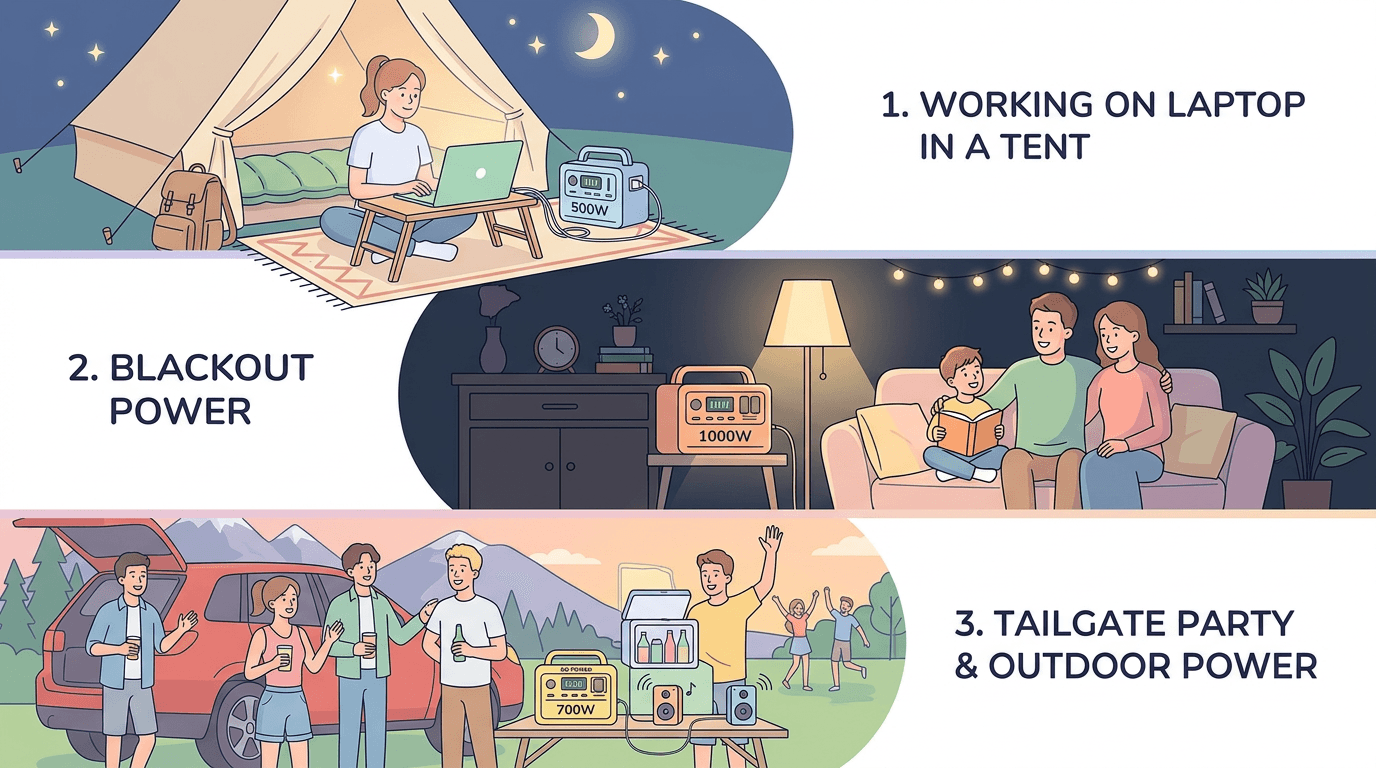
Choosing the right station depends entirely on your "Mission Profile." Are you a digital nomad working from a van, a homeowner preparing for the next hurricane, or a weekend warrior heading to a music festival? Here are our top-tier recommendations for every category.
1. The Ultimate All-Rounder:
The Delta 2 is widely considered the "sweet spot" of the industry. With a 1,024Wh capacity and a massive 1800W AC output, it can power 90% of home appliances. What sets it apart is the "X-Stream" charging technology, which allows it to go from 0% to 80% charge in just 50 minutes when plugged into a wall—ideal for those who need to charge up quickly before a storm hits.
2. The Weekend Warrior’s Companion:
Jackery is the brand that arguably started the PPS craze. The Explorer 500 is a classic for a reason: it’s rugged, incredibly simple to use, and features a bright, easy-to-read display. It’s the perfect size for charging phones, tablets, and running a 12V portable fridge for a long weekend in the woods.
3. The Heavy-Duty Home Backup:
If you are serious about home backup, the AC200MAX is a beast. Featuring a 2,048Wh LiFePO4 battery and the ability to expand its capacity with additional battery modules, this unit can keep your full-sized refrigerator running for over 24 hours. It also features a built-in 30A NEMA TT-30 outlet, making it a favorite for RV enthusiasts.
4. The Compact Tech Hub:
For those who just need to keep their laptops and drones alive during a day trip, the Anker 521 is an elegant, ultra-portable solution. It utilizes premium LiFePO4 cells (rare for this size) and comes with a 5-year full device warranty, making it one of the most reliable small-scale units on the market.
5. The Off-Grid Powerhouse:
This is less of a "portable" station and more of a "mobile power plant." With a 3,600W output and the ability to be charged at EV charging stations, the DELTA Pro is designed for those living the full-time off-grid life or those who want to power their entire house during a multi-day outage.
Making the Most of Your Investment: Pro Tips for Longevity
Owning a portable power station is an investment in peace of mind, but like any high-tech tool, it requires a bit of "battery hygiene" to ensure it stays healthy for years.
- The 20/80 Rule: Unless you absolutely need the full capacity, try to keep your battery between 20% and 80% charge. Keeping a lithium battery at 100% or 0% for long periods creates chemical stress that can shorten its lifespan.
- Temperature Control: Batteries are like humans; they are happiest between 60°F and 80°F. Avoid leaving your power station in a hot car or a freezing garage, as extreme temperatures can significantly degrade the cells.
- Store it Partially Charged: If you are putting your station away for the season, charge it to about 50-60% and check it every three months. Most modern units have a slight "parasitic drain" from the internal computer (BMS), and you never want the battery to drop to a true zero while in storage.
- Watch the Dust: These units have internal fans to keep the inverter cool. Periodically check the air intakes and use a can of compressed air to keep them clear of dust or pet hair.
The Future of Personal Sovereignty
The shift toward portable power is more than just a trend in outdoor gear; it is a fundamental shift in how we view our relationship with energy. For the first time in history, an individual can capture the energy of the sun, store it in a box the size of a cooler, and use it to power a high-definition life anywhere on the planet.
As we move toward a world that is increasingly electric and increasingly unpredictable, the portable power station represents a new kind of freedom. It is the freedom to work from a remote ridgeline, the freedom to stay comfortable when the lights go out, and the freedom to explore without leaving a trail of noise and fumes behind. We are no longer tethered to the wall. We are, finally, the masters of our own micro-grid. In the quiet hum of a power station, we can hear the future: it’s efficient, it’s mobile, and it’s entirely within our control.
Common Questions
🤔
Frequently Asked Questions
What is a portable power station and how does it work?▼
A portable power station is a compact energy system that stores electricity in high-density batteries and converts it into usable AC power through a Pure Sine Wave Inverter. The system includes a Battery Management System (BMS) that monitors, balances, and protects the cells from overcharging or overheating. It provides multiple output ports and a control interface, delivering clean, stable power suitable for laptops, CPAP machines, and small appliances. By design, it operates quietly and with zero emissions, offering a reliable alternative when the grid is down or unavailable.
Lithium iron phosphate (LiFePO4) vs. nickel manganese cobalt (NMC): which is better for a portable power station?▼
LiFePO4 generally offers longer cycle life, better thermal stability, and safer chemistry, making it a durable choice for frequent use and outdoor conditions. NMC packs have higher energy density, which can translate to more usable capacity in the same size, but they may wear faster and require careful thermal management. Your choice should balance how you plan to use the unit: long life and safety with LiFePO4, or maximum runtime per charge with NMC, keeping in mind the BMS capabilities. Either chemistry is viable, but LiFePO4 tends to be the steadier option for home or travel use.
Why is a Pure Sine Wave inverter important in a portable power station?▼
A Pure Sine Wave inverter delivers clean, smooth AC power that closely matches grid electricity, which protects sensitive electronics from voltage spikes and noise. Cheaper Modified Sine Wave inverters can cause overheating and unpredictable performance in devices like laptops, CPAP machines, and espresso makers. The combination of a pure sine wave output with a robust BMS ensures compatibility and safety across a wide range of loads. In short, it preserves device longevity and reduces compatibility issues.
Can a portable power station replace a gas generator during outages or camping trips?▼
Yes, a portable power station can power essential devices quietly and without emissions, making it a practical alternative to gas generators for many scenarios. Its portability, multiple ports, and silent operation are major advantages for camping or emergency use. However, for extended outages or heavy loads (like power-hungry appliances), you may need larger capacity or multiple units and a reliable charging strategy (solar, car, or wall charging). Plan based on total wattage needs and recharge cycles to avoid running out of power.